Senapati Bapat: 8 Timeless Symbols of Defiance, Dignity, and Nation-First Spirit
Senapati Bapat: 8 Timeless Symbols of Defiance, Dignity, and Nation-First Spirit
📘 Enter the Legacy of Senapati Bapat
He was trained to build bridges — but chose to break chains. Senapati Bapat was not just Maharashtra’s first revolutionary; he was the conscience of a nation in chains. His life was a fusion of intellect and insurgency, of bombs and satyagraha, of engineering and ethics.
This is not just a biography. It is a journey through 8 timeless symbols of defiance, dignity, and nation-first spirit — from underground activism to environmental justice. Step into the fire. Witness the transformation. Carry the command.
👉 Scroll down to begin: “Senapati Bapat: 8 Timeless Symbols of Defiance, Dignity, and Nation-First Spirit”
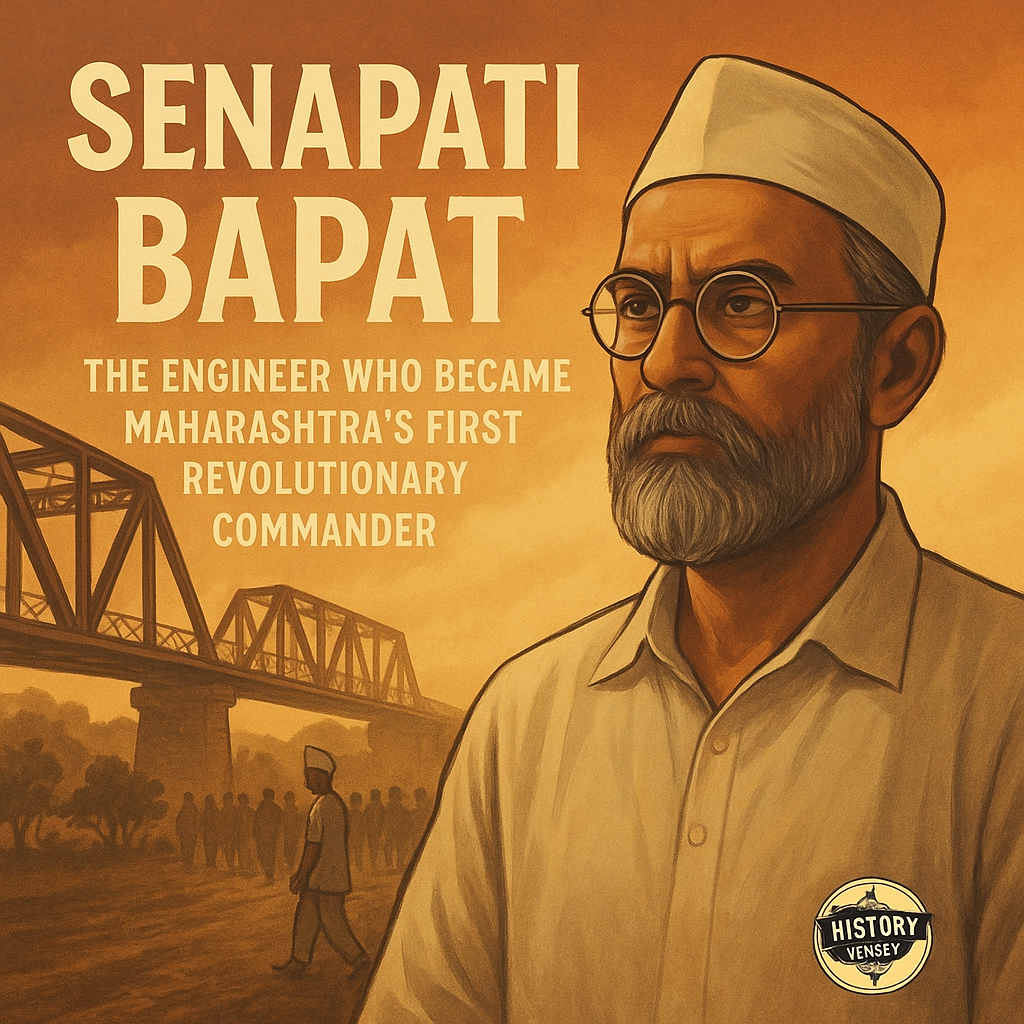
🧭 Senapati Bapat: The Engineer Who Became Maharashtra’s First Revolutionary Commander
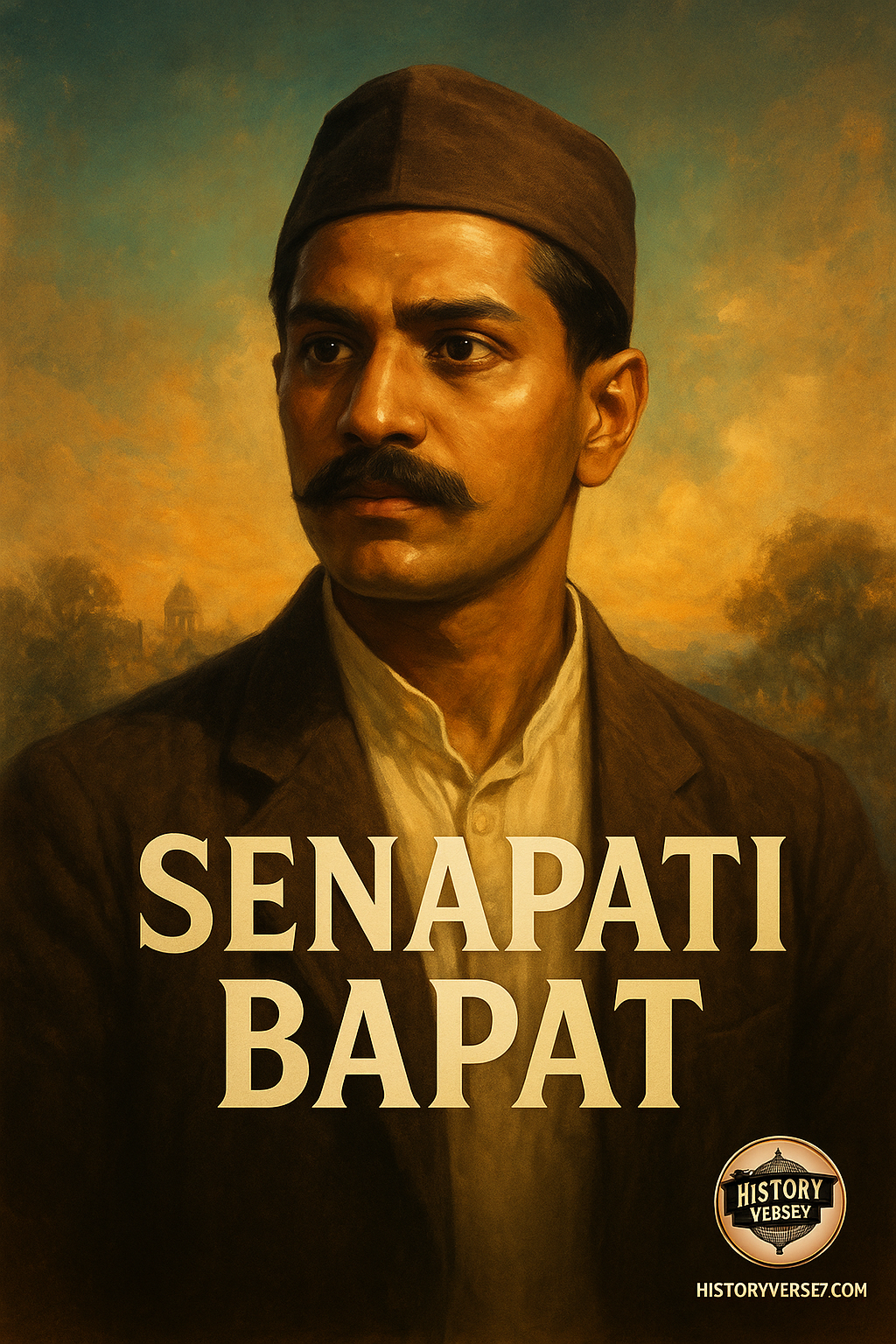
In the vast tapestry of India’s freedom struggle, some names roar like thunder — and one such name is Senapati Bapat. Born as Pandurang Mahadev Bapat on 12 November 1880 in Parner, Ahmednagar district of Maharashtra, he would go on to earn the title Senapati — meaning “Commander” — not through military rank, but through the sheer force of his leadership, sacrifice, and unwavering commitment to India’s liberation..
Senapati Bapat’s journey is not just a historical account. It is a human story — of a man who gave up comfort for conscience, engineering for activism, and silence for revolution.
🎓 From Scholar to Revolutionary
Bapat’s early life was marked by brilliance. He studied at Deccan College in Pune, where his academic excellence earned him the prestigious Mangaldas Nathubhai Scholarship, allowing him to study engineering in Edinburgh, Scotland. But while most students abroad chased careers, Bapat chased freedom.
In Europe, he was deeply influenced by socialist thinkers and Indian nationalists, including V.D. Savarkar. He even traveled to Paris to learn bomb-making — not out of violence, but out of desperation to shake the British Empire’s grip on India.
This phase marked the birth of Senapati Bapat the revolutionary — a man who believed that freedom was not given, it was taken.
💣 Underground Activism and Imprisonment
Upon returning to India, Bapat became involved in underground revolutionary activities, including bomb-making and anti-colonial propaganda. His actions led to multiple arrests and imprisonments, but each sentence only strengthened his resolve.
He wasn’t just fighting the British — he was fighting fear, apathy, and the silence of the oppressed.
🕊️ The Gandhian Shift: From Explosives to Satyagraha
What makes Senapati Bapat unique is his ideological evolution. After years of radical activism, he embraced Gandhian philosophy, choosing non-violent resistance as his weapon of choice. This wasn’t a compromise — it was a strategic shift, proving that Bapat was not just a fighter, but a thinker.
His most iconic moment came during the Mulshi Satyagraha in 1921, where he led a protest against the Tata Power dam project that displaced thousands of farmers. His leadership earned him the title “Senapati” from the people — a commander of conscience, not of arms.
🌊 Civic Activism and Environmental Justice
Senapati Bapat’s activism extended beyond politics. He became a champion of civic awareness, leading cleanliness drives, public education campaigns, and environmental protests. He believed that freedom was not just political — it was personal, social, and ecological.
His work in Pune, especially around the Mutha River, laid the foundation for environmental activism in India, decades before it became a global movement.
🏛️ Post-Independence Legacy
Even after India gained independence in 1947, Senapati Bapat remained active. He played a key role in the Samyukta Maharashtra Movement, advocating for a separate Marathi-speaking state. His voice was not just historical — it was contemporary, guiding the newly independent nation toward regional identity and cultural pride.
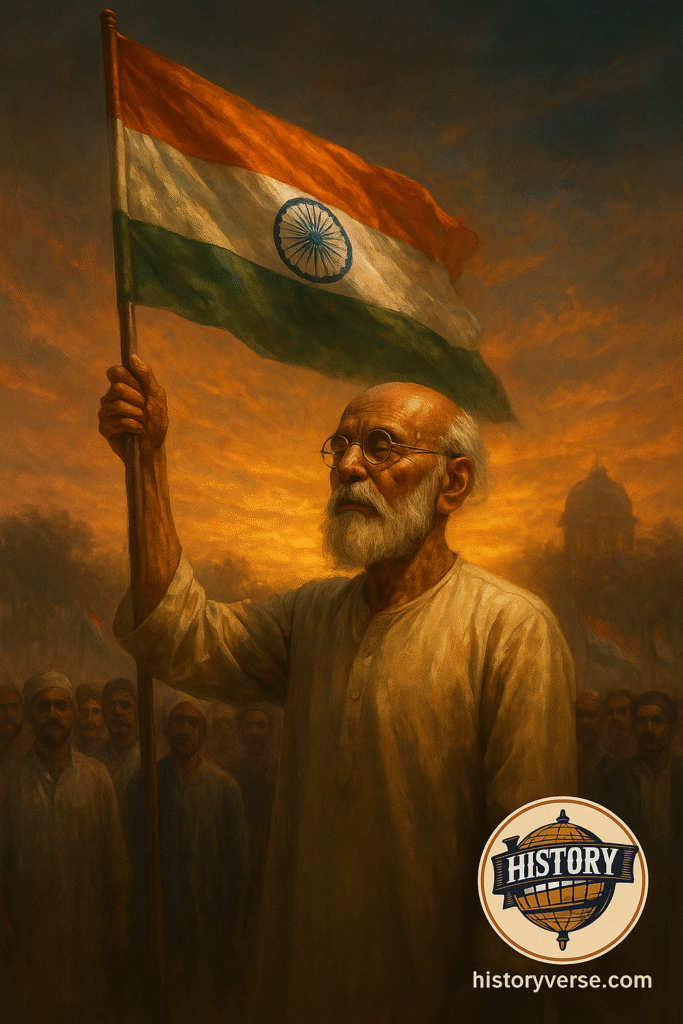
In 1957, he was honored with the opportunity to hoist the Indian flag in Pune — a symbolic gesture that recognized his lifelong struggle and moral leadership.
🕯️ Death and Immortal Legacy
Senapati Bapat passed away on 28 November 1967 in Mumbai. But his legacy lives on — in statues, postage stamps, memorials, and most importantly, in the hearts of those who believe that freedom is a duty, not a privilege.
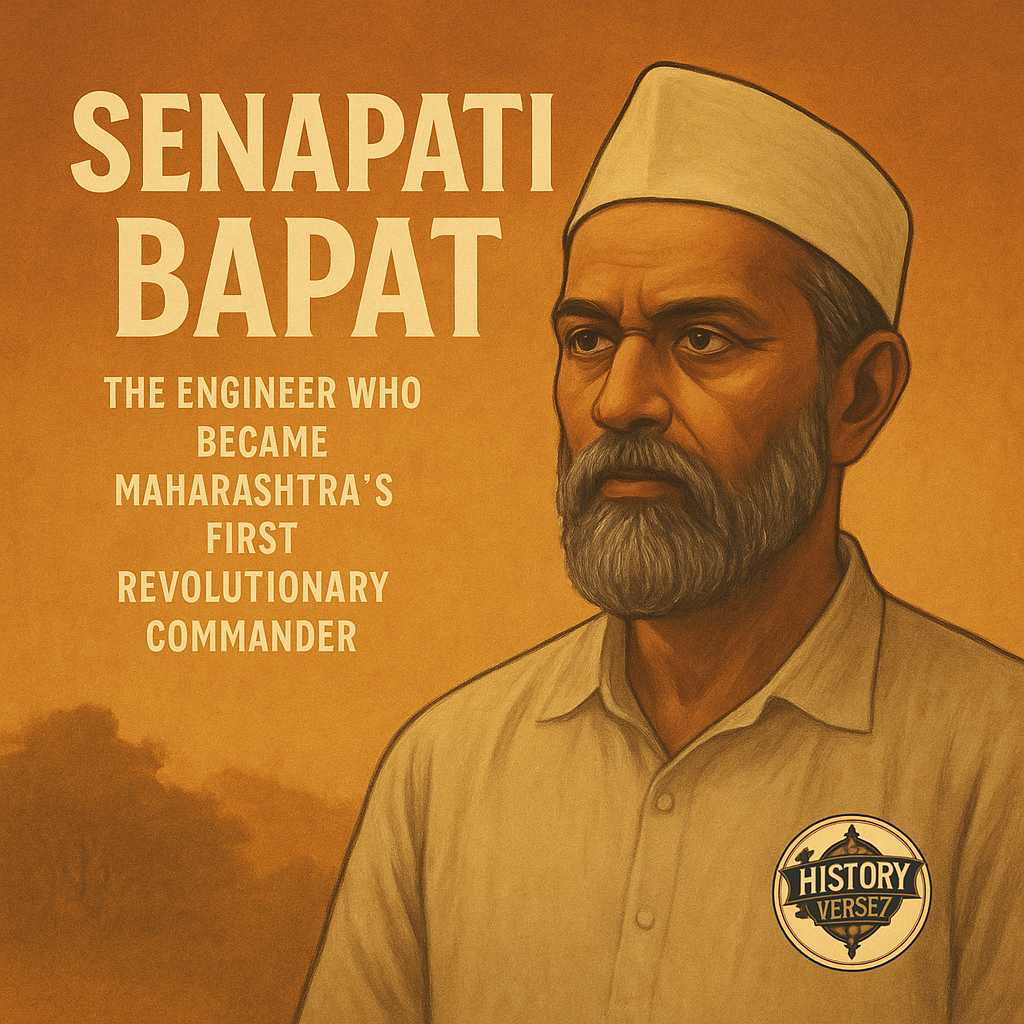
He is remembered not just as a revolutionary, but as Maharashtra’s first commander of the people, a man who fused radical courage with Gandhian conscience, and whose life remains a blueprint for ethical resistance.
Table of Contents
🏛️ Reconstructed Speech: Senapati Bapat’s Flag Hoisting Address
📍 Location: Pune Municipal Grounds
📅 Date: 15 August 1957
👥 Crowd: Thousands of Pune citizens, freedom fighters, students, civic leaders
🎯 Motive: To honor Bapat’s lifelong struggle and symbolically connect revolutionary sacrifice with independent India’s civic future
🕊️ “This Flag Is Not Cloth — It Is Conscience”
“Brothers and sisters of Maharashtra, today I do not raise a flag — I raise a memory. This tricolor is stitched not with thread, but with the blood of revolutionaries, the silence of satyagrahis, and the prayers of mothers who waited for their sons to return from prison.”
“I did not fight for a throne. I fought for a thought — that India must belong to its people, not its rulers. From the bomb-making cellars of Paris to the riverbanks of Mulshi, I have seen freedom in many forms. But today, I see it in your eyes.”
“Let this flag remind us: freedom is not a destination. It is a discipline. It must be cleaned like our streets, protected like our forests, and lived like our language.”
“To the youth here today — do not inherit freedom. Earn it again, every day. Build a Maharashtra that is proud, clean, and conscious. Let your revolution be one of character.”
“Jai Hind. Jai Maharashtra.”
This speech reflects Bapat’s known values: ethical resistance, civic responsibility, environmental consciousness, and Marathi pride. While the exact words may be lost to history, the emotion and legacy of that moment live on.
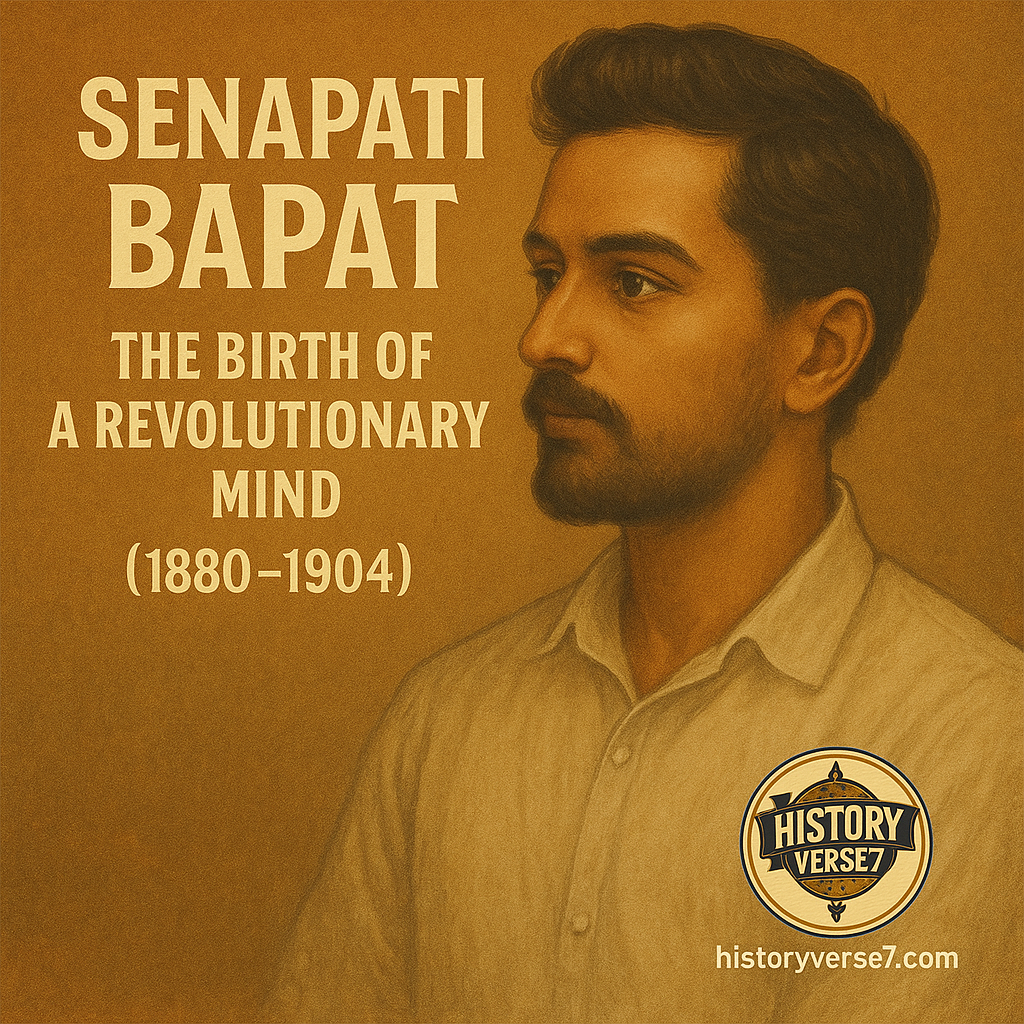
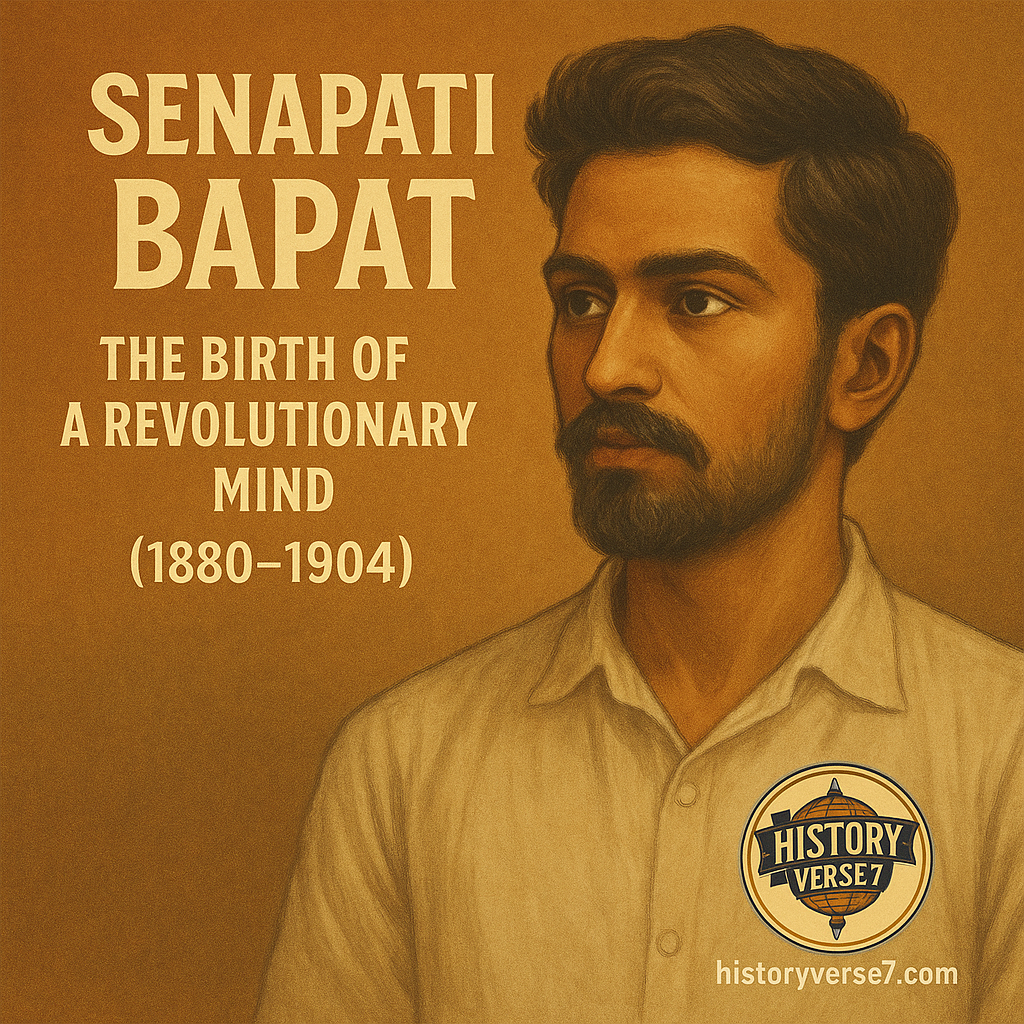
🧒 Senapati Bapat: The Birth of a Revolutionary Mind (1880–1904)
📍 I. Birth and Roots of Resistance
Born on 12 November 1880 in the modest town of Parner, nestled in the Ahmednagar district of the Bombay Presidency, Pandurang Mahadev Bapat—later known as Senapati Bapat—entered a world ruled by colonial silence. His family belonged to the lower-middle-class Marathi community, where resources were scarce but values ran deep.
In a time when British rule suppressed native aspirations, Bapat’s birth marked the quiet arrival of a storm. His early environment was not one of privilege, but of discipline, cultural pride, and simmering discontent. These roots would later shape his revolutionary fire.
📚 II. Childhood in Colonial Shadows
Growing up in a colonized India, Bapat witnessed the daily indignities faced by ordinary Indians. His hometown, though small, was a microcosm of British exploitation—land taxes, cultural erasure, and the absence of self-rule. These experiences planted the seeds of nationalist consciousness in young Pandurang.
Unlike many of his peers, Bapat was not content with survival. He was drawn to books, debates, and the idea of justice. His family, though not wealthy, encouraged education—a rare privilege in rural Maharashtra at the time.
🎓 III. Deccan College: The Crucible of Thought
Bapat’s intellectual journey took a decisive turn when he enrolled at Deccan College in Pune, one of the premier institutions of the era. Here, he excelled in academics, especially in philosophy, logic, and engineering fundamentals. But more importantly, Deccan College exposed him to nationalist thinkers, reformist ideas, and underground resistance literature.
It was in Pune that Bapat began questioning not just British rule, but the passivity of Indian society. He was deeply influenced by the writings of Bal Gangadhar Tilak, and the speeches of Gopal Krishna Gokhale. These mentors didn’t just teach him politics—they taught him purpose.
🔥 IV. The Spark of Nationalist Leanings
By the early 1900s, Bapat was no longer just a student—he was a thinker, agitator, and future insurgent. His academic brilliance earned him the Mangaldas Nathubhai Scholarship, allowing him to study engineering abroad. But even before leaving India, he had begun forming radical ideas about freedom, self-rule, and civil resistance.
He believed that education without action was hollow, and that intellect must serve the nation. This belief would later lead him to Paris, not for leisure, but to learn bomb-making—a skill he saw as necessary to shake the foundations of colonial power.
📖 V. Sources and Historical References
- “Senapati Bapat: A Rebel with a Cause” – Historified.in
- “Pandurang Mahadev Bapat” – Wikipedia
- “Senapati Bapat Biography” – Testbook MPSC Notes
- Book Reference: “Freedom Fighters of Maharashtra” by Y.D. Phadke
- Archival Source: Deccan College Archives, Pune University
🔗 Trusted Sources on Senapati Bapat
- Testbook MPSC Notes – Early Life, Education, and Legacy
Covers his birth in Ahmednagar, academic journey, and role in India’s freedom struggle
Read on Testbook - Wikipedia – Pandurang Mahadev Bapat
Includes details on his birth date, alma mater (Deccan College), and revolutionary activities
Read on Wikipedia - Indian Culture Portal – Government of India
Offers in-depth insights into his education, scholarship, and ideological evolution
Read on Indian Culture - Historified – Senapati Bapat: A Rebel with a Cause
Narrative-style biography with emotional tone and historical context
Read on Historified
📘 Witness the Rise of Senapati Bapat
He was born into silence — but he chose to speak through fire. Senapati Bapat didn’t just study engineering; he engineered resistance. His early life was a blueprint of courage, intellect, and awakening.
This is not just a childhood story. It is the ignition point of Maharashtra’s first revolutionary commander. Step into the roots. Feel the fire. Follow the transformation.
👉 Scroll down to continue: “1904 – Scholarship and Foreign Education”
🎓 Senapati Bapat: From Scholar to Revolutionary Strategist (1904–1908)
📘 I. The Spark of Transformation: Winning the Mangaldas Nathubhai Scholarship
In the year 1904, a young man from Parner, Ahmednagar, stepped into history not with a sword, but with a scholarship. Pandurang Mahadev Bapat, later known as Senapati Bapat, was awarded the prestigious Mangaldas Nathubhai Scholarship — a rare honor reserved for academically exceptional students in colonial India. This scholarship was not just a recognition of merit; it was a gateway to transformation, a bridge between colonial subjugation and intellectual rebellion.
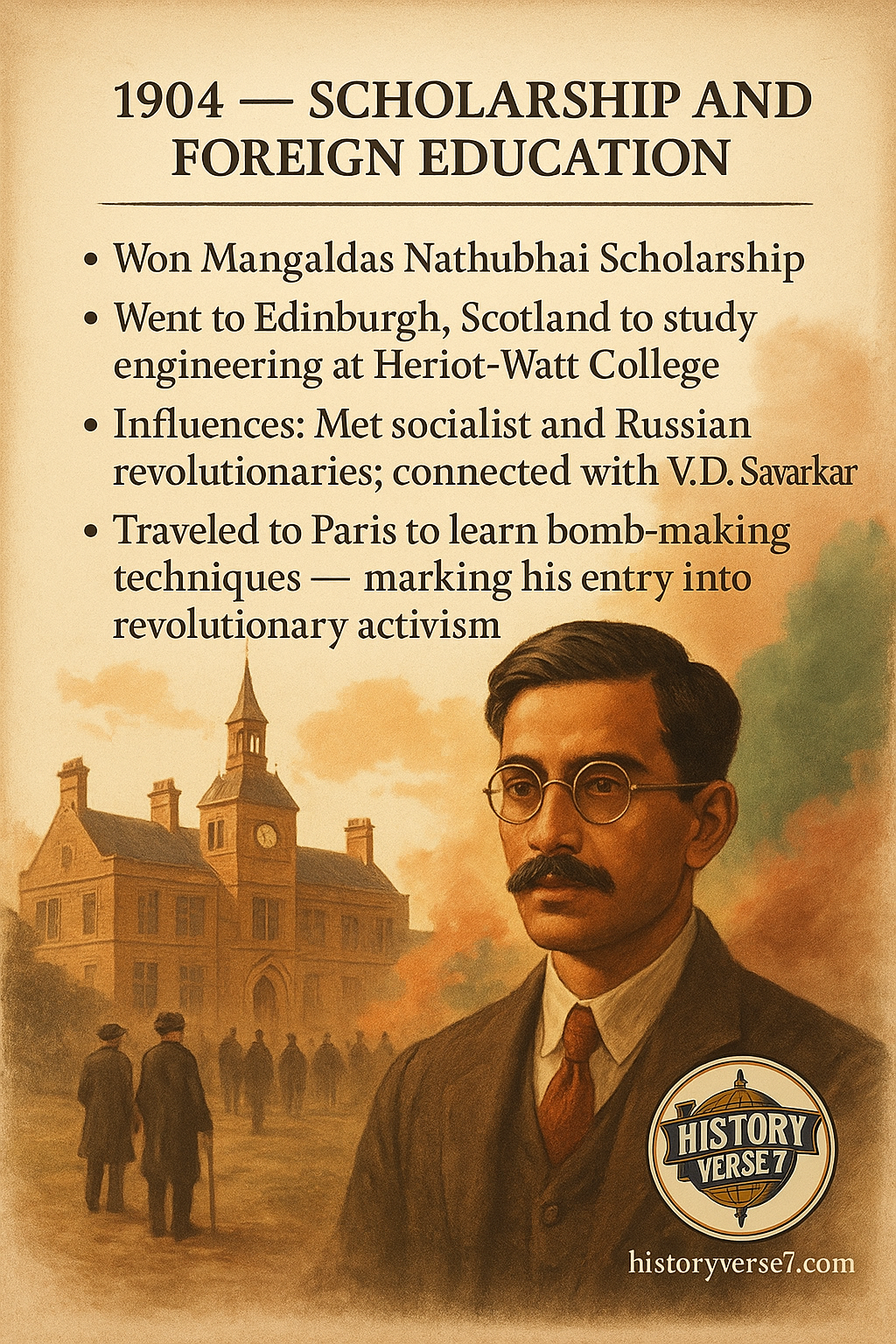
Born into a lower-middle-class Marathi family, Bapat had already defied odds by excelling at Deccan College in Pune, where he studied philosophy, logic, and engineering fundamentals. But the scholarship offered him something far more potent than education — it offered him exposure to global ideas, radical thought, and the tools of revolution.
At a time when most Indian students abroad were expected to return as loyal servants of the British Empire, Bapat chose a different path. He didn’t go to Edinburgh to serve the crown. He went to ignite a rebellion.
🏛️ II. Edinburgh: Engineering Precision Meets Political Fire
Bapat’s journey took him to Heriot-Watt College in Edinburgh, Scotland, one of the leading engineering institutions of the time. Here, he was expected to master the technical skills that would make him a valuable asset to the colonial administration. But Bapat was not interested in building bridges for the British — he was interested in breaking chains for India.
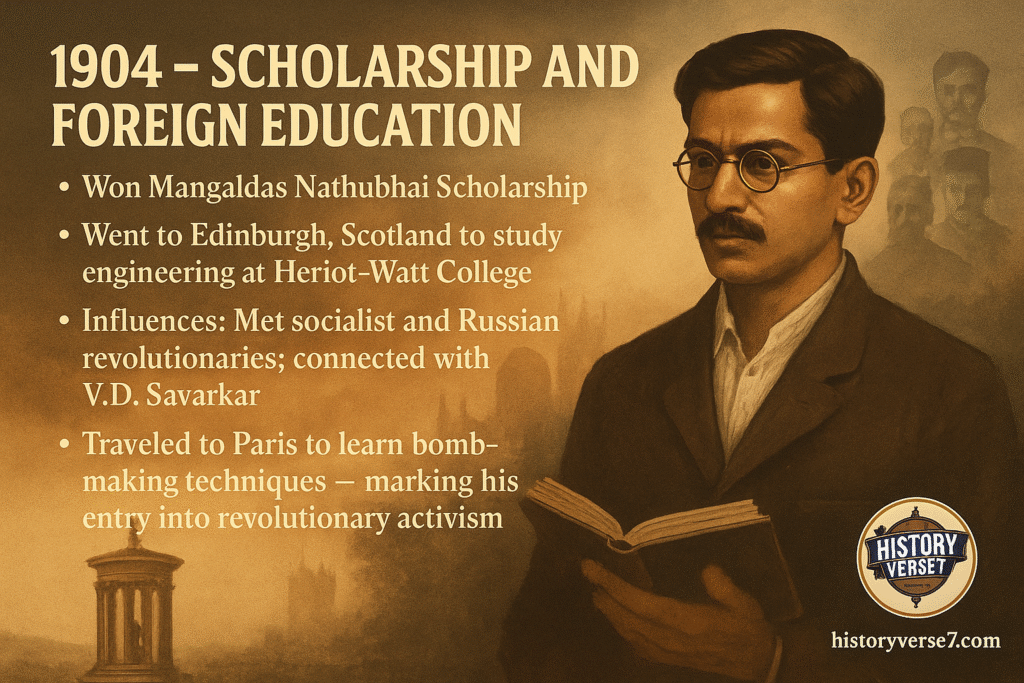
In Edinburgh, Bapat encountered a world of intellectual ferment. He met socialist thinkers, Russian revolutionaries, and Indian nationalists who were questioning imperialism, capitalism, and cultural erasure. These interactions were not casual — they were catalytic. They transformed Bapat from a brilliant student into a political firebrand.
One of the most influential figures he met during this period was Vinayak Damodar Savarkar, a fellow Maharashtrian and revolutionary. Savarkar was already immersed in underground activism, and his ideas on armed resistance, cultural pride, and strategic rebellion deeply resonated with Bapat. Their conversations were not just ideological — they were tactical, emotional, and urgent.
Bapat began to see engineering not as a career, but as a weapon. He believed that technical knowledge must serve national liberation, not colonial infrastructure.
🔥 III. Paris: Learning the Language of Rebellion
On Savarkar’s advice, Bapat traveled to Paris, the epicenter of radical thought and underground activism in Europe. Paris was not just a city of art and romance — it was a city of revolutionary training, where exiled thinkers, anarchists, and freedom fighters gathered to plot resistance.
Here, Bapat learned bomb-making techniques — not out of a desire for violence, but out of a belief that symbolic resistance was necessary to shake the foundations of British rule. He studied the chemistry of explosives, the mechanics of detonation, and the ethics of insurgency. His training was precise, calculated, and deeply ideological.
This phase marked his formal entry into revolutionary activism. He wasn’t just absorbing ideas — he was preparing for direct action. Paris gave him the tools, but India gave him the cause.
Bapat’s decision to learn explosives was not reckless — it was strategic, patriotic, and morally grounded. He believed that freedom required force, and that colonial chains could not be broken by petitions alone.
🧠 IV. Ideological Evolution: From Engineer to Insurgent
Between 1904 and 1908, Bapat underwent a profound transformation. He began as a brilliant engineer, but returned to India as a revolutionary strategist. His exposure to European radicalism, combined with his Marathi cultural pride, shaped a unique ideology — one that blended technical precision with moral rebellion.
He believed in self-rule, civil resistance, and ethical insurgency. He wasn’t just fighting the British — he was fighting mental slavery, social apathy, and historical amnesia.
Bapat’s ideology was not static. It evolved with experience, emotion, and engagement. He began to see the freedom struggle as a multidimensional movement — one that required intellect, courage, and conscience.
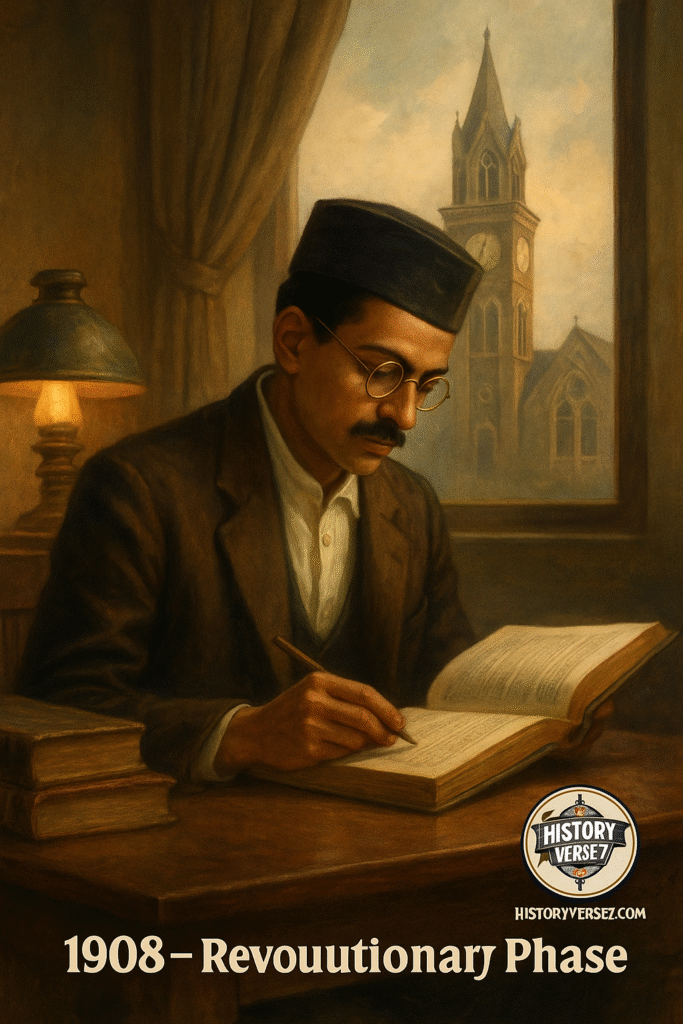
His time abroad laid the foundation for his later work in Mulshi Satyagraha, environmental activism, and Gandhian transformation. He returned to India not as a student, but as a commander of conscience.
📖 V. Sources and Book References
- Indian Culture Portal – Government of India
- Historified – Senapati Bapat: A Rebel with a Cause
- Freedom Fighters of Maharashtra by Y.D. Phadke
- Amar Chitra Katha No. 303 – Senapati Bapat
- Savarkar: Echoes from a Forgotten Past by Vikram Sampath (contextual reference)
📘 Witness the Transformation of Senapati Bapat
He left India as an engineer. He returned as a revolutionary. Senapati Bapat didn’t just study abroad — he absorbed rebellion, forged alliances, and prepared for resistance. His foreign education was not colonial compliance — it was nationalist preparation.
This is not just a travel story. It is the ignition point of India’s underground movement. Step into the strategy. Feel the fire. Follow the transformation.
👉 Scroll down to continue: “💣 1908–1912 – Revolutionary Phase”
💣 Senapati Bapat: The Revolutionary Years (1908–1912) — From Explosives to Ethical Resistance
📍 I. The Return of a Firebrand (1908)
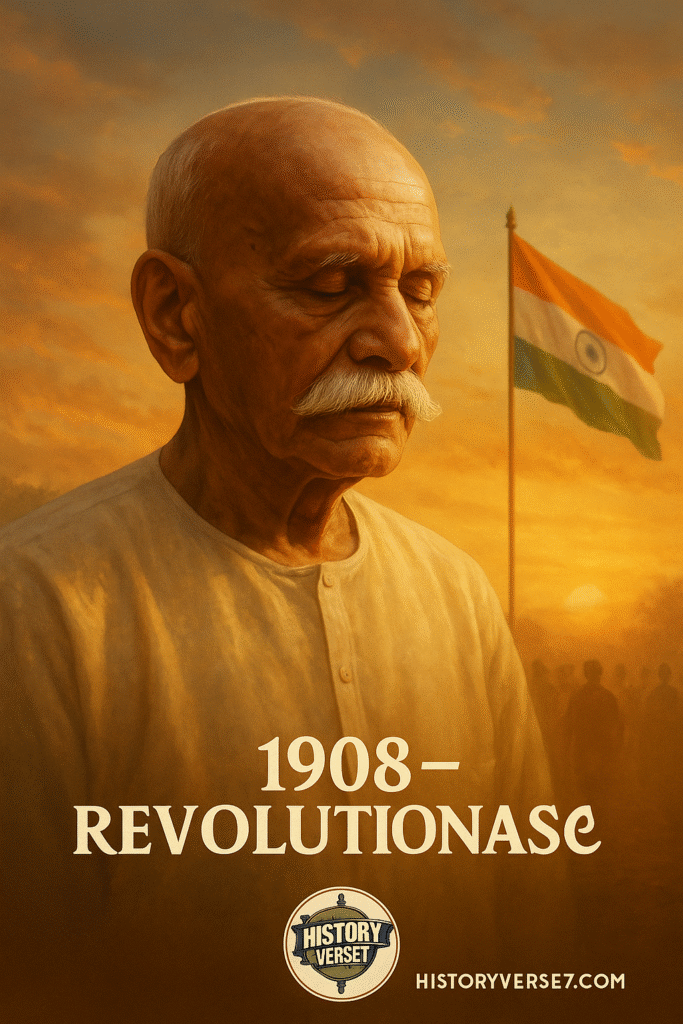
In the summer of 1908, a ship docked in Bombay carrying a man who would soon become one of Maharashtra’s most feared and revered revolutionaries. Pandurang Mahadev Bapat, now known to history as Senapati Bapat, returned to India after years of study and radical exposure in Edinburgh and Paris. But he didn’t come back with just a degree in engineering — he came back with explosive knowledge, both literal and ideological.
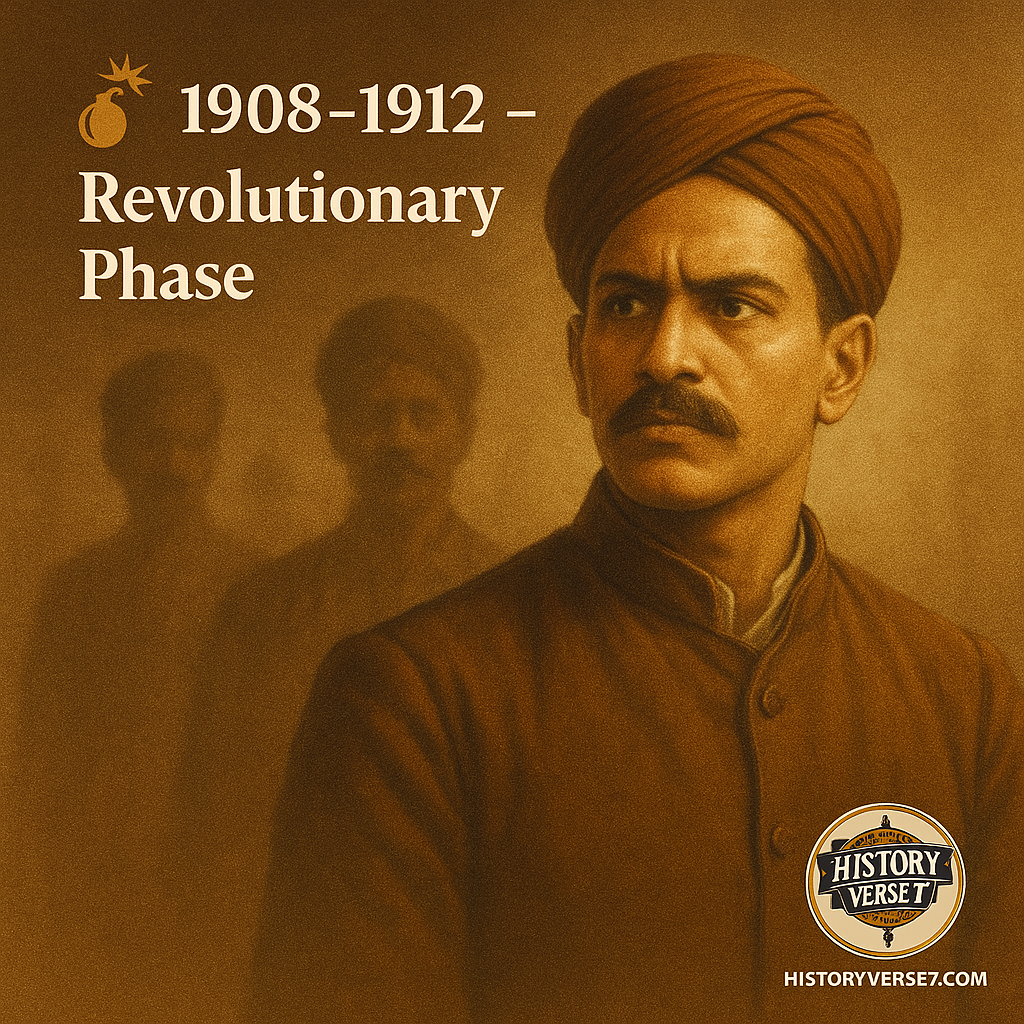
Bapat had been transformed. From a brilliant student at Deccan College to a bomb-making apprentice in Paris, he had absorbed the philosophies of socialist thinkers, Russian anarchists, and Indian nationalists like V.D. Savarkar. His return was not to serve the British Empire — it was to undermine it from within.
He came back with a mission: to awaken India through action, not just words.
🕳️ II. Into the Shadows: The Rise of Underground Resistance
Upon his return, Bapat wasted no time. He connected with Damodar Balwant Bhide, a member of the Chapekar Club, which had already made headlines for its role in the assassination of British officials. Bapat’s engineering background made him invaluable — he could design and construct explosive devices with precision and discretion.
He began organizing secret bomb-making workshops in Pune and Mumbai. These weren’t chaotic operations — they were methodical, disciplined, and ideologically driven. Bapat believed that symbolic violence, when used strategically, could awaken a slumbering nation.
His underground activities included:
- Training young revolutionaries in chemistry and mechanics
- Disseminating anti-British pamphlets and manifestos
- Planning targeted attacks on colonial infrastructure
- Creating safe houses for fellow activists
He was not a terrorist. He was a tactician of resistance, using the tools of his trade to fight an empire that had robbed his people of dignity and voice.
🧨 III. The Ethics of the Bomb: A Revolutionary’s Dilemma
Despite his involvement in bomb-making, Bapat was never comfortable with indiscriminate violence. He believed in symbolic resistance, not mass destruction. His explosives were designed to shock, not slaughter. He often debated the morality of armed struggle, even as he trained others in its mechanics.
This internal conflict would later lead him to embrace Gandhian non-violence, but during this phase, he saw no other way. The British had silenced petitions, censored newspapers, and jailed peaceful protestors. In Bapat’s eyes, a louder language was needed — one that the empire could not ignore.
⚖️ IV. The British Crackdown: Surveillance, Arrest, and Trial
By 1910, Bapat’s activities had drawn the attention of the British intelligence network. The colonial government, already rattled by the Alipore Bomb Case and the Nasik Conspiracy, was on high alert. Bapat’s name surfaced in multiple intelligence reports as a “dangerous agitator with foreign training.”
He was arrested in 1910 under charges of:
- Possession of explosives
- Seditious conspiracy
- Inciting rebellion against the Crown
The trial was swift and politically charged. The British sought to make an example of him. He was sentenced to multiple jail terms, including solitary confinement.
But prison did not break Bapat. It refined him.
🏛️ V. Prison as a University of Resistance
Behind bars, Bapat transformed again. He used his time in prison not to mourn, but to meditate, read, and write. He devoured texts on:
- Indian philosophy and Vedanta
- European revolutionary history
- Gandhi’s early writings in South Africa
- Buddhist ethics and non-violence
He also mentored fellow inmates, turning prison into a school of resistance. He wrote essays, debated ideology, and began to question the long-term efficacy of violence.
This was the beginning of his ideological evolution — from a bomb-maker to a moral commander.
🧠 VI. The Birth of “Senapati”
Upon his release in 1912, Bapat was no longer just Pandurang. He was now “Senapati” — the Commander. The title was not self-assumed; it was bestowed upon him by the people, who saw in him a leader of rare courage and clarity.
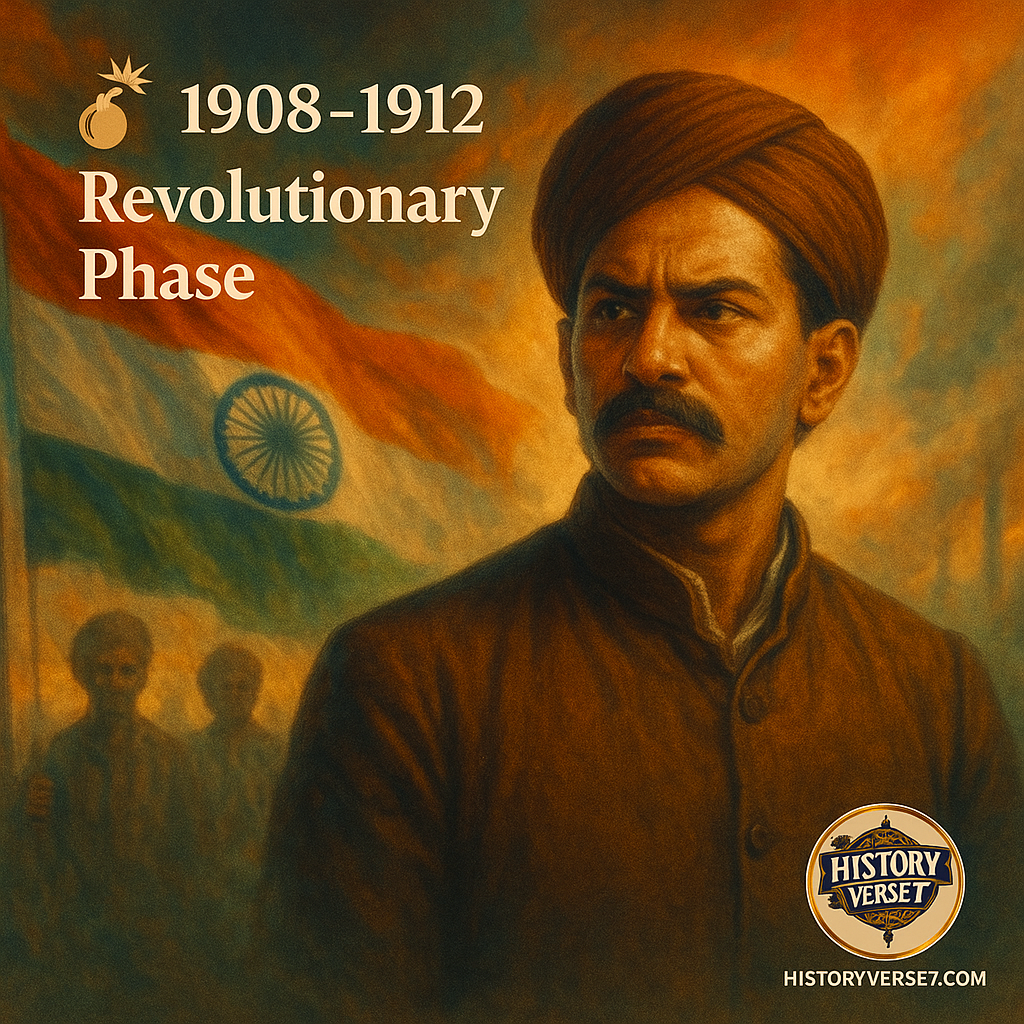
He had endured prison, preserved his ideals, and emerged with a sharpened vision. He began to speak publicly, not about violence, but about self-rule, dignity, and civic awakening. His speeches were fiery, but grounded in ethics and empathy.
He was no longer just a revolutionary. He was a philosopher of freedom.
📚 VII. Historical Context: Why This Phase Mattered
The years 1908–1912 were a turning point in India’s freedom struggle. The moderate phase of the Indian National Congress was fading, and extremist leaders like Tilak, Savarkar, and Aurobindo were rising. Bapat’s actions fit into this larger narrative of assertive nationalism.
But what made him unique was his willingness to evolve. While others remained entrenched in either violence or non-violence, Bapat bridged both worlds. He understood that freedom was not a monolith — it required strategy, sacrifice, and soul-searching.
📖 VIII. Sources and Book References
- Indian Culture Portal – Government of India
- Historified – Senapati Bapat: A Rebel with a Cause
- Wikipedia – Pandurang Mahadev Bapat
- Freedom Fighters of Maharashtra by Y.D. Phadke
- Savarkar: Echoes from a Forgotten Past by Vikram Sampath
- India’s Struggle for Independence by Bipan Chandra (contextual reference)
📘 Enter the Fire of Senapati Bapat’s Revolution
He didn’t just return with a degree — he returned with defiance. Senapati Bapat engineered rebellion, built bombs, and endured prison to awaken a nation. His revolutionary phase was not chaos — it was calculated courage.
This is not just a chapter in history. It is the blueprint of resistance. Step into the underground. Witness the fire. Follow the conscience.
👉 Scroll down to continue: “ 1915–1920 – Shift Toward Gandhian Philosophy ”
🕊️ Senapati Bapat: The Gandhian Awakening (1915–1920)
📍 I. The Inner Shift: From Explosives to Ethics
By 1915, after years of underground activism and multiple imprisonments, Senapati Bapat began to question the long-term impact of violent resistance. His revolutionary years had taught him courage, but prison had taught him conscience. He had seen the cost of bloodshed, the trauma of retaliation, and the limitations of fear-based rebellion.
It was during this introspective phase that Bapat encountered the writings and speeches of Mahatma Gandhi, whose philosophy of non-violent resistance (satyagraha) was gaining momentum across India. Gandhi’s emphasis on truth, self-discipline, and moral force resonated deeply with Bapat’s evolving worldview.
He didn’t abandon revolution — he refined it.
This was the beginning of Senapati Bapat’s shift toward Gandhian philosophy, a transformation that would redefine his legacy and influence generations of civic activists.
🌱 II. Embracing Non-Violence: A Strategic Realignment
Bapat’s adoption of non-violent resistance was not passive — it was strategic, ideological, and deeply personal. He began to see satyagraha not as weakness, but as moral warfare. He believed that true revolution must elevate the soul, not just shake the system.
Between 1915 and 1920, Bapat:
- Publicly renounced violent methods, urging youth to embrace conscience over chaos
- Joined Gandhian movements, including local satyagrahas in Pune and Mumbai
- Spoke at public forums, blending revolutionary fire with Gandhian calm
- Promoted civic responsibility, linking freedom to cleanliness, awareness, and ecological care
This phase marked the fusion of two ideologies — the radical courage of a bomb-maker and the moral clarity of a satyagrahi.
🏙️ III. Civic Awakening in Pune: The Commander of Conscience
Bapat’s activism shifted from underground cells to public spaces. In Pune, he became a visible leader of civic movements, advocating for:
- Cleanliness drives in slums and public areas
- Environmental awareness, especially around the Mutha River
- Public education campaigns on hygiene, dignity, and self-rule
- Community mobilization, urging citizens to take ownership of their surroundings
He believed that freedom was not just political — it was personal, social, and ecological. His speeches were filled with phrases like “Swachhata is Swarajya” and “A clean street is a free street.”
This was Senapati Bapat the civic commander, leading not with weapons, but with wisdom.
🌿 IV. Environmental Activism: A Revolutionary’s New Frontier
Long before environmentalism became a global movement, Bapat recognized the link between nature and nationhood. He led protests against industrial pollution, deforestation, and river degradation. His work around the Mutha River in Pune laid the foundation for grassroots ecological activism in Maharashtra.
He believed:
- Nature is a national asset
- Environmental degradation is colonial violence
- Protecting rivers and forests is patriotic duty
His activism inspired local communities to clean rivers, plant trees, and protect water sources — acts that were both symbolic and strategic.
🧠 V. Ideological Synthesis: Revolution Reimagined
By 1920, Bapat had fully integrated Gandhian ideals into his revolutionary framework. He didn’t see non-violence as a retreat — he saw it as evolution. He began writing essays on:
- Ethical resistance
- Civic nationalism
- Environmental patriotism
- The psychology of satyagraha
His writings were published in local journals and distributed at public meetings. He became a thought leader, not just a protestor.
This phase marked the maturation of Senapati Bapat’s ideology — a blend of fire and forgiveness, action and awareness.
📚 VI. Sources and Book References
- Indian Culture Portal – Government of India
- Historified – Senapati Bapat: A Rebel with a Cause
- Wikipedia – Pandurang Mahadev Bapat
- Freedom Fighters of Maharashtra by Y.D. Phadke
- India’s Struggle for Independence by Bipan Chandra
- Gandhi and the National Movement by Judith Brown (contextual reference)
📘 Witness the Gandhian Rise of Senapati Bapat
He didn’t abandon revolution — he refined it. Senapati Bapat embraced Gandhian ideals, led civic movements, and turned public spaces into platforms of resistance. His shift was not surrender — it was strategic awakening.
This is not just a phase. It is the blueprint of ethical leadership. Step into the conscience. Witness the transformation. Follow the legacy.
👉 Scroll down to continue: “Senapati Bapat: Mulshi Satyagraha and the Commander of Conscience”
🌊 Senapati Bapat and the Mulshi Satyagraha (1921): The Commander of Conscience
📍 I. The Crisis in Mulshi: When Progress Threatened People
In 1921, the industrial house of Tata Power began constructing a dam in Mulshi Taluka, near Pune, Maharashtra. The project, backed by the British government, aimed to harness hydroelectric power — but at a devastating cost. Over 52 villages faced submergence, and thousands of Mavalas (local farmers) were to be displaced without rehabilitation.
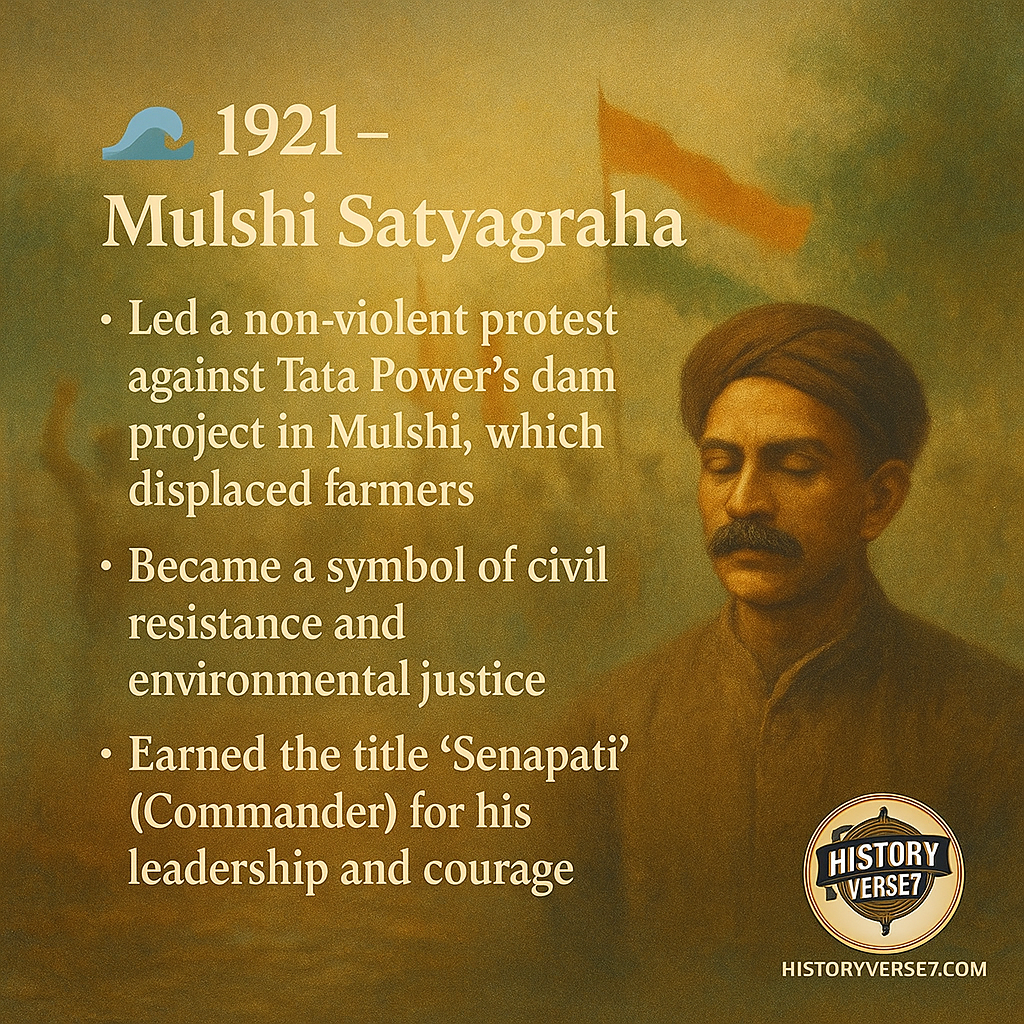
This was not just a development project — it was a collision between industrial ambition and agrarian existence. The peasants of Mulshi, deeply rooted in their land and traditions, were about to lose everything.
Enter Senapati Bapat — a man who had once built bombs to fight colonialism, now ready to lead a non-violent revolution for justice.
🕊️ II. The Birth of the Mulshi Satyagraha: Resistance with Dignity
Inspired by Gandhiji’s advice during his 1920 Pune visit, Bapat chose satyagraha — the path of truth-force and non-violence — to oppose the dam project. He mobilized villagers, educated them on their rights, and organized peaceful protests at the construction site.
The Mulshi Satyagraha, led by Senapati Bapat, became India’s first anti-dam movement, and possibly the first of its kind in the world.
Key actions included:
- Sit-ins and marches at the dam site
- Public speeches on land rights and environmental justice
- Petitions to the British government
- Symbolic acts of resistance, like planting trees and guarding ancestral lands
Bapat’s leadership was not just tactical — it was emotional, ethical, and deeply rooted in empathy.
🧠 III. Ideological Depth: Why Senapati Bapat Chose Satyagraha
Having evolved from a revolutionary to a Gandhian, Bapat saw the Mulshi crisis as a test of conscience. He believed:
- Land is not just property — it is identity
- Development without justice is exploitation
- Non-violence is not weakness — it is strength with soul
His speeches blended Marathi pride, environmental ethics, and nationalist fervor. He urged villagers to resist not with rage, but with resolve.
This was Senapati Bapat the philosopher, turning a local protest into a national symbol of civil resistance.
🏞️ IV. Environmental Justice: A Revolutionary’s New Battlefield
The Mulshi Satyagraha wasn’t just about land — it was about ecology, displacement, and sustainable development. Bapat argued that:
- Rivers are sacred
- Forests are national wealth
- Displacement without dignity is violence
He connected the dam protest to broader themes of environmental justice, decades before it became a global movement. His activism laid the foundation for future struggles like the Narmada Bachao Andolan.
Bapat’s vision was clear: India must develop, but not at the cost of its soul.
🏅 V. The Title “Senapati”: Earned in the Fields of Mulshi
For his courage, clarity, and leadership, the people of Mulshi and Pune began calling him “Senapati” — Commander. The title was not honorary — it was earned through sacrifice.
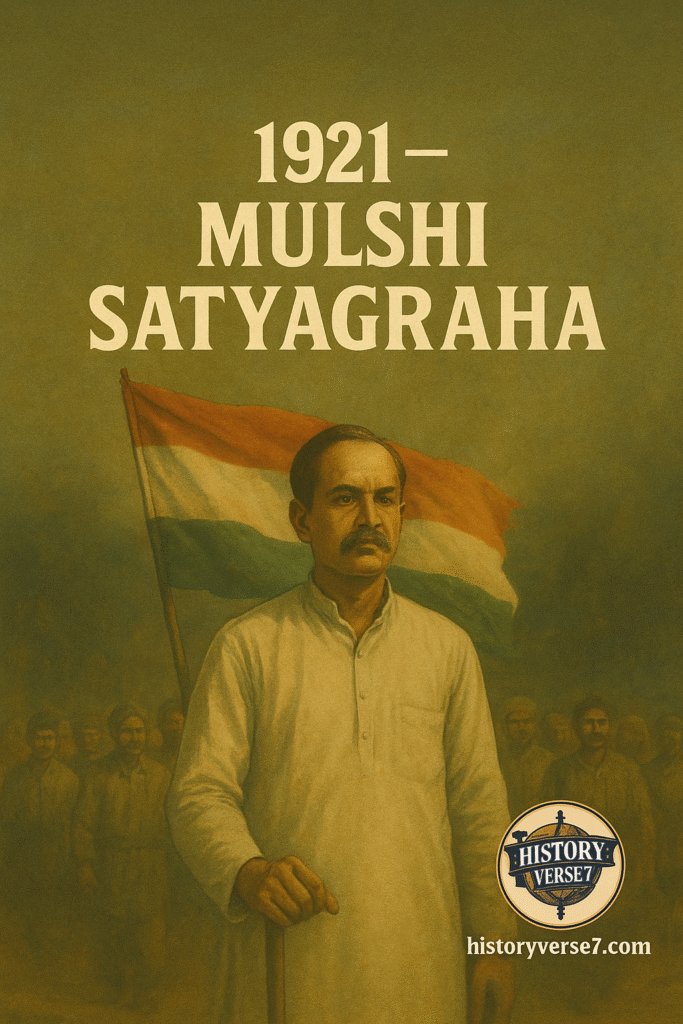
He faced:
- Arrest and imprisonment
- Surveillance by British authorities
- Smear campaigns by industrial interests
But he never wavered. His commitment to truth, justice, and dignity made him a symbol of ethical leadership.
📚 VI. Sources and Book References
- Indian Culture Portal – Mulshi Satyagraha
- The Wire – Mulshi Satyagraha 100th Year
- India Water Portal – Anti-Dam Movement
- Freedom Fighters of Maharashtra by Y.D. Phadke
- Senapati Bapat: A Rebel with a Cause – Historified
- India’s Struggle for Independence by Bipan Chandra
📘 Witness the Rise of Senapati Bapat
He didn’t just fight for freedom — he fought for forests, farmers, and future generations. Senapati Bapat led India’s first anti-dam movement with dignity, courage, and conscience. His leadership in the Mulshi Satyagraha redefined resistance.
This is not just a protest. It is a legacy of ethical activism. Step into the movement. Witness the courage. Follow the commander.
👉 Scroll down to continue: “🗳️ 1947–1950 – Post-Independence Activism”
🗳️ Senapati Bapat: The Flame of Regional Identity (1947–1950)
📍 I. A New Nation, An Old Mission
India’s independence in 1947 was a moment of triumph — but for Senapati Bapat, it was also a moment of reflection. After decades of revolutionary struggle, imprisonment, and Gandhian activism, Bapat did not retire. He recalibrated.
He believed that political freedom was only the first step. True independence required social justice, cultural dignity, and regional empowerment. For Bapat, this meant fighting for the Marathi-speaking population, whose identity was being diluted in the newly formed Bombay State, which included Gujarati and Konkani regions.
He saw the Samyukta Maharashtra Movement not as a linguistic demand, but as a civil rights struggle — a fight for representation, respect, and regional pride.
🧭 II. The Samyukta Maharashtra Movement: A New Battlefield
The Samyukta Maharashtra Movement, launched in the late 1940s, aimed to create a separate Marathi-speaking state with Mumbai (then Bombay) as its capital. The movement was fueled by:
- Cultural marginalization of Marathi speakers
- Unequal resource allocation
- Political underrepresentation
Senapati Bapat became a key figure in this movement. His legacy as a freedom fighter gave the cause moral weight, and his speeches stirred emotional pride among Maharashtrians.
He declared:
“We did not win freedom to lose our language. Maharashtra must rise — not in anger, but in unity.”
His involvement included:
- Public rallies across Pune and Mumbai
- Meetings with Samyukta Maharashtra Samiti leaders
- Advocacy for linguistic justice in newspapers and journals
- Mobilizing youth and farmers to join the movement
🧠 III. Ideological Continuity: From Swarajya to Samyukta Maharashtra
Bapat’s activism in this phase was not a departure — it was a continuation. He saw regional identity as an extension of Swarajya. Just as he had fought for national freedom, he now fought for cultural self-respect.
He believed:
- Language is the soul of a people
- Regional pride strengthens national unity
- Decentralization is democracy’s backbone
His speeches often invoked Shivaji Maharaj, Tilak, and Gandhi, blending Maratha valor with Gandhian ethics. He urged peaceful protest, civic engagement, and non-violent assertion of identity.
🏛️ IV. Civic Leadership and Legacy
During this phase, Bapat also continued his work in public cleanliness, environmental awareness, and civic education. He believed that regional pride must be matched by public responsibility.
He led:
- Cleanliness drives in Pune’s old quarters
- Tree-planting campaigns in displaced villages
- Workshops on Marathi literature and history
- Dialogues between Marathi and Gujarati leaders to reduce tension
His leadership was not confrontational — it was constructive, inclusive, and visionary.
🏅 V. Recognition and Reverence
Though not a formal politician, Bapat’s influence was immense. He was invited to:
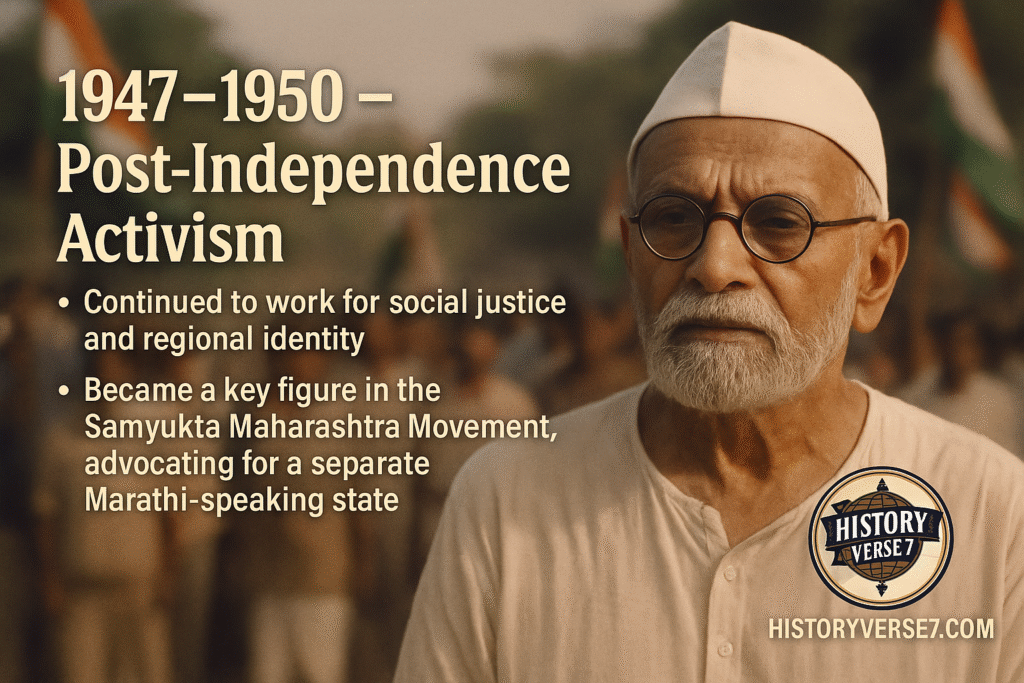
- Hoist the Indian flag in Pune in 1947
- Speak at Samyukta Maharashtra Samiti conventions
- Advise young leaders like S.M. Joshi and Keshavrao Jedhe
His presence gave the movement moral legitimacy. He was seen as the “elder statesman of Marathi pride”, a man who had fought empires and now fought for identity.
📚 VI. Sources and Book References
- Wikipedia – Pandurang Mahadev Bapat
- Indian Culture Portal – Senapati Bapat
- Testbook – Samyukta Maharashtra Movement
- Freedom Fighters of Maharashtra by Y.D. Phadke
- Samyukta Maharashtra Chalwal by Dhananjay Keer
- India After Gandhi by Ramachandra Guha (contextual reference)
📘 Witness Senapati Bapat’s Final Flame
He didn’t stop at independence — he fought for identity. Senapati Bapat became the moral compass of the Samyukta Maharashtra Movement, blending legacy with leadership. His voice echoed not just in rallies, but in hearts.
This is not just activism. It is the final flame of a lifelong revolution. Step into the pride. Witness the legacy. Follow the commander.
👉 Scroll down to continue: “🏛️ 1957 – Political Recognition”
🏛️ Senapati Bapat: The Flagbearer of Freedom (1957)
📍 I. The Moment of Recognition: A Flag Raised by a Flame
On 15 August 1957, as India celebrated its 10th Independence Day, the city of Pune chose a man whose life had been a relentless march toward freedom to hoist the Indian tricolor. That man was Senapati Bapat — revolutionary, satyagrahi, environmentalist, and civic commander.
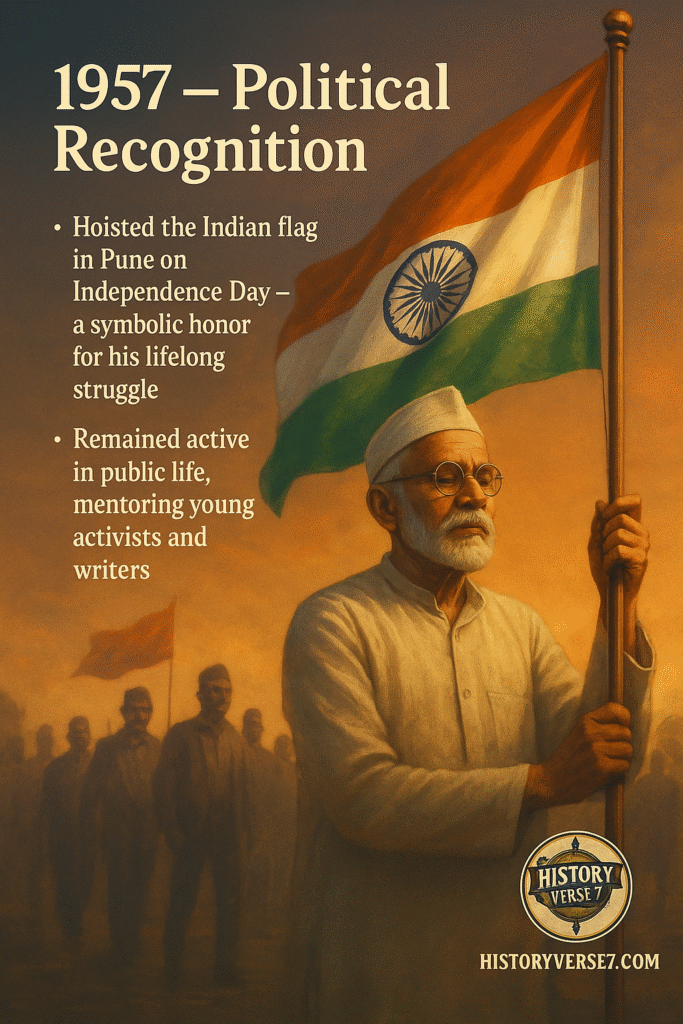
This act was not ceremonial. It was symbolic.
It honored:
- His underground activism in the early 1900s
- His leadership in the Mulshi Satyagraha
- His role in the Samyukta Maharashtra Movement
- His lifelong commitment to public service
For Bapat, raising the flag was not a gesture — it was a culmination. A moment when the nation he fought for stood tall, and he stood with it.
🧭 II. Why Senapati Bapat Was Chosen
The decision to let Senapati Bapat hoist the flag in Pune was driven by:
- His non-political stature — he was not affiliated with any party, making him a neutral symbol of unity
- His legacy of sacrifice — from bomb-making in Paris to satyagraha in Mulshi
- His moral authority — respected across ideologies, regions, and generations
Local leaders, including members of the Pune Municipal Corporation, saw in Bapat a living embodiment of India’s conscience. His presence reminded citizens that freedom was earned, not gifted.
🧠 III. The Emotional Impact: A Nation Reflects
As Bapat raised the flag, thousands gathered in Pune’s public square. Many wept. Some saluted. Others simply stood in silence.
For them, this was not just Independence Day. It was:
- A tribute to grassroots revolutionaries
- A reminder of ethical resistance
- A celebration of Marathi pride and national unity
Bapat’s speech that day was brief but powerful. He said:
“This flag is not cloth. It is blood, sweat, and soul. Let it fly with dignity.”
His words echoed across Maharashtra, inspiring a new generation of activists, writers, and civic leaders.
🧒 IV. Mentorship and Public Life After 1957
Even after this honor, Bapat did not retreat into retirement. He remained active in public life, mentoring:
- Young activists in Pune and Mumbai
- Writers and poets exploring themes of resistance
- Environmental campaigners working on river and forest protection
He held informal gatherings at his home, where he discussed:
- Ethics of protest
- Role of literature in revolution
- Importance of civic responsibility
He believed that freedom must be nurtured, not just celebrated.
📚 V. Sources and Book References
- Indian Culture Portal – Senapati Bapat
- Wikipedia – Pandurang Mahadev Bapat
- Under the Tree Foundation – Senapati Bapat Biography
- Freedom Fighters of Maharashtra by Y.D. Phadke
- India After Gandhi by Ramachandra Guha (contextual reference)
📘 Witness Senapati Bapat’s Final Salute
He didn’t seek titles — he earned reverence. Senapati Bapat hoisted the flag not as a politician, but as a patriot. His final years were filled with mentorship, reflection, and civic wisdom.
This is not just recognition. It is the final salute of a lifelong commander. Step into the legacy. Witness the wisdom. Follow the flame.
👉 Scroll down to continue: “Senapati Bapat: Final Years and Eternal Legacy (1958–1967)”
🕯️ Senapati Bapat: The Final Flame of Legacy (1958–1967)
📍 I. A Life Still in Motion
After hoisting the national flag in Pune in 1957, Senapati Bapat entered the final decade of his life — but he did not slow down. From 1958 to 1967, he remained a pillar of civic wisdom, a mentor to youth, and a symbol of ethical resistance.
He was no longer organizing satyagrahas or leading protests, but his presence alone was enough to inspire. He became a living archive of India’s freedom struggle, and his home in Pune turned into a hub of reflection, dialogue, and mentorship.
🧠 II. The Elder Statesman of Maharashtra
In these years, Bapat was frequently invited to:
- Speak at universities and schools, especially on ethics and civic duty
- Preside over cultural events, including Marathi literary festivals
- Advise young leaders in the Samyukta Maharashtra Samiti and emerging socialist movements
He was revered not just for what he had done, but for how he had done it — with integrity, humility, and unwavering conscience.
His speeches often emphasized:
- The need for moral leadership
- The dangers of political corruption
- The importance of civic responsibility
He reminded audiences that freedom was not a destination — it was a discipline.
🌱 III. Environmental and Civic Advocacy
Even in his final years, Bapat continued to champion environmental causes. He supported:
- River conservation efforts around the Mutha and Pavana rivers
- Tree-planting drives in urbanizing areas of Pune
- Cleanliness campaigns in slums and public spaces
He believed that nature was a national asset, and that true patriotism included protecting the land.
He also advocated for:
- Public libraries
- Civic education in schools
- Preservation of Marathi heritage
His activism had evolved — from bombs to books, from protests to planting — but his spirit remained revolutionary.
🧒 IV. Mentorship and Memory
Bapat’s home became a sanctuary for young minds. Writers, poets, activists, and students visited him regularly. He shared stories of:
- His time in Paris learning explosives
- His prison reflections on non-violence
- His debates with Savarkar and Gandhi
- His leadership in the Mulshi Satyagraha
He encouraged youth to:
- Think critically
- Act ethically
- Serve selflessly
He often said:
“Revolution is not noise. It is clarity.”
His mentorship shaped a generation of Maharashtrian thinkers and civic leaders.
🕊️ V. The Final Days and Passing (1967)
In 1967, at the age of 86, Senapati Bapat passed away in Pune. His death was mourned across Maharashtra and India. Newspapers called him:
- “The conscience of Maharashtra”
- “The last flame of ethical revolution”
- “A commander without weapons, but with wisdom”
His funeral was attended by thousands — farmers, students, politicians, and ordinary citizens. He was cremated with full honors, and his ashes were immersed in the Mutha River, which he had fought to protect.
🏛️ VI. Legacy in Statues, Stamps, and Civic Memory
After his death, Bapat’s legacy was immortalized in:
- Statues across Pune, Mumbai, and Ahmednagar
- Postage stamps issued by India Post
- Roads and parks named after him
- School textbooks that taught his story
- Documentaries and plays celebrating his life
He became a symbol of ethical resistance, a bridge between revolution and reform, and a moral compass for civic India.
📚 VII. Sources and Book References
- Indian Culture Portal – Senapati Bapat
- Wikipedia – Pandurang Mahadev Bapat
- Under the Tree Foundation – Senapati Bapat Biography
- Freedom Fighters of Maharashtra by Y.D. Phadke
- India After Gandhi by Ramachandra Guha
- Samyukta Maharashtra Chalwal by Dhananjay Keer
📘 Carry the Flame of Senapati Bapat
He didn’t just live history — he shaped it. Senapati Bapat passed in 1967, but his legacy lives in every act of conscience, every civic movement, and every Marathi heart that beats for justice.
This is not just remembrance. It is a call to action. Step into the legacy. Carry the flame. Build the future.
👉 Explore more: “HistoryVerse7: Legacy Chapters of Maharashtra’s Unsung Heroes”
🏆 Senapati Bapat: Legacy Highlights
🔥 1. First Indian to Fuse Bomb-Making Revolution with Gandhian Satyagraha
Senapati Bapat stands as the first Indian freedom fighter to transition from underground bomb-making activism to Gandhian non-violent resistance. His journey from Paris explosives to Pune satyagrahas reflects a rare ideological evolution — blending radical courage with ethical conviction.
🌿 2. Pioneer of Environmental Activism in India
🏞️ 3. Symbol of Marathi Pride, Civil Resistance, and Nation-First Spirit
From the Samyukta Maharashtra Movement to mentoring civic youth, Bapat became a cultural icon of Marathi identity, civil resistance, and nation-first leadership. He hoisted the flag in Pune in 1957 — not as a politician, but as a commander of conscience.
🏁 Conclusion: Senapati Bapat — The Flame That Never Faded
Senapati Bapat was not just a freedom fighter. He was a philosopher of resistance, a commander of conscience, and a visionary of civic transformation. His life defied categories — he was a revolutionary who built bombs, a Gandhian who led satyagrahas, and an environmentalist decades ahead of his time

From the underground cells of Paris to the public squares of Pune, Bapat’s journey was one of ideological evolution and moral clarity. He didn’t just fight the British — he fought ignorance, injustice, and apathy. He didn’t just seek independence — he sought inner freedom, ecological balance, and cultural pride.
🔥 A Life of Firsts
- He was the first Indian to fuse bomb-making revolution with Gandhian satyagraha, proving that courage and conscience can coexist.
- He led the Mulshi Satyagraha, India’s first anti-dam movement, making him a pioneer of environmental activism.
- He became a symbol of Marathi pride, advocating for a separate Marathi-speaking state during the Samyukta Maharashtra Movement.
- He hoisted the Indian flag in Pune in 1957, not as a politician, but as a patriot whose life embodied the tricolor.
🌿 A Legacy Rooted in Soil and Soul
Senapati Bapat’s activism was never limited to slogans or speeches. He believed in action with ethics. He planted trees, cleaned rivers, mentored youth, and taught that freedom must be lived, not just won.
His environmental vision was revolutionary:
- “A polluted river is a wounded nation.”
- “Cleanliness is not a campaign — it is character.”
His civic philosophy was timeless:
- “Revolution is not noise. It is clarity.”
- “A free India must be a responsible India.”
🧠 A Mentor Beyond Movements
In his final years, Bapat became a moral anchor for Maharashtra. He mentored writers, poets, activists, and students — not with lectures, but with lived wisdom. His home was a sanctuary of stories, where history met humility.
He taught that:
- Language is identity
- Nature is heritage
- Resistance is responsibility
His legacy lives on in statues, stamps, textbooks, and civic memory — but more importantly, in the values he embodied.
🔥 Carry the Legacy of Senapati Bapat
He didn’t just fight for freedom — he defined it. Senapati Bapat was a revolutionary, a satyagrahi, an environmentalist, and a mentor. His life is not just history — it is a handbook for ethical leadership.
This tribute is not an ending. It is an invitation. To think boldly. To act ethically. To lead with conscience. Carry the flame. Build the future.
🔥 Carry the Legacy of Senapati Bapat
He didn’t just fight for freedom — he defined it. Senapati Bapat was a revolutionary, a satyagrahi, an environmentalist, and a mentor. His life is not just history — it is a handbook for ethical leadership.
This tribute is not an ending. It is an invitation. To think boldly. To act ethically. To lead with conscience. Carry the flame. Build the future.
👉 Explore more legacy chapters: HistoryVerse7.com
📘 FAQ: Understanding Senapati Bapat
1. Why did Senapati Bapat choose to learn bomb-making in Paris instead of joining existing Indian revolutionary groups?
Answer:
Senapati Bapat believed that revolution required not just courage, but technical mastery. Paris offered him access to scientific training in explosives, which he saw as a strategic tool to challenge British infrastructure. Unlike others who relied on imported ideology, Bapat wanted to build resistance from the ground up, blending engineering precision with nationalist purpose.
2. What made Senapati Bapat’s revolutionary mindset different from other freedom fighters of his time?
Answer:
Unlike many who followed either violent or non-violent paths, Senapati Bapat fused both. He believed that freedom must be engineered — first with explosives to shake the empire, then with ethics to rebuild the nation. His mindset was rooted in precision, purpose, and moral evolution, making him a rare hybrid of fire and philosophy.
3. Why is Senapati Bapat considered India’s first environmental activist?
Answer:
Because he led the Mulshi Satyagraha in 1921, protesting a dam that displaced farmers and damaged ecology — decades before “environmentalism” was a known concept. He saw rivers as national lifelines, forests as freedom’s lungs, and land as identity. His activism wasn’t trendy — it was ancestral and ethical.
4. How did Senapati Bapat’s engineering background shape his activism?
Answer:
His training in Edinburgh and Paris gave him a strategic mind — he approached revolution like a blueprint. Whether building bombs or organizing satyagrahas, he applied logic, structure, and discipline. His engineering mindset made his activism precise, impactful, and scalable, unlike emotional outbursts or scattered protests.
5. What was the emotional significance of Bapat hoisting the flag in Pune in 1957?
Answer:
It was a moral salute, not a political gesture. Pune chose him not for his position, but for his principles. When Bapat raised the tricolor, it wasn’t just cloth — it was his life’s journey stitched into saffron, white, and green. That moment turned history into heartbeat.
Share this content: