
🔥 Before You Read, Remember This:
He didn’t just fight a tiger—he became one. Bagha Jatin wasn’t a name. He was a roar. A strategist, a warrior, a martyr—whose silence shook empires and whose courage still fuels revolutions.
👉 If you believe bravery isn’t loud—it’s relentless… 👉 If you believe patriotism is built in sacrifice, not speeches… Then this story is for you.
Begin the Legacy →🐅 Introduction: Bagha Jatin — The Tiger Who Bled for Bharat
In the vast tapestry of India’s freedom struggle, some names blaze like fire. Bagha Jatin is one of them. Born as Jatindranath Mukherjee on December 7, 1879, in the Bengal Presidency (now in Bangladesh), he would go on to become a symbol of fearless resistance and strategic brilliance. But Bagha Jatin’s legacy is not just about battles—it’s about belief. It’s about a man who didn’t wait for history to remember him. He lived in a way that history could never forget.
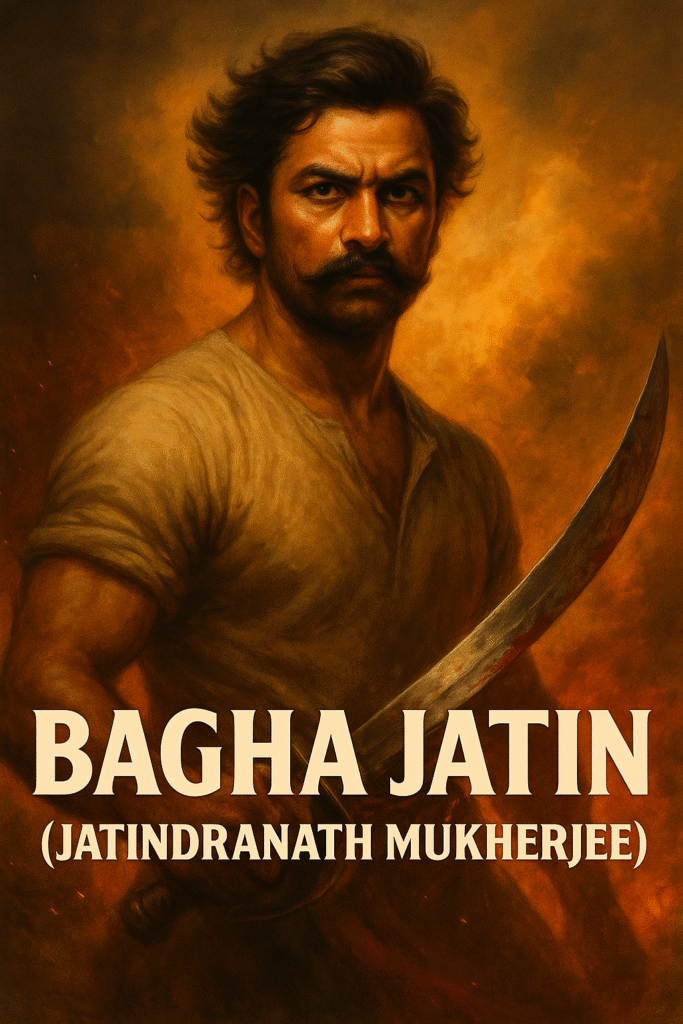
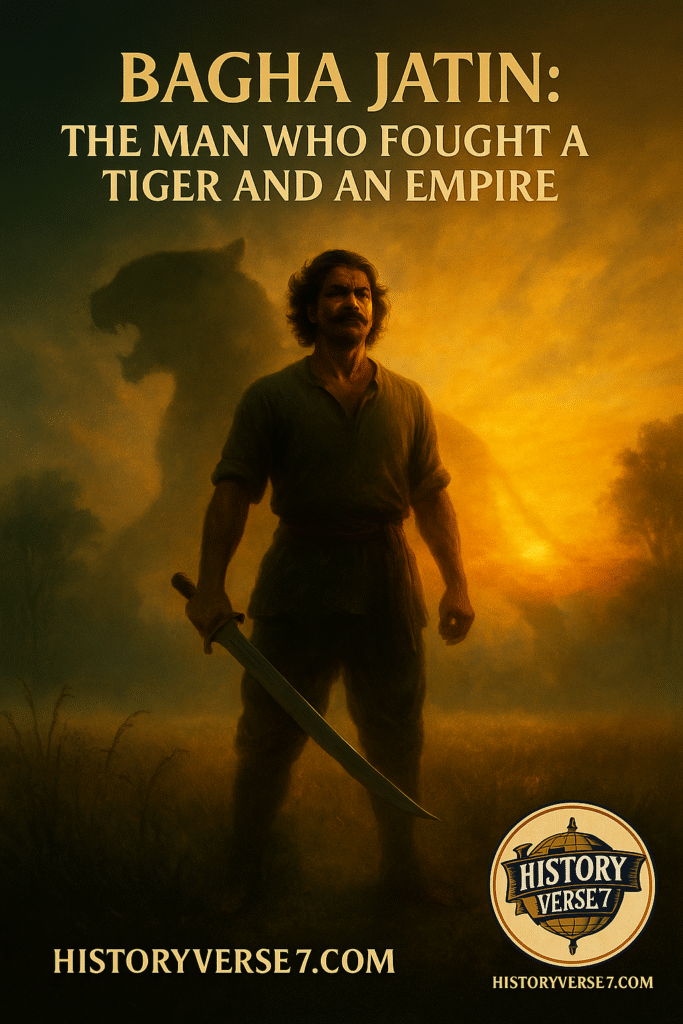
The name Bagha Jatin—literally “Tiger Jatin”—was not a metaphor. It was earned. In 1906, while camping in the forests of Darjeeling, he fought and killed a full-grown Bengal tiger with nothing but a dagger. That moment wasn’t just physical bravery—it was symbolic. It marked the birth of a revolutionary who would one day take on the British Empire with the same ferocity..
But what makes Bagha Jatin truly unforgettable is not just his strength—it’s his soul. He was deeply influenced by Swami Vivekananda, who once told him, “You have the making of a hero in you.” That seed of inspiration grew into a life of sacrifice. Jatin didn’t just want freedom—he wanted dignity for every Indian. He believed that true patriotism meant service, discipline, and fearlessness.
As a leader of the Jugantar Party, Bagha Jatin built a vast underground network of revolutionaries across Bengal, Odisha, and Punjab. He trained young men in physical fitness, ideological clarity, and armed resistance. He wasn’t just a fighter—he was a mentor, a strategist, and a visionary. His goal was not chaos, but coordinated revolution.
Between 1907 and 1915, Bagha Jatin orchestrated some of the most daring plans in India’s early resistance movement. He was involved in the Indo-German Conspiracy during World War I, aiming to bring arms from Germany to spark a nationwide uprising. The British, terrified of his growing influence, called him “the most dangerous man in Bengal.”
But Bagha Jatin was not driven by hatred. He was driven by hope. He believed that India could rise—not just through rebellion, but through unity. He worked across religious and regional lines, bringing Hindus and Muslims together under one flag of freedom. His leadership was not loud—it was luminous.
The final chapter of his life reads like an epic. In September 1915, cornered by British forces near Balasore, Odisha, Bagha Jatin and four comrades fought a heroic gun battle. Outnumbered and outgunned, they held their ground for hours. Jatin was fatally wounded and died the next day. He was just 35.

But death could not silence him. His sacrifice became a spark. Subhas Chandra Bose later said, “If Bagha Jatin had lived, he would have led the Indian revolution.” That’s the power of his legacy—it lives not in monuments, but in movements.
Today, as we scroll through reels and read forgotten pages, the name Bagha Jatin reminds us of what it means to be truly fearless. He teaches us that revolution is not just about weapons—it’s about will. That patriotism is not performance—it’s purpose. And that even in silence, a tiger can roar.
Table of Contents
🐅 Bagha Jatin: 1879–Early Life of a Revolutionary Soul
From Kumarkhali to Courage: The Making of a Tiger
🧬 I. Birth of a Legacy (December 7, 1879)
Bagha Jatin, born as Jatindranath Mukherjee, entered the world on December 7, 1879, in Kumarkhali, Kushtia, a quiet town nestled in the Bengal Presidency (now in Bangladesh). His birthplace was not a battlefield, but it would one day be remembered as the cradle of courage.

His father, Umeshchandra Mukherjee, passed away when Jatin was young, leaving his mother, Sharatshashi Devi, to raise him alone. She wasn’t just a parent—she was a pillar. Her strength, discipline, and spiritual depth became the first lessons in patriotism for the boy who would one day be called Bagha Jatin.
🧠 II. The Moral Compass of a Widowed Mother
Growing up under the care of a widowed mother in colonial Bengal was no easy path. But Bagha Jatin didn’t inherit sorrow—he inherited strength. Sharatshashi Devi instilled in him a deep sense of dharma, self-respect, and service to the nation. She taught him that true bravery wasn’t in fighting—it was in standing firm.
This maternal influence became the emotional bedrock of his revolutionary spirit. Unlike many freedom fighters who found their calling in youth movements or political circles, Bagha Jatin found his fire at home—in the quiet resilience of a mother who refused to bow to fate.
📚 III. Education and Early Awakening
Jatin’s formal education began at Krishnanagar Anglo-Vernacular School, where he excelled in academics and athletics. But his real awakening came through books and mentors. He was deeply influenced by Swami Vivekananda, whose teachings on fearlessness, service, and national pride resonated deeply.
Swami Vivekananda once told him,
“You have the making of a hero in you.”
That sentence wasn’t just praise—it was prophecy. It planted a seed that would grow into a life of sacrifice.
🏋️ IV. Physical Strength Meets Spiritual Fire
Even as a teenager, Bagha Jatin was known for his extraordinary physical strength. He trained in wrestling, swordsmanship, and horse riding. But what set him apart was his discipline. He didn’t seek glory—he sought readiness.
His body was a weapon, but his mind was a temple. He believed that a revolutionary must be physically invincible and morally incorruptible. This balance of strength and spirit became his signature.
🐅 V. The Roar Before the Revolution
By the time he reached his twenties, Bagha Jatin was already organizing youth groups, spreading nationalist ideas, and preparing for armed resistance. But he didn’t rush. He built slowly, silently, and strategically.
His early life was not marked by rebellion—it was marked by preparation. He understood that revolutions fail without roots. So he spent years building those roots—in minds, in bodies, and in hearts.
🔥 VI. Why His Early Life Still Matters
In today’s world of instant fame and loud activism, Bagha Jatin’s early life teaches us the power of quiet preparation. He didn’t seek attention. He sought transformation. His childhood wasn’t dramatic—it was deliberate.
He reminds us that true revolutionaries aren’t born in crowds—they’re forged in solitude. That courage begins at home. And that every roar begins as a whisper.
📖 Book References & Sources
🌱 His Childhood Wasn’t Ordinary—It Was Preparation
Before Bagha Jatin roared against the British, he listened to the silence of sacrifice. His early life wasn’t loud—but it was legendary. Raised by a mother who taught him strength, shaped by mentors who saw his fire, he became the revolutionary India didn’t know it needed.
👉 Continue reading to explore how this quiet boy became the Tiger of Bengal.
Read the Next Chapter →🐅 Bagha Jatin: 1895–1899 — The Awakening Years
From Classroom to Conscience: The Making of a Revolutionary
🎓 I. Calcutta Central College — Where Ideas Took Root
In 1895, Bagha Jatin enrolled at Calcutta Central College (now Maulana Azad College), pursuing his First Arts (F.A.) degree. The college was more than an academic institution—it was a crucible of nationalist thought. Bengal was simmering with discontent, and the classrooms echoed with whispers of resistance.
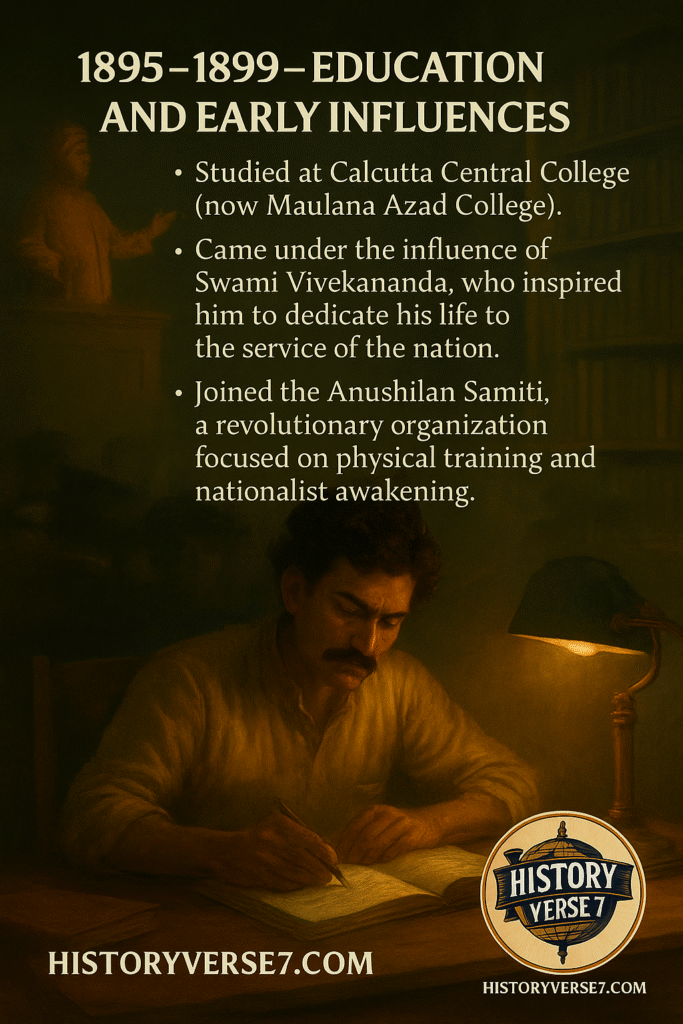
Jatin wasn’t just a student—he was a seeker. He devoured books on history, philosophy, and politics. His mind was sharp, but his heart was restless. He questioned colonial narratives, challenged passive obedience, and began to see education not as a career path—but as a weapon.
He lived with his maternal uncle, Dr. Hemanta Kumar Chatterjee, in Shobhabazar, Calcutta. This household became a hub of intellectual exchange. Here, Bagha Jatin met thinkers, reformers, and quiet rebels. The city’s pulse began to shape his purpose.
🔱 II. Meeting Swami Vivekananda — The Spark of Service
In 1897, destiny intervened. Bagha Jatin met Swami Vivekananda, the monk who had electrified the world with his message of fearless service and spiritual nationalism. Their meeting wasn’t casual—it was catalytic.
Swami Vivekananda saw in Jatin a rare fire. He told him:
“You have the making of a hero in you.”
That sentence wasn’t just encouragement—it was ignition. It awakened in Bagha Jatin a lifelong commitment to serve the nation, uplift the oppressed, and fight injustice. He began to see patriotism not as protest—but as dharma.
Under Vivekananda’s influence, Jatin embraced the ideals of self-discipline, fearlessness, and unity across religions. He began training his body rigorously—not for vanity, but for readiness. He saw the revolutionary as a yogi—focused, fearless, and selfless.
🥋 III. Joining Anushilan Samiti — The Path of Action
By 1899, Bagha Jatin had joined the Anushilan Samiti, a secret revolutionary organization that combined physical training with nationalist awakening. The Samiti believed that India needed warriors—not just thinkers. It trained young men in martial arts, ethics, and underground resistance.
Jatin quickly rose through the ranks. His leadership was quiet but magnetic. He organized youth cells, conducted training camps, and began building a network that would later evolve into the Jugantar Party.
He believed that revolution must be rooted in character. That a fighter must first conquer his own fear before confronting an empire. His approach was not impulsive—it was intentional.
🧠 IV. Why These Years Mattered
The period from 1895 to 1899 was the foundation of Bagha Jatin’s legacy. It was when he:
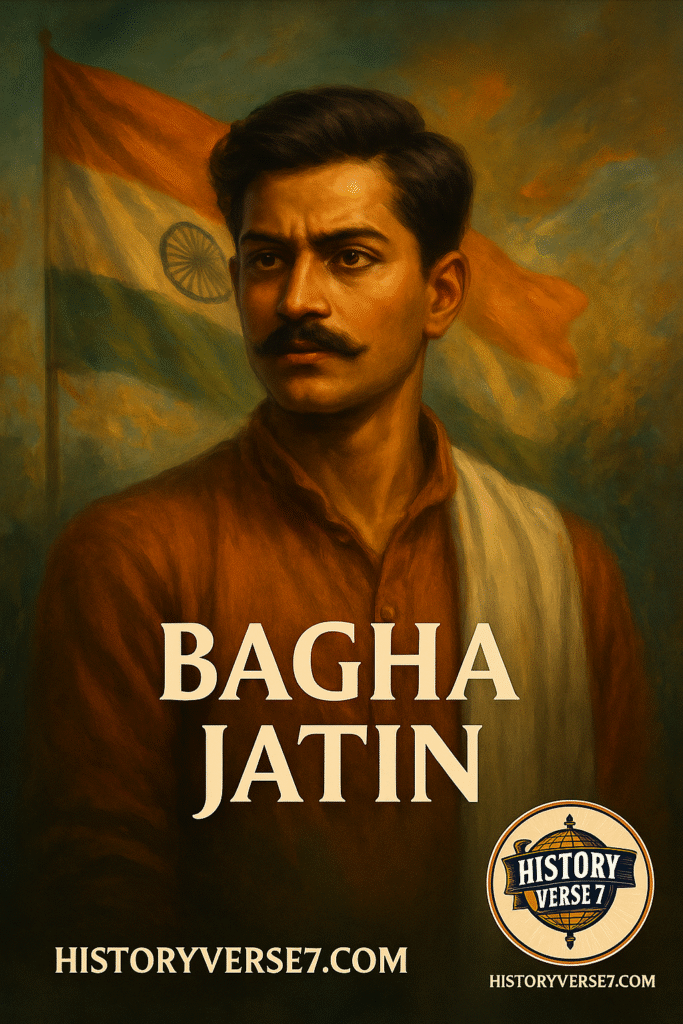
- Discovered the power of education as resistance
- Met Swami Vivekananda and embraced service as patriotism
- Joined Anushilan Samiti and began training future revolutionaries
- Developed the balance between spiritual depth and physical strength
These years weren’t loud—but they were luminous. They didn’t make headlines—but they made history.
📚 Book References & Sources
- Bagha Jatin – Wikipedia
- Bagha Jatin Biography – WikiBio
- NetajiSubhasBose.org – Bagha Jatin Education
📘 His Education Wasn’t Just Learning—It Was Liberation
Between 1895 and 1899, Bagha Jatin didn’t just study—he awakened. From college corridors to spiritual conversations, every step shaped the roar he would become. His journey reminds us that true revolution begins in the mind, and service begins in silence.
👉 Continue reading to explore how Bagha Jatin transformed into Bengal’s most fearless revolutionary.
Read the Next Chapter →🐅 Bagha Jatin: 1906 — The Tiger Incident That Forged a Legend
From Flesh to Fire: How One Moment Turned a Man into a Movement
🌲 I. The Setting: Darjeeling’s Forests and a Fateful Encounter
In the summer of 1906, Bagha Jatin—then known as Jatindranath Mukherjee—was camping in the forests of Darjeeling with a group of fellow adventurers and students. The region, known for its serene beauty, was also home to wild predators. What began as a peaceful retreat soon turned into a test of life and death.
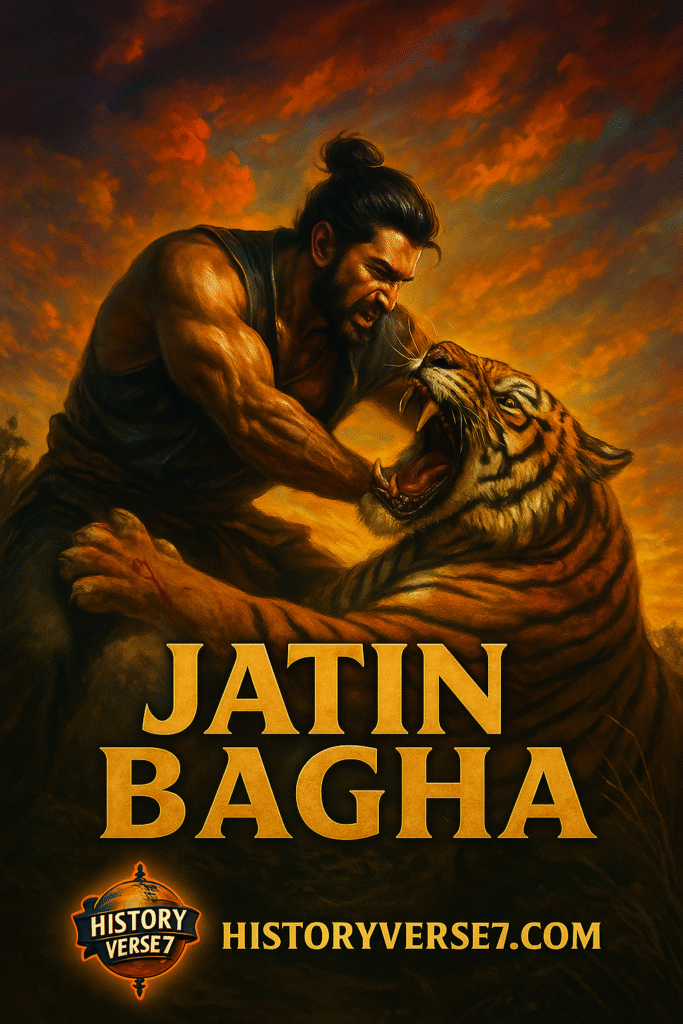
A full-grown Bengal tiger, known to have terrorized nearby villages, suddenly appeared near their campsite. Panic spread. The beast was not just a threat—it was a symbol of raw, untamed danger. And in that moment, Bagha Jatin stepped forward—not with a rifle, but with a dagger.
🗡️ II. The Battle: Man vs. Beast
The confrontation was brutal. The tiger lunged. Jatin didn’t flinch. With calculated precision and fearless resolve, he engaged the animal in close combat. The fight lasted minutes—but felt eternal. Blood was spilled. Bones were tested. And in the end, Bagha Jatin emerged victorious, having slain the tiger with his dagger.
This was not a stunt. It was survival. But more than that—it was symbolism. In that moment, Jatin proved that courage isn’t the absence of fear—it’s the mastery of it.
🐅 III. The Name: “Bagha” Jatin Is Born
News of the incident spread rapidly across Bengal. Locals and revolutionaries alike began calling him “Bagha Jatin”—“Tiger Jatin.” The name stuck, not just because of the act, but because of what it represented.

The tiger, in Indian mythology, is a symbol of power, fearlessness, and divine energy. By defeating it, Bagha Jatin became a living embodiment of those traits. His name became a rallying cry. His story—a legend.
🔥 IV. The Symbolism: Why This Moment Mattered
The tiger incident wasn’t just a tale of bravery—it was a metaphor for colonial resistance. The British Empire, like the tiger, was seen as invincible. But Bagha Jatin’s act showed that even the fiercest predator could be defeated by courage and conviction.
This moment marked a turning point in his life. He began to be seen not just as a leader—but as a warrior. His physical strength, moral clarity, and strategic mind made him a natural icon for the revolutionary movement.
🧠 V. Psychological Impact: Fearlessness as Identity
For Bagha Jatin, the tiger wasn’t just an animal—it was a challenge. And by overcoming it, he overcame the psychological barriers that often paralyze resistance. He taught his comrades that fear is a choice—and courage is a discipline.
This incident became part of his identity. It shaped how he trained others, how he led missions, and how he faced death. He didn’t just preach bravery—he lived it.
📚 VI. Historical Context: Bengal’s Revolutionary Pulse
The early 1900s were a time of rising nationalist sentiment in Bengal. The Partition of Bengal (1905) had triggered widespread unrest. Secret societies like Anushilan Samiti and Jugantar were gaining momentum. And in this charged atmosphere, Bagha Jatin’s tiger incident became a symbol of defiance.
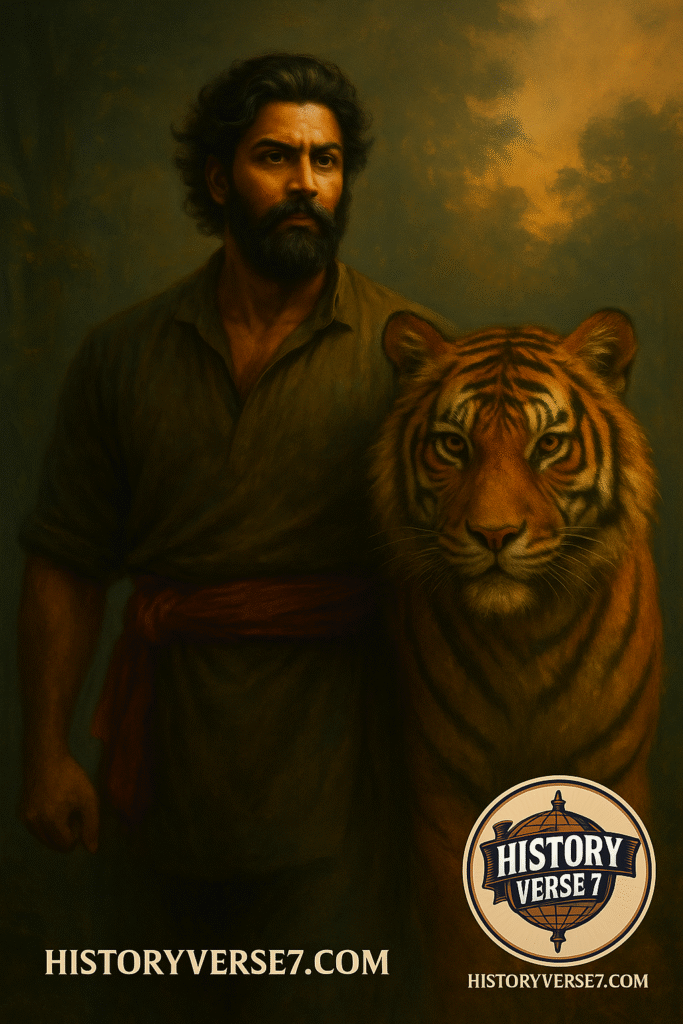
It wasn’t just about killing a beast—it was about awakening a generation.
🧬 VII. Legacy: The Roar That Echoed Beyond the Forest
Even decades later, Bagha Jatin’s tiger story continues to inspire. It’s taught in schools, referenced in speeches, and revered in revolutionary circles. His act is seen as the perfect blend of physical courage and patriotic symbolism.
Subhas Chandra Bose once said,
“If Bagha Jatin had lived, he would have led the Indian revolution.”
That’s the power of his legacy. He didn’t just fight battles—he built belief.
📖 Book References & Sources
🐅 He Didn’t Just Kill a Tiger—He Became One
In 1906, Bagha Jatin faced death—and chose defiance. His dagger didn’t just pierce flesh—it pierced fear. This wasn’t a story. It was a signal. A roar. A revolution.
👉 Continue reading to explore how Bagha Jatin transformed this fearless spirit into a nationwide movement.
Read the Next Chapter →🐅 Bagha Jatin: 1907–1910 — The Architect of Revolutionary Networks
From Roar to Strategy: How Bagha Jatin Built the Backbone of Bengal’s Resistance
🧭 I. The Rise of Jugantar and Bagha Jatin’s Leadership
By 1907, the revolutionary landscape in Bengal was shifting. The Anushilan Samiti, once focused on physical training and nationalist awakening, had birthed a more militant wing—Jugantar. This faction believed that armed resistance was no longer optional—it was essential.
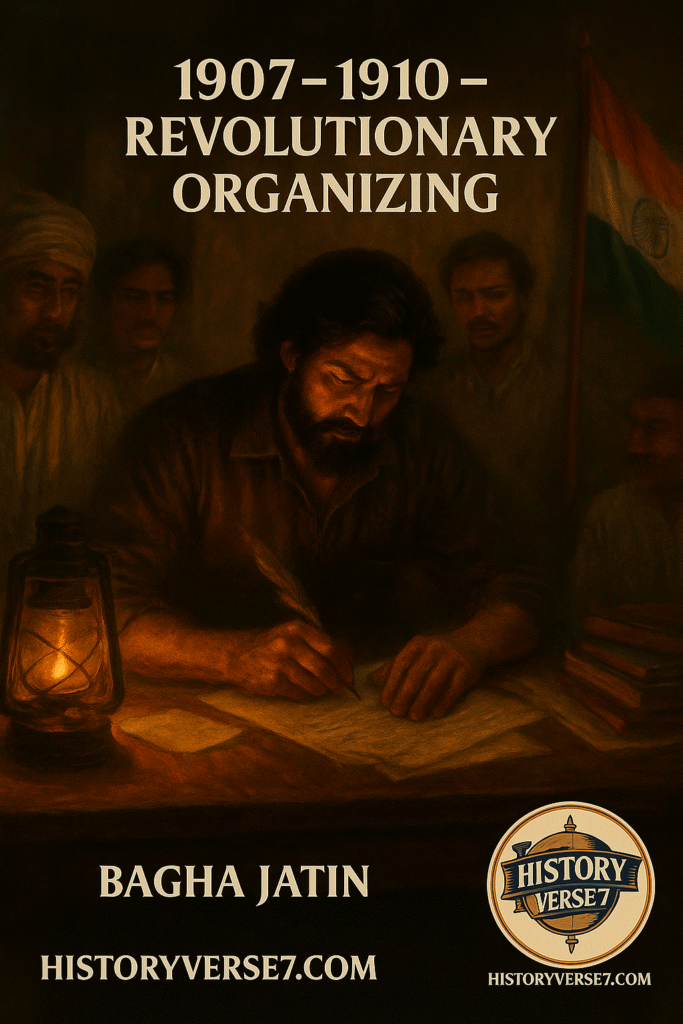
Bagha Jatin, already revered for his tiger-slaying courage and spiritual discipline, was chosen as a key leader. But he didn’t lead with noise—he led with precision. He understood that revolutions fail without structure. So he began building one.
His leadership style was quiet, methodical, and deeply personal. He didn’t command from above—he trained from within. He mentored young revolutionaries, taught them discipline, and instilled in them a sense of moral clarity. For Bagha Jatin, a revolutionary wasn’t just a fighter—he was a servant of Bharat Mata.
🕵️ II. Organizing Secret Cells Across Bengal, Odisha, and Bihar
Between 1907 and 1910, Bagha Jatin created a network of secret cells that stretched across Bengal, Odisha, and Bihar. These cells weren’t just meeting points—they were training grounds, intelligence hubs, and emotional sanctuaries.
Each cell operated independently but was ideologically aligned. Jatin ensured that members were physically fit, mentally sharp, and spiritually grounded. He emphasized secrecy, loyalty, and sacrifice. His model was inspired by ancient gurukul systems—where the guru trained warriors not just in combat, but in character.
This decentralized structure made it difficult for British intelligence to penetrate. Even when one cell was compromised, the others remained intact. It was a revolutionary web—woven with silence and strength.
💣 III. The Alipore Bomb Case — Indirect Involvement, Direct Impact
In 1908, the Alipore Bomb Case shook British India. It involved an assassination attempt on Magistrate Kingsford by Khudiram Bose and Prafulla Chaki, followed by a crackdown on revolutionaries like Aurobindo Ghosh and Barindra Ghosh.
Though Bagha Jatin was not directly involved, he played a critical support role. He provided shelter, resources, and strategic guidance to many of the accused. His home became a safe haven. His network helped revolutionaries escape, regroup, and continue their mission.
This indirect involvement made him a target. British officials began tracking his movements, intercepting his communications, and preparing for arrest. But Jatin remained calm. He knew that visibility was vulnerability. So he went deeper underground.
⚖️ IV. The Howrah-Sibpur Conspiracy Case — Arrest and Acquittal
In 1910, Bagha Jatin was arrested in the Howrah-Sibpur conspiracy case, which accused him of orchestrating anti-British activities and harboring fugitives. The case was built on shaky evidence and forced confessions.
Inside prison, Jatin faced psychological and physical torture. But he didn’t break. He didn’t name names. He didn’t plead for mercy. His silence was his shield.
One of the accused, Birendra Duttagupta, under duress, claimed that Jatin had deputed him to assassinate British officer Shamsul Alam. But the evidence was circumstantial. After months of trial, Bagha Jatin was acquitted due to lack of proof.
His release wasn’t just legal—it was legendary. It proved that even under pressure, Bagha Jatin’s resolve was unshakable. His silence protected dozens of revolutionaries. His dignity became a lesson in resistance.
🔥 V. Why These Years Matter
The period from 1907 to 1910 was the strategic heart of Bagha Jatin’s legacy. It was when he:
- Transitioned from symbol to strategist
- Built a decentralized revolutionary network
- Supported high-risk operations like the Alipore Bomb Case
- Survived arrest without compromising the movement
These years weren’t just about action—they were about architecture. Bagha Jatin didn’t just fight the British—he built the blueprint for future revolutionaries.
📚 Book References & Sources
- Bagha Jatin – Wikipedia
- NetajiSubhasBose.org – Bagha Jatin English Biography
- Alipore Conspiracy Case – Vajiram & Ravi UPSC Notes
🧠 He Didn’t Just Fight—He Built
Between 1907 and 1910, Bagha Jatin became the architect of India’s underground resistance. His silence saved lives. His strategy built legacies. These weren’t just years—they were blueprints for revolution.
👉 Continue reading to explore how Bagha Jatin expanded his network globally and prepared for the Indo-German plot.
Read the Next Chapter →🐅 Bagha Jatin: 1910–1914 — Strategic Expansion and Global Vision
From Bengal to Berlin: How Bagha Jatin Engineered India’s Revolutionary Web
🧭 I. Vision Beyond Borders: The Pan-Indian Blueprint
After his acquittal in the Howrah-Sibpur conspiracy case in 1910, Bagha Jatin didn’t retreat—he recalibrated. He realized that isolated uprisings were insufficient. What India needed was a coordinated, pan-Indian revolutionary network—one that could challenge British rule from multiple fronts.

He began traveling discreetly across provinces, meeting local leaders, assessing strengths, and identifying gaps. His goal was clear: unify fragmented resistance into a single, strategic force. This wasn’t just ambition—it was architecture.
Bagha Jatin’s approach was visionary. He didn’t believe in spontaneous rebellion. He believed in prepared revolution, built on trust, training, and timing.
🤝 II. Building Bridges: Punjab, Maharashtra, and Madras
Between 1911 and 1913, Bagha Jatin established direct connections with revolutionaries in Punjab, Maharashtra, and Madras. These regions had their own histories of resistance, but lacked coordination.
In Punjab, he collaborated with emerging leaders influenced by the Ghadar movement. In Maharashtra, he revived ties with Tilak’s followers and underground cells. In Madras, he connected with Tamil revolutionaries and port-based operatives crucial for future arms landings.
He didn’t impose ideology—he built alliances. His charisma, discipline, and legacy as “Bagha” made him a respected figure across linguistic and regional lines. He was no longer just Bengal’s tiger—he was India’s strategist.
✈️ III. Sending Emissaries to Europe: The Global Gambit
Bagha Jatin understood that India’s fight needed international support. Inspired by the Irish and Balkan resistance models, he began sending emissaries to Europe—especially to France and Germany—to seek arms, training, and diplomatic backing.
These emissaries posed as students, traders, and cultural envoys. Their mission: secure weapons, build alliances, and prepare for a coordinated uprising timed with global conflict.
This was not fantasy—it was foresight. Bagha Jatin anticipated that World War I would stretch British resources thin, creating an opportunity for rebellion. He wasn’t just reacting to history—he was predicting it.
🇩🇪 IV. Contact with Indian Revolutionaries in Germany
By 1914, Bagha Jatin had established contact with Indian revolutionaries in Germany, including members of the Berlin Committee (later known as the Indian Independence Committee). These expatriates, many of whom were students and intellectuals, were eager to support armed resistance back home.
Bagha Jatin coordinated plans to receive arms shipments via the Bay of Bengal, using the Odisha coast as a landing point. The idea was to spark a nationwide revolt, synchronized with German attacks on British interests.

This Indo-German conspiracy was bold, complex, and unprecedented. It showed Bagha Jatin’s ability to think globally while acting locally. He wasn’t just a fighter—he was a geopolitical tactician.
🔥 V. Why These Years Matter
The period from 1910 to 1914 was the strategic peak of Bagha Jatin’s revolutionary career. It was when he:
- Unified resistance across India
- Built international alliances
- Anticipated global war as a trigger for rebellion
- Engineered the Indo-German conspiracy with precision
These years weren’t just preparation—they were prophecy. Bagha Jatin saw the storm coming—and planned to ride its winds.
📚 Book References & Sources
- Bagha Jatin – Wikipedia
- Revisiting Bagha Jatin – Vidyasagar University Journal
- NetajiSubhasBose.org – Bagha Jatin English Biography
🌍 He Didn’t Just Dream of Freedom—He Engineered It
Between 1910 and 1914, Bagha Jatin built a revolutionary web that stretched from Bengal to Berlin. His vision was global. His strategy was precise. His courage—unmatched. These weren’t just years—they were blueprints for India’s awakening.
👉 Continue reading to uncover Bagha Jatin’s final battle at Balasore and the legacy of his supreme sacrifice.
Read the Next Chapter →🐅 Bagha Jatin: 1914–1915 — The Indo-German Conspiracy and the Final Gambit
From Bengal to Berlin: How Bagha Jatin Engineered India’s Most Audacious Rebellion
🌍 I. The Global Context: World War I and Revolutionary Opportunity
In 1914, as World War I erupted across Europe, Bagha Jatin saw a rare opening. The British Empire was stretched thin, fighting battles on multiple fronts. Jatin realized that this global conflict could be India’s moment to strike.
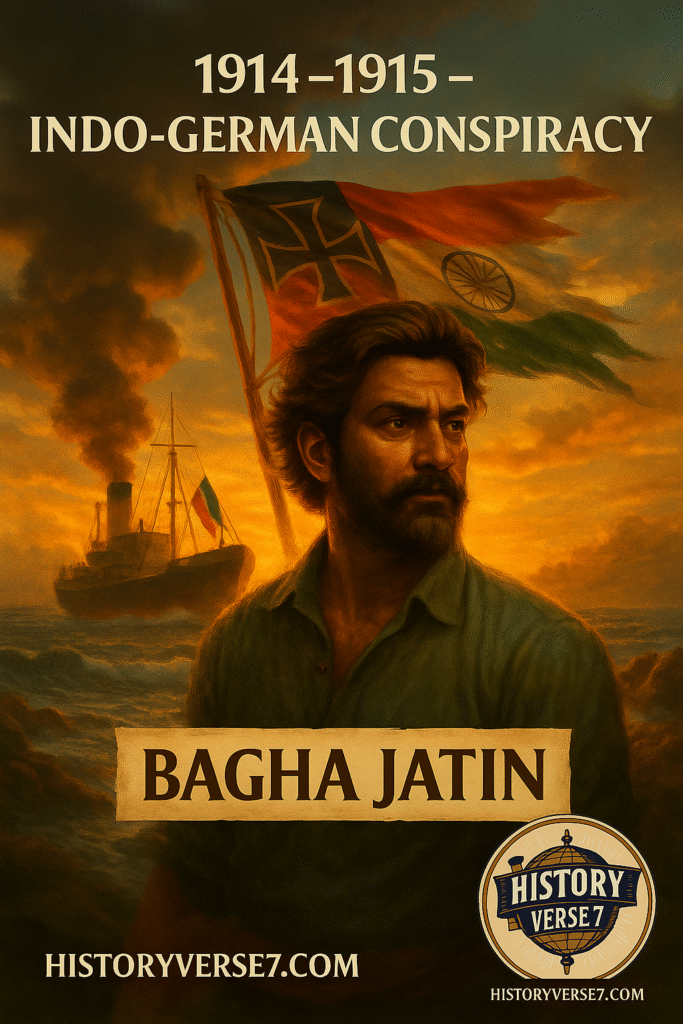
He envisioned a coordinated armed uprising, supported by Germany—Britain’s enemy in the war. This wasn’t fantasy—it was geopolitical foresight. Jatin believed that if Germany could supply arms and support, India could ignite a rebellion that would cripple British control.
This vision became the foundation of the Indo-German Conspiracy, a transcontinental plot that connected revolutionaries in Bengal, Berlin, and beyond.
📡 II. Planning the Plot: Strategy, Secrecy, and Sacrifice
Bagha Jatin began working with the Indian Independence Committee in Berlin, a group of expatriate revolutionaries committed to overthrowing British rule. He coordinated with German officials, including members of the Foreign Office, to arrange arms shipments to India’s eastern coast.
The plan was daring:
- German ships would deliver weapons to Odisha’s coastline, near Balasore.
- Jugantar cells, trained and ready, would receive the arms.
- A nationwide revolt would be triggered, timed with British military distractions.
Jatin’s network included emissaries in Europe, local operatives in Bengal and Odisha, and strategists across India. He wasn’t just leading a rebellion—he was engineering a revolution.
⚠️ III. British Interception: Intelligence, Espionage, and Crackdown
But the British weren’t blind. Their intelligence network, bolstered by informants and intercepted communications, began to unravel the plot. The Criminal Intelligence Department (CID) traced the movement of revolutionaries and decoded parts of the plan.
By mid-1915, the British had identified Bagha Jatin as the central figure in the Indo-German conspiracy. They launched a massive crackdown, arresting key operatives, raiding safe houses, and deploying forces to intercept the arms shipment.
The German ship carrying weapons never reached the coast. The plan was compromised. But Bagha Jatin didn’t flee. He prepared for the final stand.
🏞️ IV. Retreat to Balasore: The Last Roar
In September 1915, Bagha Jatin and four comrades retreated to a riverside trench near Balasore, Odisha. British forces surrounded them. What followed was a fierce gun battle, lasting over 75 minutes.
Outnumbered and outgunned, Jatin fought with unmatched valor. He was fatally wounded, and died the next day—September 10, 1915, at the age of 35.
His death wasn’t defeat—it was defiance. He chose to die fighting, rather than surrender. His final battle became a symbol of unbreakable patriotism.
🔥 V. Legacy of the Indo-German Conspiracy
Though the conspiracy failed to deliver arms, it succeeded in shaking the British Empire. It revealed the depth of India’s revolutionary networks and the global reach of its freedom fighters.
Bagha Jatin’s role in the Indo-German plot inspired future leaders like Subhas Chandra Bose, who later sought German support for the Indian National Army (INA). Jatin’s vision lived on—not in documents, but in movements.
He proved that India’s fight for freedom was not isolated—it was international. And that even in failure, courage writes history.
📚 Book References & Sources
- Hindu–German Conspiracy – Wikipedia
- Bagha Jatin – The Civil India
- NetajiSubhasBose.org – Bagha Jatin Biography
🗺️ He Didn’t Just Fight for India—He Fought With the World
Between 1914 and 1915, Bagha Jatin dared to dream of a global rebellion. His Indo-German plot was bold, brilliant, and brutally suppressed. But his courage became a blueprint for future freedom fighters.
👉 Continue reading to witness Bagha Jatin’s final battle at Balasore and the immortal legacy he left behind.
Read the Next Chapter →🐅 Bagha Jatin: September 9–10, 1915 — The Final Battle and Martyrdom
When the Tiger Roared One Last Time
🏞️ I. Prelude to the Battle: The Indo-German Plot Unravels
By mid-1915, Bagha Jatin had meticulously planned the Indo-German conspiracy—a daring attempt to receive arms from Germany via the Odisha coast and spark a nationwide uprising. But British intelligence, through its CID network, intercepted the plan. The conspiracy was compromised. Arrests followed. Surveillance tightened.
Jatin, aware of the looming danger, did not flee. Instead, he moved with four trusted comrades—Chittapriya Ray Chaudhuri, Manoranjan Sengupta, Niren Dasgupta, and Jatish Chandra Pal—toward Balasore, Odisha. Their goal: regroup, receive the arms if possible, and resist till the end.
🛡️ II. The Final Stand: Chasakhand, Balasore
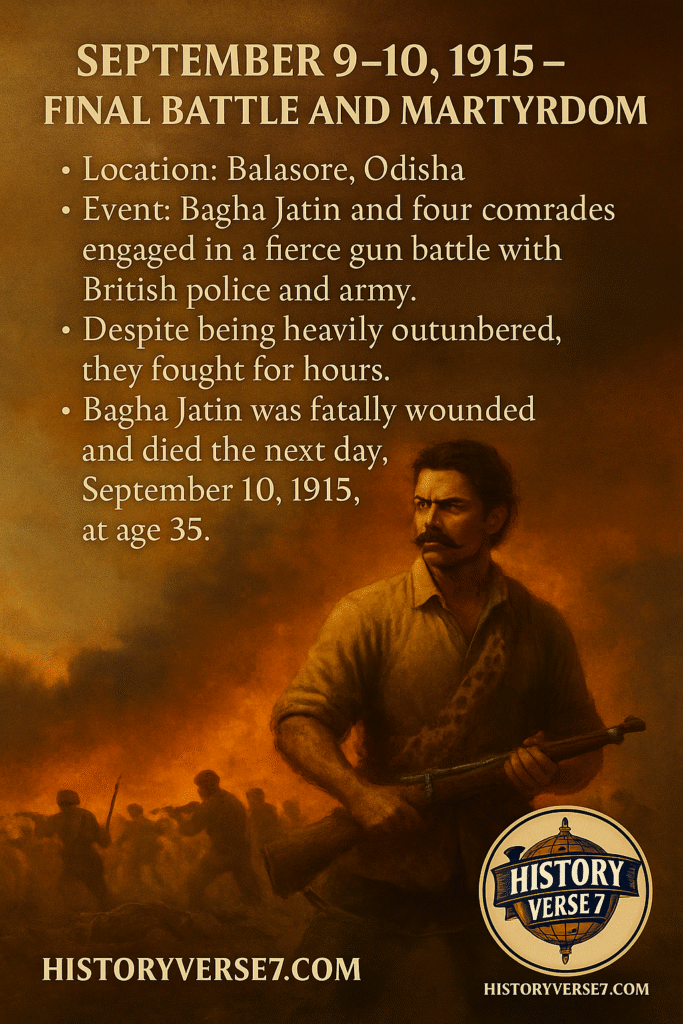
On September 9, 1915, British forces, tipped off by informants, surrounded the revolutionaries near Chasakhand village, close to the banks of the Buribalam River in Balasore district. The revolutionaries had taken shelter in a thatched hut, armed with a few rifles and limited ammunition.
What followed was a fierce gun battle that lasted over 75 minutes. Despite being heavily outnumbered and outgunned, Bagha Jatin and his comrades fought with unmatched valor. They refused to surrender. Every bullet they fired was a message: India will not kneel.
🩸 III. The Wounds of Glory: September 10, 1915
During the firefight, Bagha Jatin was gravely wounded, taking multiple bullets to his body. His comrade Chittapriya Ray Chaudhuri was killed on the spot. The others were captured, wounded but alive.
Jatin was taken to Balasore Hospital, where he succumbed to his injuries on September 10, 1915, at the age of 35. His final moments were marked by silence, dignity, and the same fire that had defined his life.
He died not as a fugitive, but as a martyr—a man who chose death over dishonor, resistance over retreat.
🕊️ IV. The Aftermath: Echoes of a Roar
The British believed they had silenced a threat. But in truth, they had ignited a legend. News of Bagha Jatin’s final stand spread across Bengal and Odisha. He became a symbol of fearless resistance, a martyr whose blood nourished the roots of India’s freedom.
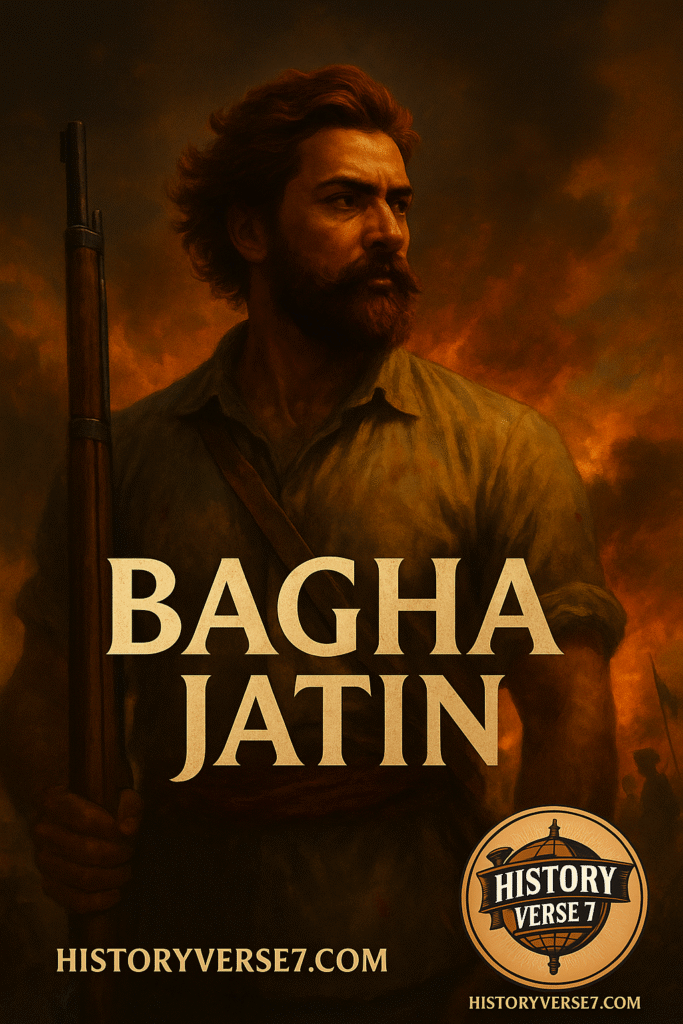
His comrades were tried and sentenced. But none betrayed his name. His silence had taught them strength. His sacrifice had taught them purpose.
🔥 V. Why This Moment Matters
The final battle at Balasore was not just a skirmish—it was a statement. It proved that:
- Bagha Jatin was willing to die for his ideals
- A handful of patriots could shake an empire
- Martyrdom could be more powerful than victory
This moment crystallized his legacy. He wasn’t just a revolutionary—he was a revolution.
📚 Book References & Sources
- Bagha Jatin: Forgotten Hero – Rediff
- India Today – Remembering Bagha Jatin
- Testbook – Death of Bagha Jatin
🩸 He Didn’t Die in Silence—He Died So India Could Speak
On September 10, 1915, Bagha Jatin gave his life—not for glory, but for generations. His final battle wasn’t a defeat—it was a declaration. His blood didn’t spill—it seeded a revolution.
👉 Continue reading to explore how Bagha Jatin’s legacy shaped India’s freedom movement and inspired future revolutionaries.
Read the Legacy Chapter →🐅 Bagha Jatin: Legacy Beyond the Battlefield
The Roar That Never Died
🕊️ I. Reverberations Across India
Bagha Jatin’s death sent shockwaves through Bengal, Odisha, and the entire Indian revolutionary network. His final stand at Balasore became a legend whispered in underground cells, a story passed from mentor to disciple, a name etched into the soul of resistance.
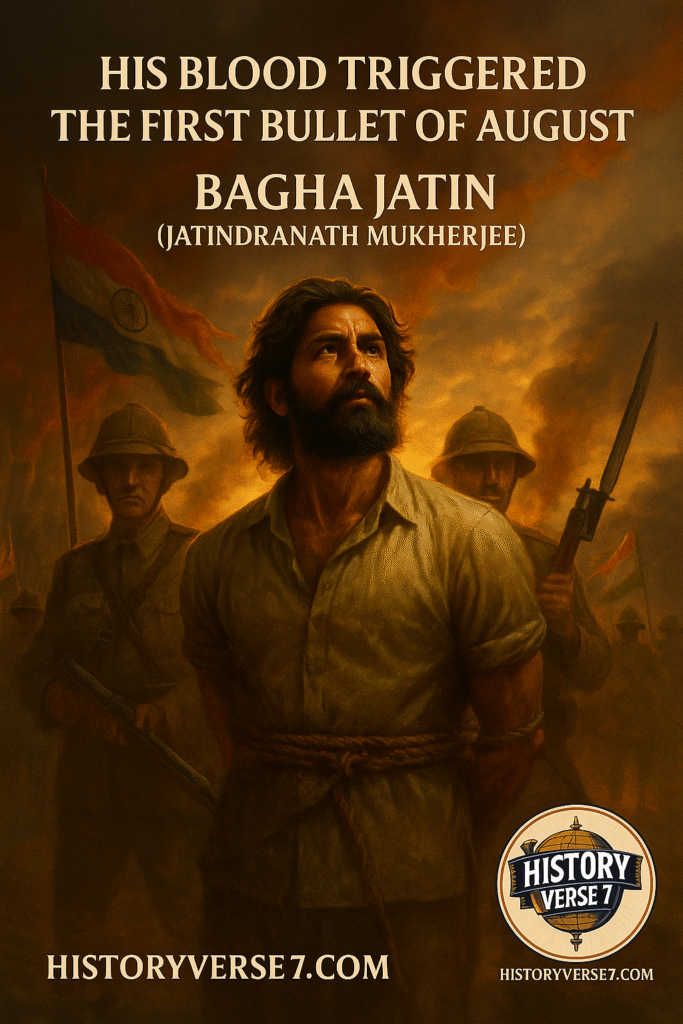
He wasn’t mourned with silence—he was honored with action. Young revolutionaries invoked his name before missions. His courage became a moral compass, guiding those who believed that freedom must be earned, not begged.
🧠 II. Influence on Future Revolutionaries
Bagha Jatin’s strategic brilliance and moral clarity deeply influenced leaders like:
- Subhas Chandra Bose, who admired Jatin’s Indo-German vision and later pursued similar alliances for the INA.
- Rash Behari Bose, who continued the revolutionary momentum in Japan.
- Bhagat Singh, whose fearless defiance echoed Jatin’s final stand.
Jatin’s legacy wasn’t just in tactics—it was in temperament. He taught India that bravery must be disciplined, and revolution must be rooted in ethics.
🏛️ III. Memorials and Tributes
Though not as widely commemorated as some freedom fighters, Bagha Jatin’s memory lives on through:
- Statues and busts in Bengal and Odisha, especially near Balasore.
- Bagha Jatin Railway Station in Kolkata, named in his honor.
- Schools and streets bearing his name, reminding every passerby of the tiger who roared for freedom.
His story is taught in select history curricula, and his name resurfaces every year on September 10, the day of his martyrdom.
📚 IV. Literary and Historical Recognition
Books and essays continue to explore Bagha Jatin’s life, including:
- “Bagha Jatin: The Revolutionary Who Fought a Tiger and the British Empire” – The Civil India
- “Revisiting Bagha Jatin” – Vidyasagar University Journal
- “Indian Revolutionaries: A Biographical Dictionary” – V.D. Savarkar’s references
These works highlight his strategic mind, spiritual depth, and unmatched courage, placing him among the greatest revolutionaries of India.

🔥 V. Why His Legacy Still Matters
In an age of noise, Bagha Jatin’s silence speaks volumes. He reminds us that:
- True patriotism is quiet, relentless, and sacrificial
- Leadership is earned through action, not titles
- Martyrdom is not the end—it’s the beginning of memory
His life is a blueprint for those who seek to serve, not just speak. His death is a reminder that freedom is never free—it’s fought for, bled for, and lived for.
🕊️ He Didn’t Just Die—He Became Immortal
Bagha Jatin’s legacy is not buried—it’s blooming. In every act of courage, in every whisper of resistance, his roar lives on. His story isn’t just history—it’s heritage.
👉 Explore our tribute series to discover how Bagha Jatin’s ideals continue to shape India’s soul.
Visit HistoryVerse7 →🐅 Conclusion: Bagha Jatin — The Roar That Became a Revolution
Bagha Jatin’s life was not a series of events—it was a crescendo of courage. From the quiet resolve of his childhood to the thunderous final stand at Balasore, he lived with a singular purpose: to awaken India’s soul. His journey wasn’t just about rebellion—it was about responsibility. He didn’t fight for fame. He fought for freedom.
In every phase of his life, Bagha Jatin embodied a rare blend of physical strength, spiritual depth, and strategic brilliance. He was the kind of leader who didn’t need applause—he needed action. Whether slaying a tiger with a dagger or building a pan-Indian revolutionary network, his choices were deliberate, his silence powerful, and his sacrifice absolute.
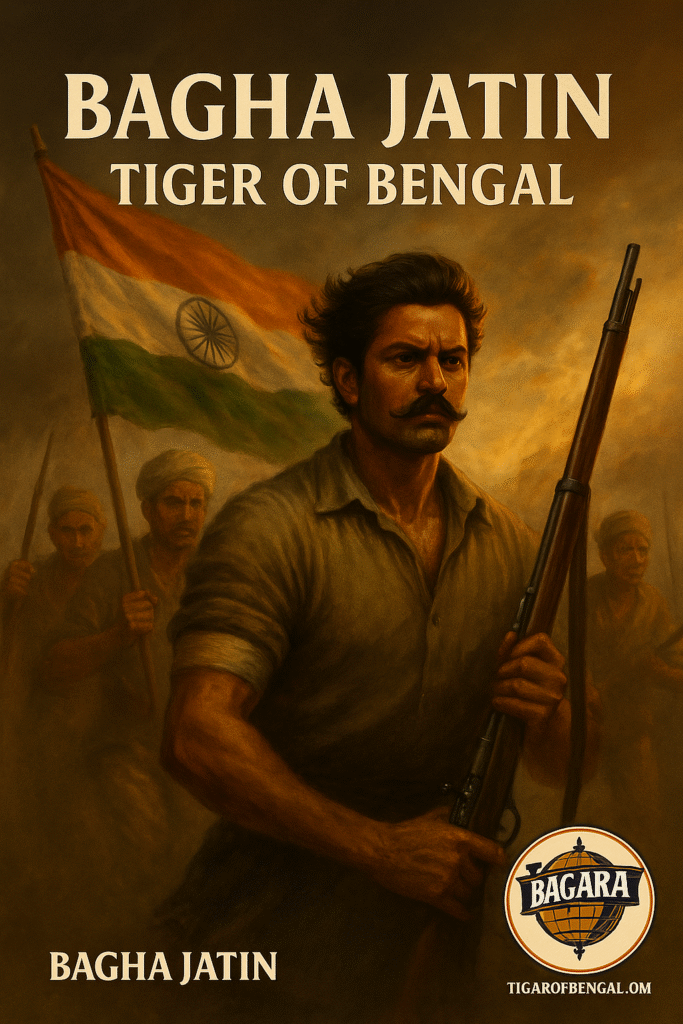
What makes Bagha Jatin unforgettable is not just how he died—but how he lived. He chose danger over comfort, dignity over compromise, and legacy over survival. His final words weren’t recorded in speeches—they were etched in the soil of Balasore, where bullets met bravery and martyrdom met immortality.
Even today, his story resonates—not because it’s dramatic, but because it’s deeply human. He was a son raised by a widowed mother, a student inspired by a monk, a fighter who never sought revenge, and a visionary who saw unity in diversity. He reminds us that patriotism isn’t loud—it’s lived. That revolution isn’t chaos—it’s conviction.
In a world that often celebrates noise, Bagha Jatin teaches us the power of quiet fire. His legacy is not just in statues or street names—it’s in every act of courage, every refusal to bow, every dream of a free and dignified India.
So when we speak of freedom, let’s remember the man who chose the noose over betrayal. When we speak of leadership, let’s remember the strategist who built silently. And when we speak of legacy, let’s remember the roar that never died.
Bagha Jatin didn’t just fight the British—he fought fear. And in doing so, he gave India not just a story, but a standard.
🇮🇳 His Roar Still Echoes—Will You Carry It Forward?
Bagha Jatin’s legacy isn’t locked in the past—it’s alive in every act of courage today. His story is a reminder that freedom is earned, not gifted. That silence can be strength. And that one man’s roar can awaken a nation.
👉 Dive deeper into HistoryVerse7’s tribute series to explore the lives of India’s unsung heroes. Let their stories shape your voice, your values, and your vision.
Explore More Tributes →📘 FAQ: Understanding Bagha Jatin (Exclusive Edition)
1. Why did Bagha Jatin choose silence over speeches?
Answer:
Because he believed that revolution wasn’t performance—it was preparation. Bagha Jatin’s silence was strategic. Every word he didn’t speak was a name he protected, a plan he preserved, and a legacy he built. His silence wasn’t absence—it was armor.
2. What made Bagha Jatin trust a dagger more than a crowd?
Answer:
He knew that courage isn’t measured by applause—it’s tested in solitude. When he faced the tiger, he didn’t wait for help. He acted. That moment defined his philosophy: If you want to awaken a nation, you must first conquer fear alone.
3. How did Bagha Jatin balance spiritual depth with armed resistance?
Answer:
He saw no contradiction. Inspired by Swami Vivekananda, Bagha Jatin believed that dharma demanded action. His revolver was not rage—it was responsibility. His training was not aggression—it was alignment with a higher purpose: freedom with dignity.
4. What was Bagha Jatin’s greatest weapon—strategy, strength, or sacrifice?
Answer:
Sacrifice. Strategy gave him reach. Strength gave him resilience. But sacrifice gave him immortality. He didn’t just plan revolts—he absorbed their consequences. His final battle wasn’t tactical—it was testimonial. He chose death so others could choose courage.
5. If Bagha Jatin were alive today, what would he ask of us?
Answer:
He wouldn’t ask for statues. He’d ask for stamina. He’d ask us to build quietly, serve fearlessly, and protect truth like a trench. He’d remind us that patriotism isn’t a post—it’s a practice. And that every generation must earn its roar.
Share this content:


Very good ✨🚩🔥