
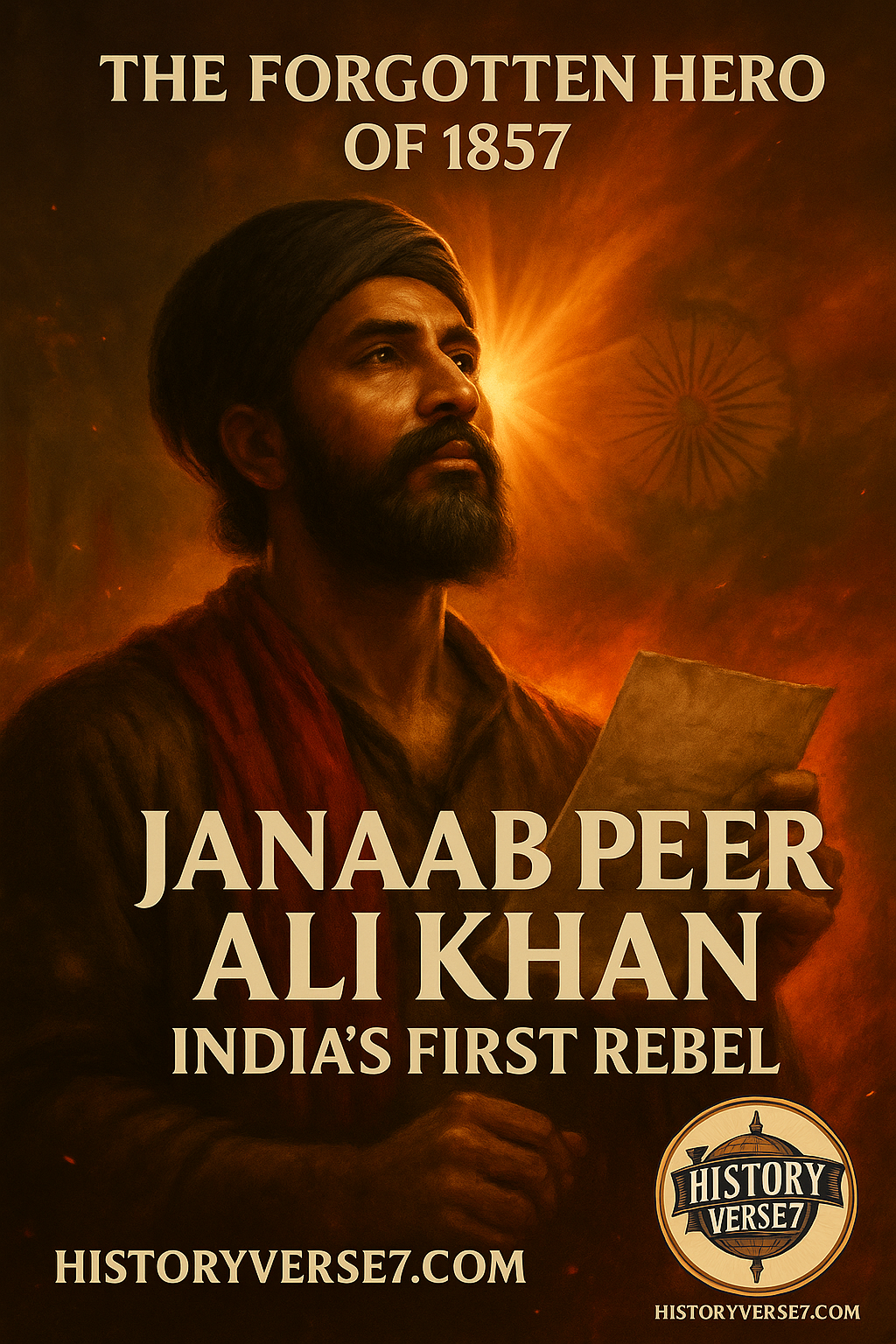
🕊️ Before You Read: Let His Silence Speak
He didn’t lead armies. He led ideas.
Before you scroll down, pause — and meet a man who chose the noose over betrayal, ink over violence, and conviction over compromise.
Janaab Peer Ali Khan wasn’t just a revolutionary. He was a whisper that became a roar.
- 👉 This isn’t just history. It’s a resurrection.
- 👉 These aren’t just facts. They’re fearless truths.
Read on — and let his legacy rewrite what you thought you knew about 1857.
🕊️ Introduction: Janaab Peer Ali Khan — The Ink That Roared
n the grand tapestry of India’s freedom struggle, some names shine in textbooks, while others whisper through time, waiting to be heard. Janaab Peer Ali Khan is one such whisper—soft, steady, and unshakable. Born in 1812 in Muhammadpur, Azamgarh (Uttar Pradesh), Peer Ali Khan didn’t come from privilege or power. He came from purpose. And that purpose would lead him to become one of the first martyrs of the 1857 revolt, executed not for violence, but for printing truth.
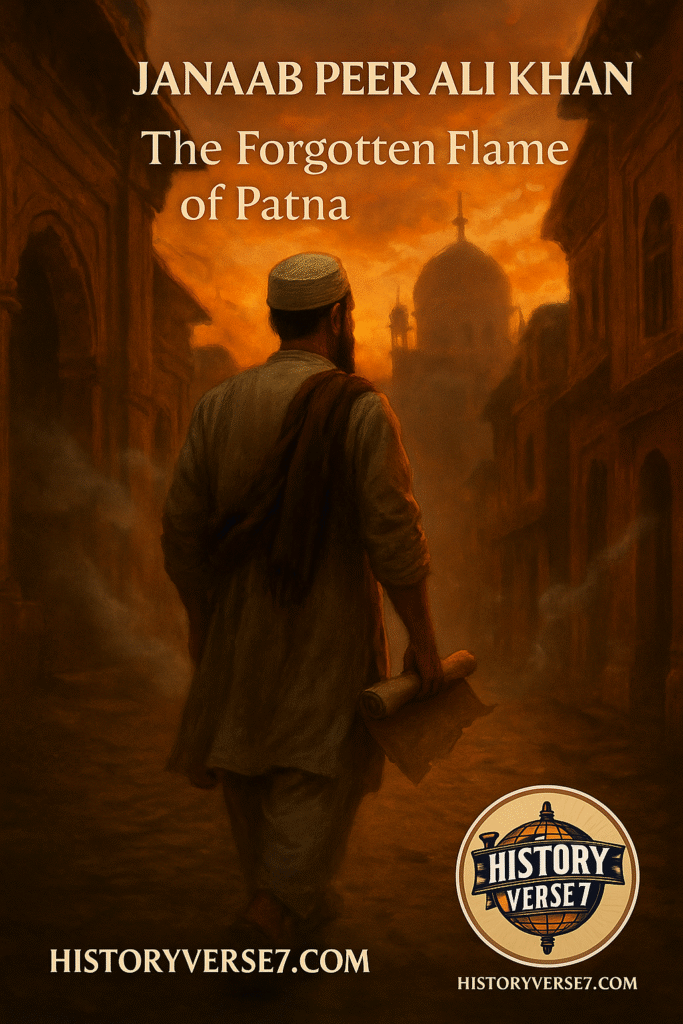
As a young boy, Peer Ali Khan ran away from home and settled in Patna, Bihar, where a local zamindar took him in and raised him with care and education. He eventually became a bookbinder, a humble profession that placed him at the crossroads of literature, learning, and rebellion. His shop in Patna wasn’t just a place for books—it became a clandestine hub for revolutionary pamphlets, anti-British leaflets, and coded messages. In an era where words were weapons, Peer Ali Khan wielded ink like a sword.
By the early 1850s, his underground network had grown. He wasn’t a soldier, but he was a strategist. He didn’t fire bullets, but he fired minds. His printed materials stirred unrest, inspired courage, and connected rebels across regions. When the First War of Independence erupted in 1857, Peer Ali Khan was already a marked man. The British saw him not as a mere printer—but as a threat to their narrative.
On July 4, 1857, Peer Ali Khan was arrested along with 33 fellow revolutionaries. Despite brutal interrogation, he refused to name his allies or betray the cause. His silence was his final act of resistance. Just three days later, on July 7, 1857, he was publicly executed by hanging in Patna—without trial, without mercy.
His final words, as recorded by Indian Culture archives, were chillingly prophetic:
“You may hang me, or such as me, every day, but thousands will rise in my place, and your object will never be gained.”
Peer Ali Khan’s martyrdom didn’t make headlines. It didn’t echo through parades or speeches. But it planted a seed—a legacy of quiet courage that would inspire generations of rebels, thinkers, and patriots. His grave in Patna became a symbol of sacrifice, and today, a park stands in his honor, reminding us that freedom isn’t always loud—it’s often silent, stubborn, and sacred..
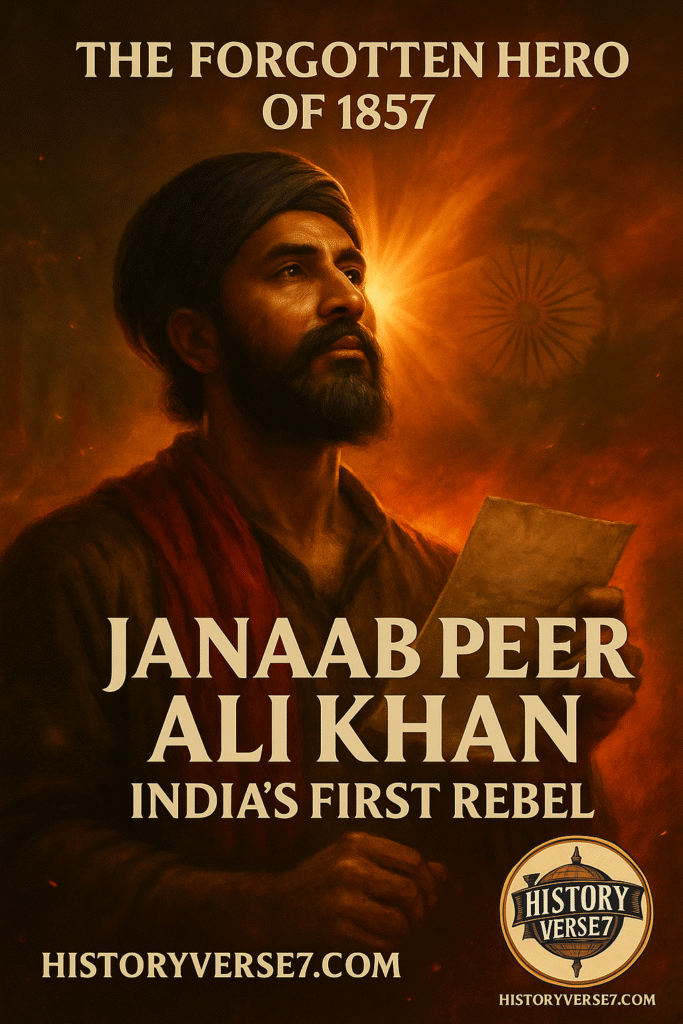
In a world obsessed with fame, Peer Ali Khan chose anonymity. In a time ruled by fear, he chose defiance. And in a moment that demanded compromise, he chose the noose.
Janaab Peer Ali Khan was not just a revolutionary. He was a reminder that resistance begins with truth—and that even the smallest voice can shake an empire.
Sources:
Peer Ali Khan – Wikipedia
Historified – Peer Ali Khan: A Revolutionary Lost in History
Indian Culture Portal – Peer Ali Khan
Table of Contents
🧒 1812 – Birth in Azamgarh, Uttar Pradesh
The Silent Spark of a Future Rebel
📍 Geographic Roots: Azamgarh’s Forgotten Son
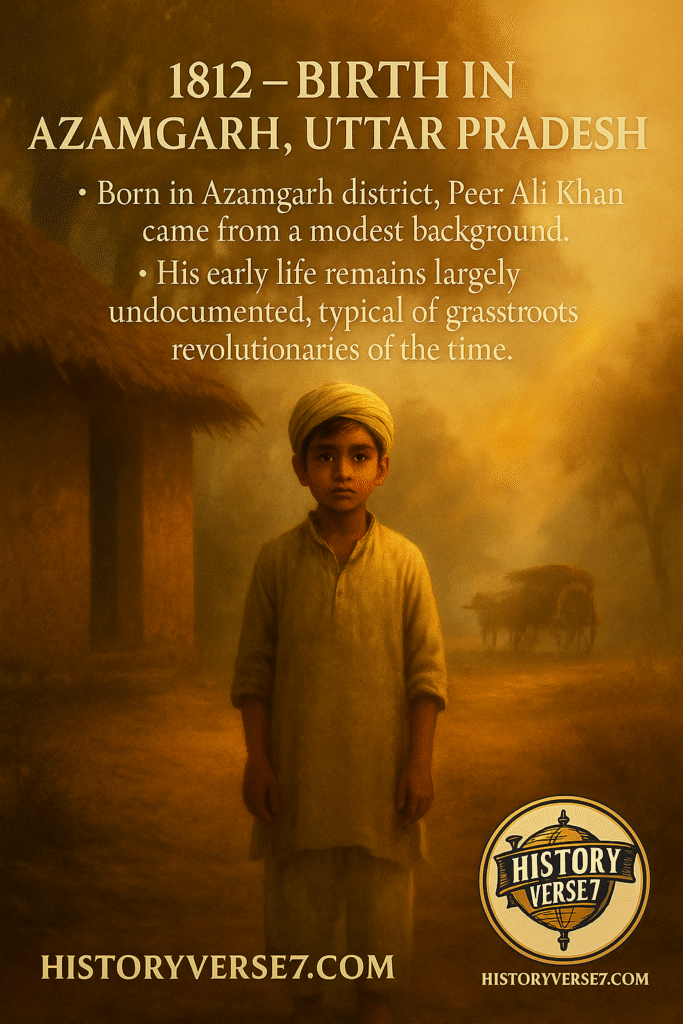
In the quiet fields of Azamgarh, a district tucked deep within the heart of Uttar Pradesh, Janaab Peer Ali Khan was born in 1812. His arrival didn’t shake empires or summon headlines—but it planted a seed. A seed that would one day grow into one of India’s earliest martyrs of resistance. Janaab Peer Ali Khan came from modest circumstances. His family had no land, no titles, and no political influence. But what they lacked in privilege, they carried in quiet dignity.
Azamgarh, during the early 19th century, was a region simmering with unrest. British land revenue policies had begun to erode traditional livelihoods. The Permanent Settlement Act and exploitative zamindari systems created a climate of economic suffocation. Farmers lost land. Artisans lost trade. And families like that of Janaab Peer Ali Khan lived under the weight of colonial extraction.
Yet, in this soil of hardship, something else was growing—defiance. Azamgarh was home to poets, reformers, and thinkers. The air was thick with stories of resistance, whispered in homes and sung in folk verses. Janaab Peer Ali Khan was born into this landscape—not as a warrior, but as a witness. And soon, as a rebel.
🧒 Childhood in Silence: The Unrecorded Years
The early life of Janaab Peer Ali Khan remains undocumented—a fate shared by many grassroots revolutionaries. Colonial historians rarely chronicled the lives of those who didn’t wear medals or speak in courts. But silence doesn’t mean insignificance. It means sacrifice.
What we do know is this: Janaab Peer Ali Khan ran away from home as a child. Whether driven by hardship, curiosity, or a deeper calling, he left Azamgarh behind and arrived in Patna, Bihar. Alone but determined, he wandered the streets until a local zamindar named Nawab Meer Abdullah took him in—not as a servant, but as a son.
This act of compassion would shape the destiny of Janaab Peer Ali Khan. Under the zamindar’s care, he was educated, mentored, and trained in the art of bookbinding. He learned Urdu, Persian, and Arabic. He absorbed the philosophies of resistance, the poetry of rebellion, and the politics of silence. Janaab Peer Ali Khan was no longer just a runaway—he was becoming a revolutionary.
📚 The Bookbinder’s Apprenticeship: Ink Before Arms
In a time when rebellion was brewing, books were weapons. Janaab Peer Ali Khan’s choice of profession was not just practical—it was prophetic. As a bookbinder, he gained access to literature, ideas, and networks. His shop in Patna became more than a business—it became a clandestine hub for revolutionary thought.
He didn’t shout slogans. He stitched them into pages.
He didn’t carry guns. He carried pamphlets.
And in doing so, Janaab Peer Ali Khan became a quiet architect of India’s first war of independence.
His shop attracted thinkers, rebels, and messengers. It became a sanctuary for dissent. He printed anti-British leaflets, distributed coded messages, and connected revolutionaries across regions. His work laid the foundation for later freedom fighters like Bhagat Singh, who also used literature as a tool of resistance.
Janaab Peer Ali Khan understood something few did at the time: ideas travel faster than armies. His printed materials didn’t just inform—they ignited. He used Urdu, Persian, and Hindi to reach diverse audiences. His leaflets criticized British policies, exposed injustices, and called for unity among Hindus and Muslims.
🧠 The Making of a Revolutionary Mind
The transformation of Janaab Peer Ali Khan from a runaway child to a revolutionary was gradual but relentless. He observed British injustice, absorbed radical ideas, and began to print and distribute anti-colonial literature. His shop became a sanctuary for rebels, thinkers, and dreamers.
He wasn’t just reacting to oppression—he was strategizing against it. His mind was a battlefield long before 1857 erupted. British intelligence began tracking him, labeling him a “dangerous agitator.” But Janaab Peer Ali Khan was elusive. His operations were decentralized, his messages encrypted, and his loyalty unshakable.
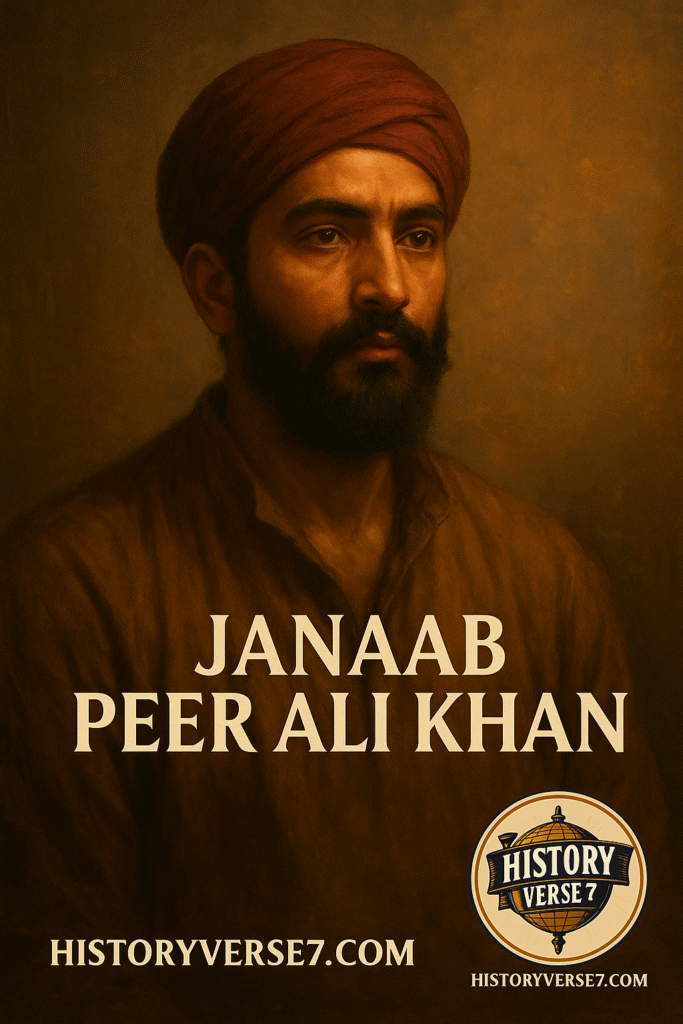
He built a network of 33 freedom fighters, many of whom operated in secrecy across Bihar and Bengal. These men weren’t soldiers—they were thinkers, messengers, and organizers. They distributed pamphlets, coordinated meetings, and planned uprisings. And at the center of it all was Janaab Peer Ali Khan—the bookbinder who became a revolutionary.
🧭Why His Early Life Still Matters
In today’s world, where fame often overshadows substance, the story of Janaab Peer Ali Khan reminds us that true revolution begins in silence. His early life wasn’t marked by grand gestures or dramatic speeches. It was marked by resilience, learning, and quiet defiance.
He didn’t seek glory. He sought justice.
He didn’t crave attention. He craved freedom.
And in doing so, Janaab Peer Ali Khan became immortal.
His journey from Azamgarh to Patna is more than a geographic shift—it’s a spiritual one. It’s the journey of a soul that refused to be broken, a mind that refused to be silenced, and a heart that refused to betray its people.
📖 Book References & Sources
- Rebels Against the Raj by Ramachandra Guha
- The Great Rebellion of 1857 by Rudrangshu Mukherjee
- Peer Ali Khan – Wikipedia
- Historified – Peer Ali Khan
- Indian Culture Portal – Peer Ali Khan
- New Age Islam – Peer Ali Khan
🕊️ Ready to Meet the Rebel?
Janaab Peer Ali Khan’s journey didn’t begin with rebellion—it began with resilience.
From Azamgarh’s silence to Patna’s underground press, his story is a reminder that even the quietest beginnings can lead to the loudest legacies.
👉 Continue reading to uncover how this 📚 1830s–1840s – Settles in Patna, Bihar .
Explore His Revolutionary Years →📚 1830s–1840s – Settles in Patna, Bihar
The Bookbinder Who Bound a Nation’s Rage
🏙️ Arrival in Patna: A City of Contrasts
In the early 1830s, Janaab Peer Ali Khan arrived in Patna, a city that pulsed with contradictions. On one hand, it was a colonial administrative hub, dotted with British cantonments and revenue offices. On the other, it was a cultural crucible—home to poets, scholars, and merchants who whispered of freedom in hushed tones.
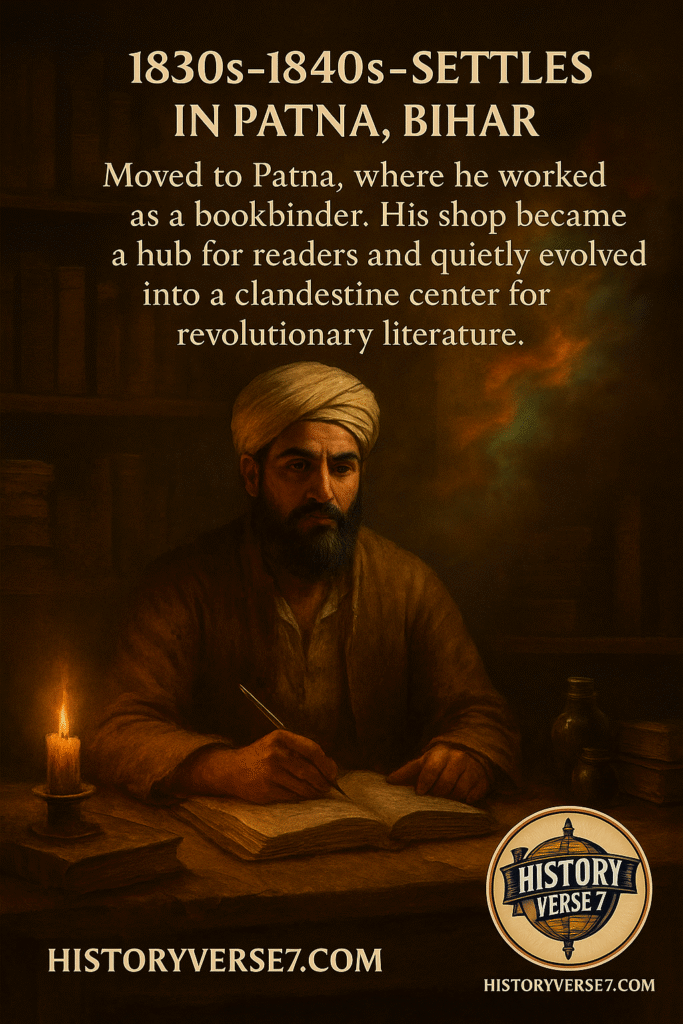
For Janaab Peer Ali Khan, Patna was both refuge and rebirth. Having fled his native Azamgarh as a child, he found shelter under the patronage of a local zamindar. But now, as a young man in his twenties, he was ready to carve his own path. He chose the trade of bookbinding—a profession that seemed humble, but would soon become revolutionary.
🧵 1831–1833: Learning the Craft, Listening to the Streets
The first few years in Patna were about mastery and observation. Janaab Peer Ali Khan apprenticed under seasoned binders, learning how to stitch, press, and preserve manuscripts. But he wasn’t just binding books—he was absorbing ideas. His shop, located near the bustling lanes of old Patna, attracted scholars, clerks, and curious readers.
He listened. He learned. He watched the British officers swagger past native workers. He heard stories of land seizures, forced labor, and cultural humiliation. And slowly, the seed of resistance began to take root.
📖 1834–1836: The Shop Becomes a Salon
By the mid-1830s, Janaab Peer Ali Khan had established his own bookbinding shop. It was modest—just a wooden bench, a few tools, and stacks of worn manuscripts. But it became a salon of ideas. Readers gathered not just to repair books, but to discuss them. Clerks brought in government documents. Students brought poetry. Travelers brought news from Calcutta and Delhi.
And Janaab Peer Ali Khan listened to it all. He began collecting banned texts, revolutionary tracts, and Persian treatises on justice and governance. His shop became a library of resistance, hidden in plain sight.
🕵️ 1837–1839: The First Whispers of Rebellion
As the 1830s drew to a close, the British grip on India tightened. New taxes, racial laws, and cultural impositions stirred unrest. In Patna, the discontent was palpable. Janaab Peer Ali Khan began to print and circulate handwritten pamphlets, criticizing British policies and calling for unity among Hindus and Muslims.
He used coded language, poetic metaphors, and religious symbolism to evade detection. His leaflets were passed hand-to-hand, read in secret, and burned after reading. He wasn’t just binding books anymore—he was binding a movement.
🔥 1840–1842: Building the Network
By the early 1840s, Janaab Peer Ali Khan had built a network of like-minded patriots. Some were clerks in British offices. Others were students, traders, or artisans. They met in the back of his shop, under the pretense of literary discussion. But their real agenda was resistance.
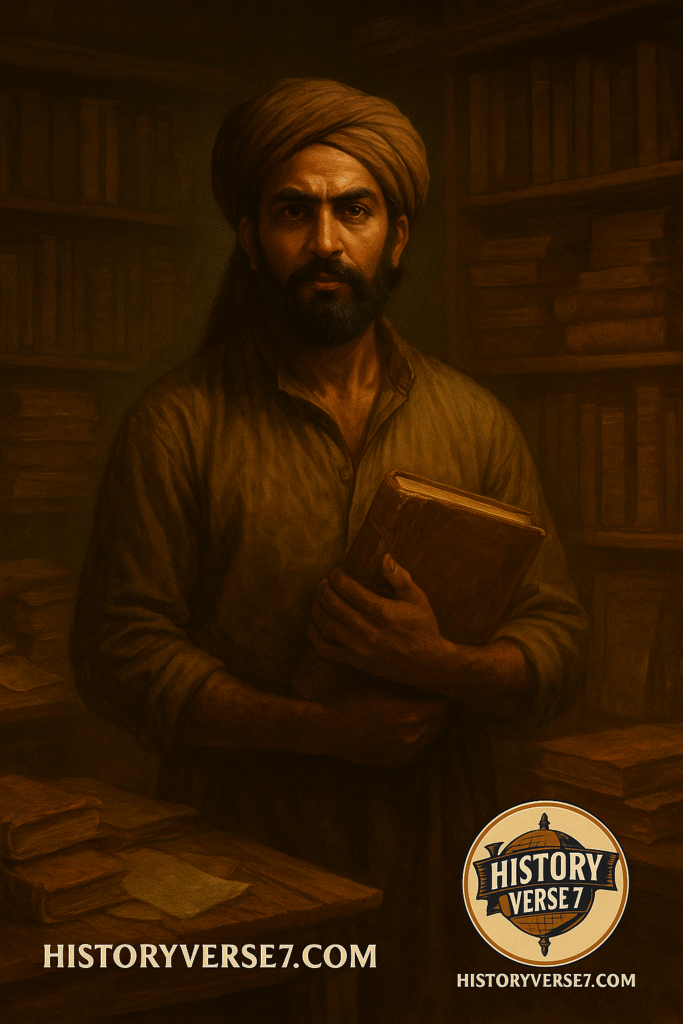
They discussed strategy, shared intelligence, and coordinated the distribution of revolutionary literature. Janaab Peer Ali Khan became the nerve center of Patna’s underground movement—a role he embraced with quiet conviction.
📖 Book References & Sources
- Rebels Against the Raj by Ramachandra Guha
- The Great Rebellion of 1857 by Rudrangshu Mukherjee
- Peer Ali Khan – Wikipedia
- The Credible History – Peer Ali Khan and the 1857 Uprising in Patna
- New Age Islam – Peer Ali Khan
📚 The Bookbinder Was Just Getting Started
Janaab Peer Ali Khan didn’t just repair books—he repaired a nation’s broken spirit.
His shop in Patna became a sanctuary of resistance, a press of purpose, and a cradle of courage.
👉 Continue reading to witness how this 🕵️♂️ Early 1850s – Begins Underground Activities.
Read His Final Stand →🕵️♂️ 1840–1850: The Rise of the Underground Rebel
How Janaab Peer Ali Khan Turned Ink into Insurrection
📍 1840–1842: The Shift from Craftsman to Catalyst
By the dawn of the 1840s, Janaab Peer Ali Khan had already earned respect in Patna as a skilled bookbinder. But beneath the surface, something deeper stirred. The colonial grip on India was tightening—new taxes, cultural erasure, and racial laws were suffocating native dignity. Janaab Peer Ali Khan, who had spent years listening to scholars and stitching manuscripts, began to see literature not just as knowledge—but as resistance.
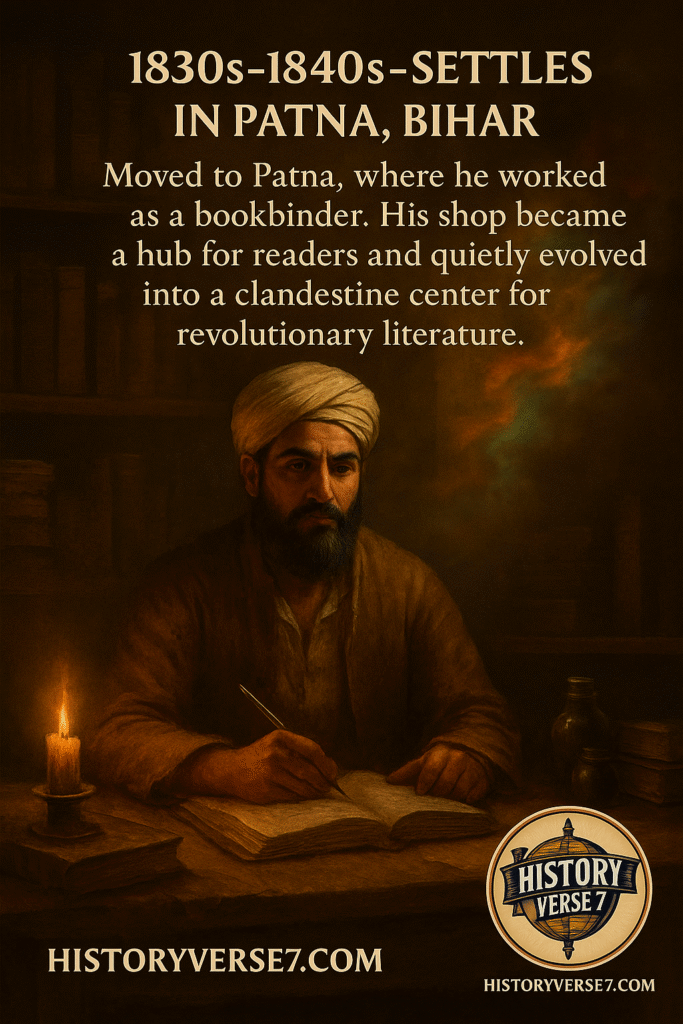
He started collecting banned texts, revolutionary essays, and Persian treatises on justice. His shop became a repository of rebellion, hidden in plain sight. And slowly, he began writing his own pamphlets—anonymous, poetic, and incendiary.
📜 1843–1845: The First Pamphlets of Defiance
During these years, Janaab Peer Ali Khan began printing and distributing anti-British pamphlets. These weren’t crude slogans—they were carefully crafted essays that exposed colonial exploitation, called for unity, and invoked spiritual duty. He used metaphors from Islamic and Hindu scriptures to mask his messages, allowing them to circulate undetected.
His leaflets reached mosques, temples, tea stalls, and schools. They were read in whispers, copied by hand, and burned after reading. Janaab Peer Ali Khan had weaponized the written word. And the British had no idea who was behind it.
🧠 1846–1847: Building the Secret Network
Realizing the power of coordinated action, Janaab Peer Ali Khan began building a secret network of freedom fighters. These weren’t soldiers—they were clerks, students, artisans, and traders. He trained them in cipher writing, safe printing, and message distribution.
Meetings were held in the back of his shop, under the guise of literary discussions. Messages were stitched into book bindings. Revolutionary tracts were hidden inside religious texts. Janaab Peer Ali Khan had created a clandestine communication system, decades ahead of its time.
🔥 1848–1849: Literature as a Weapon
By the late 1840s, Janaab Peer Ali Khan’s pamphlets had become sharper, bolder, and more widespread. He criticized British land policies, exposed the cruelty of forced labor, and called for spiritual rebellion. His writings didn’t just inform—they ignited.
He used Urdu, Persian, and Hindi to reach diverse audiences. His messages emphasized unity across caste and creed. He argued that freedom was a divine obligation, and that silence was complicity. His words stirred unrest in Patna, Bengal, and beyond.
🕵️ 1850: The British Begin to Notice
By 1850, British intelligence had begun to suspect underground activity in Patna. Surveillance increased. Informants were planted. But Janaab Peer Ali Khan remained elusive. His operations were decentralized, his messages encrypted, and his loyalty unshakable.
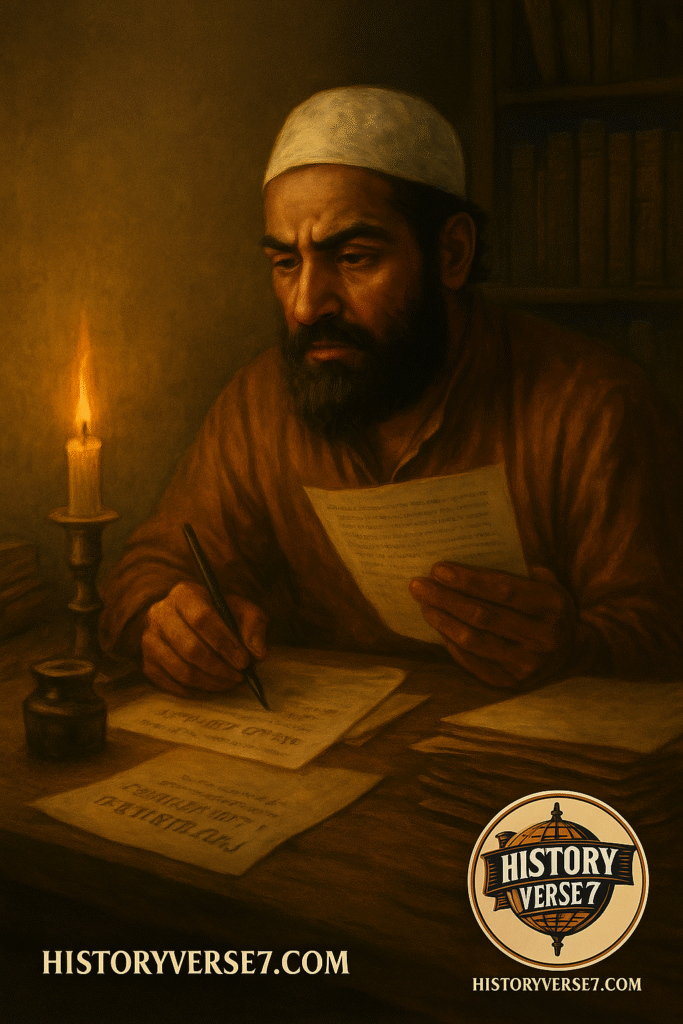
He was questioned, warned, and watched. But he refused to stop. He believed that truth was worth the risk, and that martyrdom was better than betrayal. His resolve became legendary among his network.
💡 Why This Decade Matters
The 1840s weren’t just a prelude—they were the blueprint. Janaab Peer Ali Khan didn’t wait for 1857 to rebel. He laid the intellectual and logistical foundation for it. His underground press, secret network, and fearless literature became the invisible scaffolding of India’s first war of independence.
He proved that revolution doesn’t begin with guns—it begins with ideas. And that even the quietest man, armed with conviction and a printing press, can shake an empire.
📖 Book References & Sources
- Rebels Against the Raj by Ramachandra Guha
- The Great Rebellion of 1857 by Rudrangshu Mukherjee
- Peer Ali Khan – Wikipedia
- Historified – Peer Ali Khan
- New Age Islam – Peer Ali Khan
🕵️ The Network Was Ready
Janaab Peer Ali Khan didn’t wait for history—he built it.
His underground press and secret network laid the foundation for India’s first war of independence.
👉 Continue reading to witness how this quiet rebel faced arrest, interrogation, and martyrdom in 1857.
Read His Final Stand →⚖️ 1857: The Final Stand of Janaab Peer Ali Khan
From Underground Rebel to Immortal Martyr
🔥 The Uprising Begins
By mid-1857, India was ablaze. The First War of Independence, sparked in Meerut, had spread like wildfire. Cities like Kanpur, Lucknow, and Delhi were in revolt. But in Patna, the resistance was quieter—strategic, underground, and deeply rooted in literature. At the heart of it stood Janaab Peer Ali Khan, the bookbinder turned revolutionary.
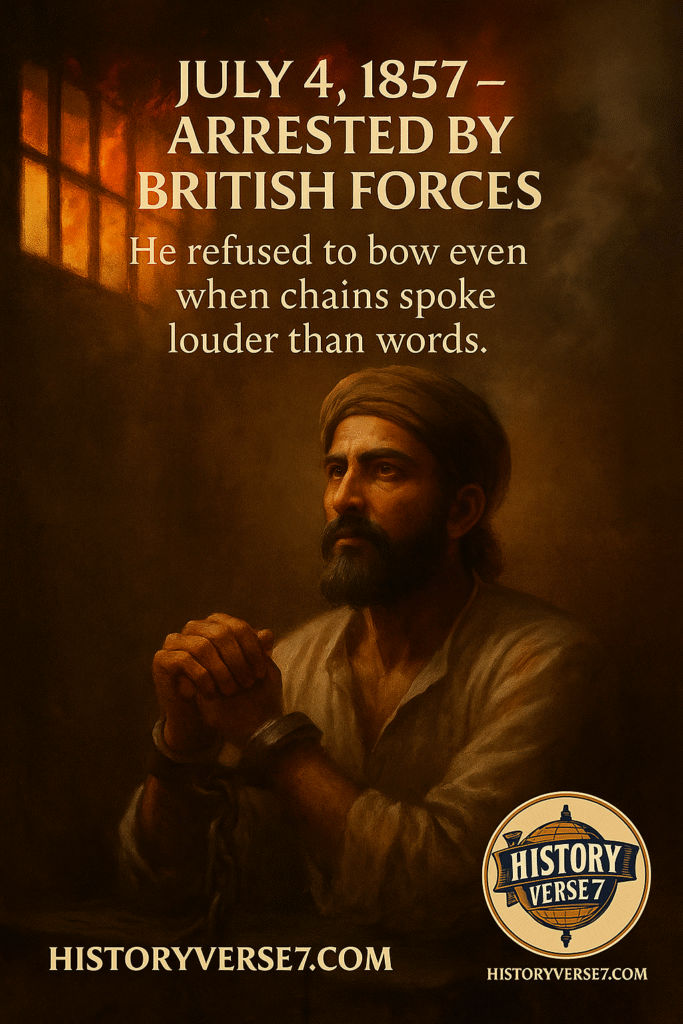
His shop had long been a covert press, printing anti-British pamphlets, coded messages, and revolutionary manifestos. His network of 33 freedom fighters operated in secrecy, distributing literature and coordinating rebellion. As British authorities scrambled to contain the uprising, they turned their gaze toward Patna—and toward Janaab Peer Ali Khan.
🕵️ July 4, 1857 – The Arrest
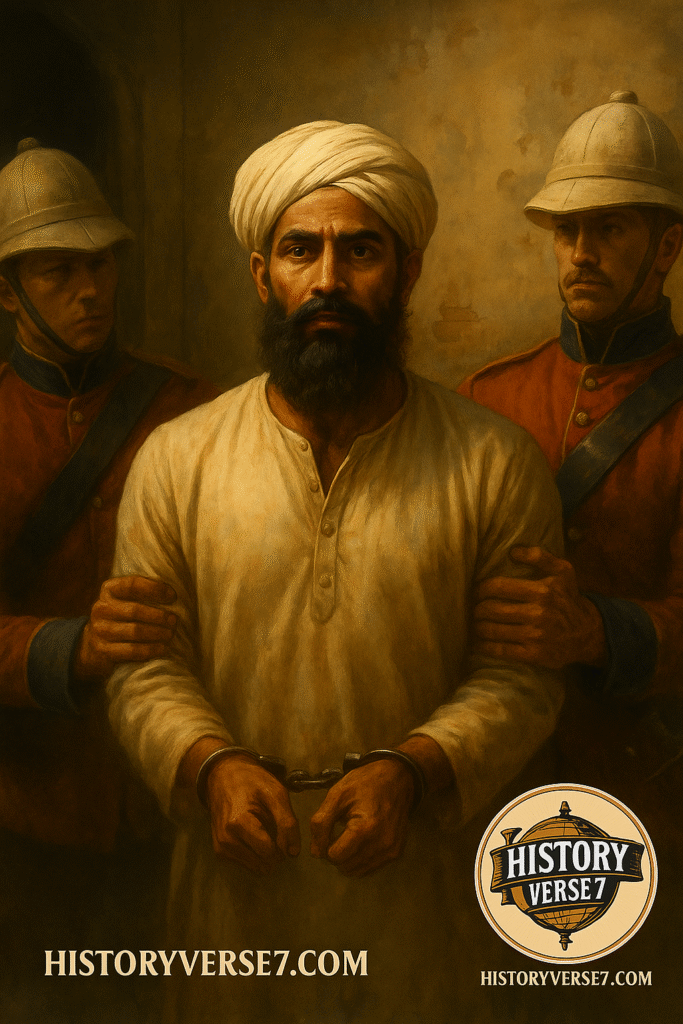
On July 4, 1857, British forces raided Peer Ali Khan’s shop. He was arrested along with 33 associates. The charges were severe: mutiny, sedition, and the murder of an English nobleman. His materials were confiscated, his network dismantled, and his name entered into colonial records—not as a criminal, but as a threat.
Despite brutal interrogation, Janaab Peer Ali Khan refused to betray his comrades. He didn’t name names. He didn’t plead for mercy. His silence was his final act of resistance. According to Times of India, he turned down a clemency offer from Patna Commissioner William Taylor “with a broad smile.”
His final words, as recorded by witnesses, were chillingly prophetic:
“You may hang me, or such as me, every day, but thousands will rise in my place, and your purpose will never succeed.”
⛓️ The Interrogation
Peer Ali Khan was tortured. He was beaten, starved, and threatened. But he remained unshaken. His interrogators were stunned. They expected fear. They received unshakable resolve.
He was offered leniency in exchange for information. He refused. He chose the noose over betrayal. His silence was not weakness—it was loyalty. His defiance wasn’t loud—it was legendary.
As New Age Islam notes, “He used his bookselling profession to support the Great Revolt of 1857. His shop served as a covert hub for distributing revolutionary materials in Patna.”
🕊️ The Legacy That Refused to Die
For decades, Janaab Peer Ali Khan’s name was missing from textbooks. Overshadowed by figures like Mangal Pandey and Rani Lakshmibai, his story faded into silence. But silence is where he thrived. And silence is where his legacy waited.
Today, historians, writers, and patriots are reclaiming his story. His grave in Patna is a site of remembrance. His name is rising again—on blogs, in books, and in the hearts of those who believe that freedom begins with truth.
📚 Why His Martyrdom Still Matters
Janaab Peer Ali Khan didn’t lead armies. He led ideas.
He didn’t fire bullets. He fired minds.
He didn’t seek glory. He sought justice.
His martyrdom reminds us that revolution isn’t always loud—it’s often silent, stubborn, and sacred. He chose death over compromise. Ink over violence. Conviction over comfort.
In a world obsessed with fame, Janaab Peer Ali Khan chose anonymity. In a time ruled by fear, he chose defiance. And in a moment that demanded betrayal, he chose the noose.
🧠 Legacy Lessons from Janaab Peer Ali Khan
- Resistance begins with truth
- Silence can be louder than slogans
- Martyrdom doesn’t need medals—it needs meaning
- History isn’t written by victors—it’s remembered by the brave
His story is not just history—it’s a heartbeat. A reminder that even the quietest voice, armed with conviction, can shake an empire.
📖 Book References & Sources
- Peer Ali Khan – Wikipedia
- Times of India – Peer Ali: The Lost Hero of 1857
- New Age Islam – Peer Ali Khan: The Quiet Revolutionary
🪦 His Death Was Not the End
Janaab Peer Ali Khan’s execution didn’t silence rebellion—it immortalized it.
His final words still echo through the soil of Patna, reminding us that courage doesn’t need a crowd—it needs conviction.
👉 Continue reading to explore how his🪦 July 7, 1857 – The Execution.
Explore His Living Legacy →⚖️ July 7, 1857 – Public Execution in Patna
The Noose That Immortalized Janaab Peer Ali Khan
🕵️ Arrested for Defiance, Not Violence
In the heat of the 1857 uprising, Janaab Peer Ali Khan was arrested on July 4, 1857, in Patna. His crime? Printing truth. Distributing rebellion. Refusing silence. The British charged him with mutiny and the murder of an English opium agent, Dr. Lyell. But the real reason was fear—fear of his words, his network, and his unwavering resolve.
He was interrogated by Patna Commissioner William Taylor, who offered him clemency in exchange for betrayal. Janaab Peer Ali Khan declined—with a smile. He refused to name allies. He refused to plead. He chose the gallows over compromise.
⛓️ Torture and Silence
After his arrest, Janaab Peer Ali Khan was brutally tortured. He was beaten, starved, and humiliated. But he remained silent. His silence was not weakness—it was loyalty. His refusal to speak was louder than any slogan.
British officials were stunned. They expected fear. They received unshakable conviction. His silence became a statement. His pain became a protest. And his final words became prophecy.
🪦 July 7, 1857 – The Execution
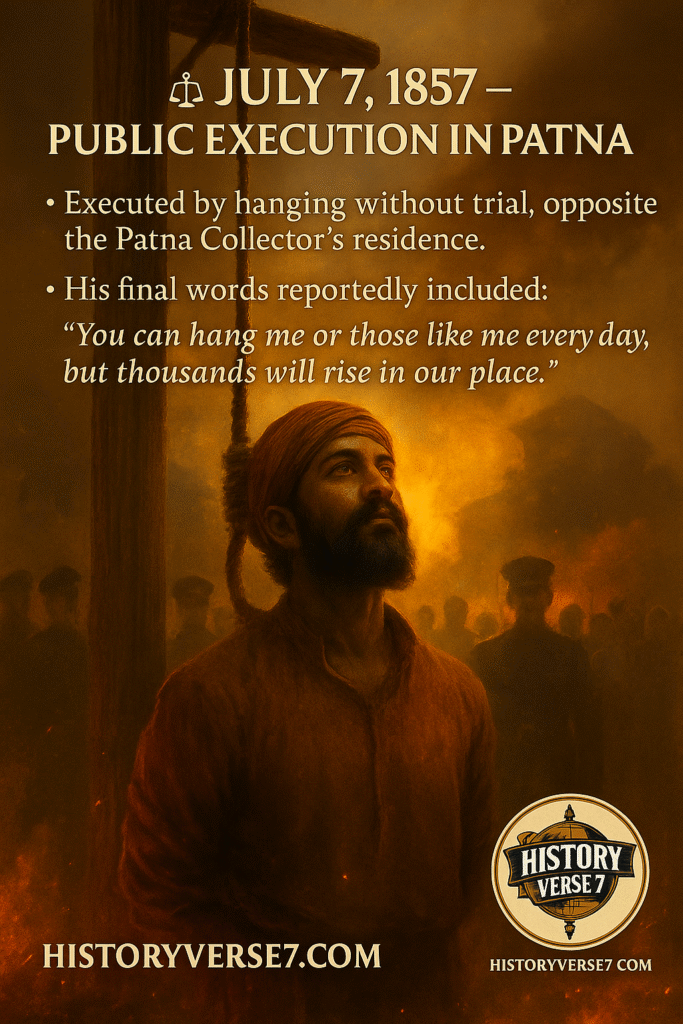
On July 7, 1857, Janaab Peer Ali Khan was hanged without trial, opposite the Patna Collector’s residence. The location was symbolic—a place of colonial power, now turned into a stage for martyrdom. Hundreds gathered. Some wept. Some prayed. All remembered.
His final words, as recorded by Times of India, were:
“You can hang me or those like me every day, but thousands will rise in our place and your purpose will never succeed.”
He didn’t plead. He proclaimed.
He didn’t flinch. He forgave.
And in that moment, Janaab Peer Ali Khan became immortal.
🏞️ The Site Today
The execution site, once a symbol of colonial authority, is now a park named after Janaab Peer Ali Khan. It stands as a tribute to his sacrifice—a place where silence once reigned, now echoing with legacy.
Visitors come to reflect, to honor, and to remember. His grave, simple and unadorned, carries the weight of a nation’s gratitude. It is not just a resting place—it is a reminder.
📚 Why His Execution Still Matters
Janaab Peer Ali Khan didn’t die for fame. He died for freedom.
He didn’t seek recognition. He sought justice.
His execution wasn’t the end—it was the beginning.
His death reminds us that martyrdom doesn’t need medals—it needs meaning. That resistance isn’t always loud—it’s often silent, stubborn, and sacred. And that even the quietest man, armed with conviction, can shake an empire.
🧠 Legacy Lessons from Janaab Peer Ali Khan
- Truth is worth dying for
- Silence can be resistance
- Conviction is louder than fear
- Legacy lives beyond death
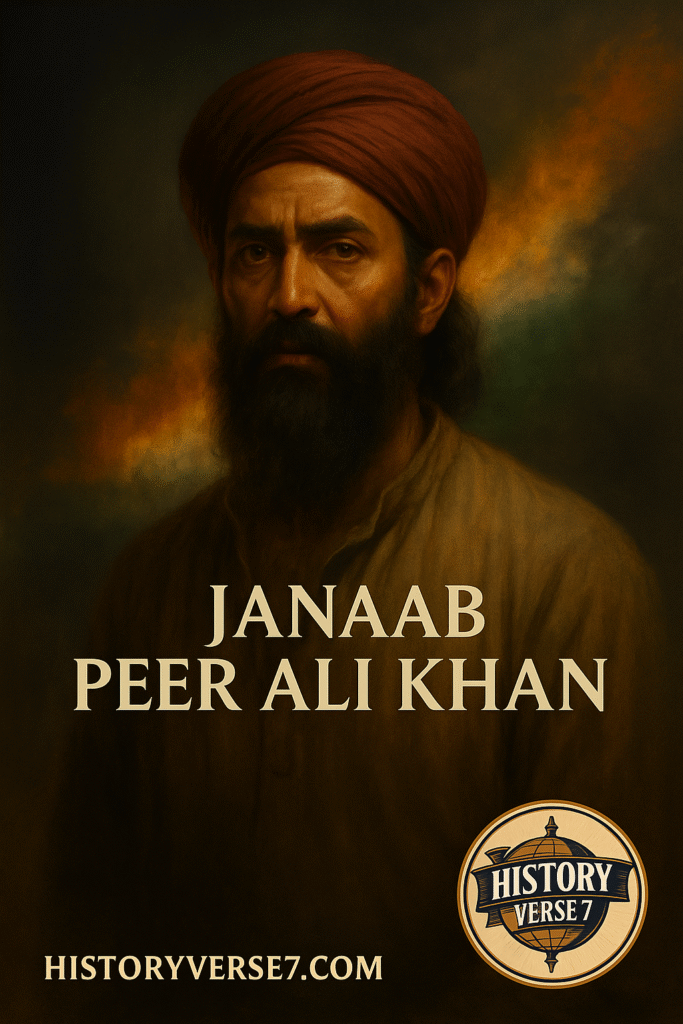
His story is not just history—it’s a heartbeat. A reminder that courage doesn’t need a crowd—it needs conviction.
📖 Book References & Sources
- Peer Ali Khan – Wikipedia
- Times of India – Peer Ali: The Lost Hero of 1857
- Jagran – पीर अली को पटना में फांसी दी गई थी
🪦 His Death Was Not the End
Janaab Peer Ali Khan’s execution didn’t silence rebellion—it immortalized it.
His final words still echo through the soil of Patna, reminding us that courage doesn’t need a crowd—it needs conviction.
👉 Continue reading to explore how his legacy is being revived today through tributes, memorials, and storytelling.
Explore His Living Legacy →🕊️ Beyond the Noose: The Living Legacy of Janaab Peer Ali Khan
How a Quiet Revolutionary Became a Symbol of Eternal Resistance
🪦 The Grave That Became a Shrine
After his execution on July 7, 1857, Janaab Peer Ali Khan was buried quietly in Patna. There were no garlands, no speeches, no headlines. But the people remembered. His grave, tucked away in the city’s heart, became a silent shrine—a place where whispers of gratitude replaced the silence of history.
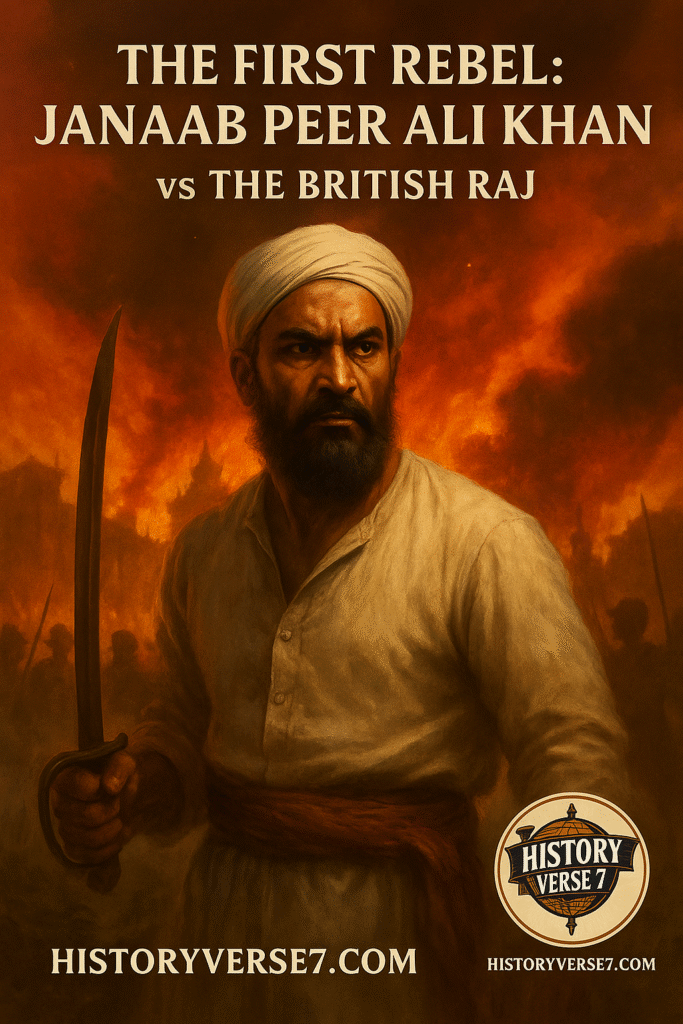
Over time, the site of his execution—once a symbol of colonial terror—was transformed. Today, it is home to Shaheed Peer Ali Park, a public space named in his honor. The park stands not just as a memorial, but as a living testament to the man who chose the noose over betrayal.
🏛️ Memorials and Recognition
For decades, Janaab Peer Ali Khan remained a footnote in India’s freedom narrative. Overshadowed by louder names, his story was passed down in oral traditions, family memories, and regional folklore. But in recent years, historians and cultural custodians have begun to reclaim his legacy.
- In 2008, the Government of Bihar officially named the park in his honor.
- His life is now part of school textbooks in Bihar, ensuring that future generations know his name.
- Cultural organizations have hosted annual tributes, poetry readings, and exhibitions in his memory.
These efforts are not just about remembrance—they are about restoration. They are about giving Janaab Peer Ali Khan the place he always deserved in India’s freedom story.
📖 His Story in Modern Literature and Media
Writers, bloggers, and historians have begun to document the life of Janaab Peer Ali Khan with renewed vigor. His story has appeared in:
- Rebels Against the Raj by Ramachandra Guha
- The Great Rebellion of 1857 by Rudrangshu Mukherjee
- Historified’s tribute article
- New Age Islam’s profile
These works don’t just tell his story—they resurrect his voice. They remind us that Janaab Peer Ali Khan was not a side note—he was a cornerstone.
📢 Relevance in Today’s India
In an age of noise, Janaab Peer Ali Khan’s life offers a radical lesson: that quiet conviction can be more powerful than loud rhetoric. His story resonates with today’s youth, activists, and thinkers who seek change not through chaos, but through clarity.
He teaches us that:
- Resistance can be intellectual
- Sacrifice doesn’t need spectacle
- Unity across faiths is revolutionary
- Legacy is built in silence, not selfies
In a time when history is often politicized, Janaab Peer Ali Khan stands as a non-partisan symbol of courage—a man who gave everything, asked for nothing, and left behind a legacy that refuses to die.
🧠 What We Must Remember
- He was one of the first martyrs of 1857
- He used literature as a weapon
- He built a secret network of 33 revolutionaries
- He was executed without trial for refusing to betray his comrades
- His final words became a prophecy of India’s eventual freedom
Janaab Peer Ali Khan reminds us that freedom is not gifted—it is earned. And sometimes, it is earned not by those who shout the loudest, but by those who suffer in silence and stand unshaken.
🧵 His Legacy in the Threads of Time
Today, as India reflects on its freedom, the story of Janaab Peer Ali Khan is more than relevant—it is essential. His life bridges the gap between grassroots resistance and national awakening. He represents the countless unnamed, unarmed, and uncelebrated heroes who bled ink before blood.
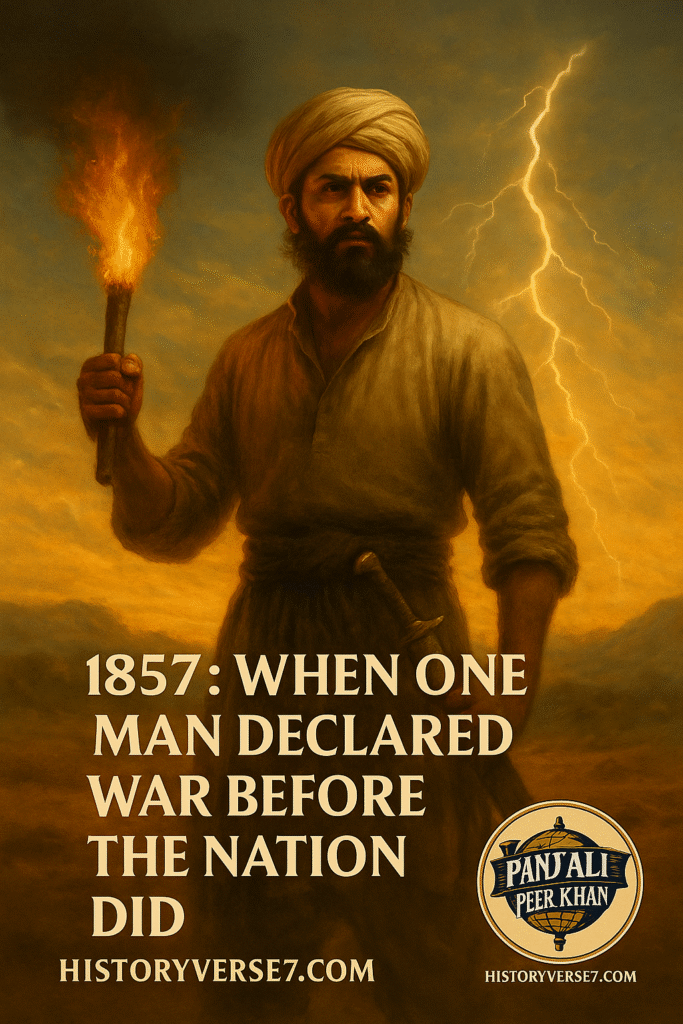
His legacy lives on in:
- Every student who reads his name in a textbook
- Every writer who dares to speak truth to power
- Every citizen who believes that silence can be strength
📖 Book References & Sources
- Rebels Against the Raj by Ramachandra Guha
- The Great Rebellion of 1857 by Rudrangshu Mukherjee
- Peer Ali Khan – Wikipedia
- Historified – Peer Ali Khan
- New Age Islam – Peer Ali Khan
- Times of India – Peer Ali: The Lost Hero of 1857
📜 Carry His Legacy Forward
Janaab Peer Ali Khan’s story is not just a tribute—it’s a torch.
Share his legacy. Teach his name. Let his silence speak through your voice.
👉 Explore more unsung heroes of India’s freedom struggle in our Legacy Series.
Discover More Forgotten Legends →🕊️ Conclusion: The Man Who Chose the Noose Over Silence
In the grand narrative of India’s freedom struggle, some heroes roared through battlefields. Others whispered through ink. Janaab Peer Ali Khan was the latter—a man who didn’t fight with weapons, but with words. A bookbinder by trade, a revolutionary by conviction, and a martyr by choice.
His life was not adorned with medals or monuments during his time. He didn’t seek applause. He sought awakening. From the dusty lanes of Azamgarh to the charged streets of Patna, Janaab Peer Ali Khan stitched rebellion into every page he bound. He built a secret network of freedom fighters, distributed anti-British pamphlets, and turned his humble shop into a sanctuary of resistance.
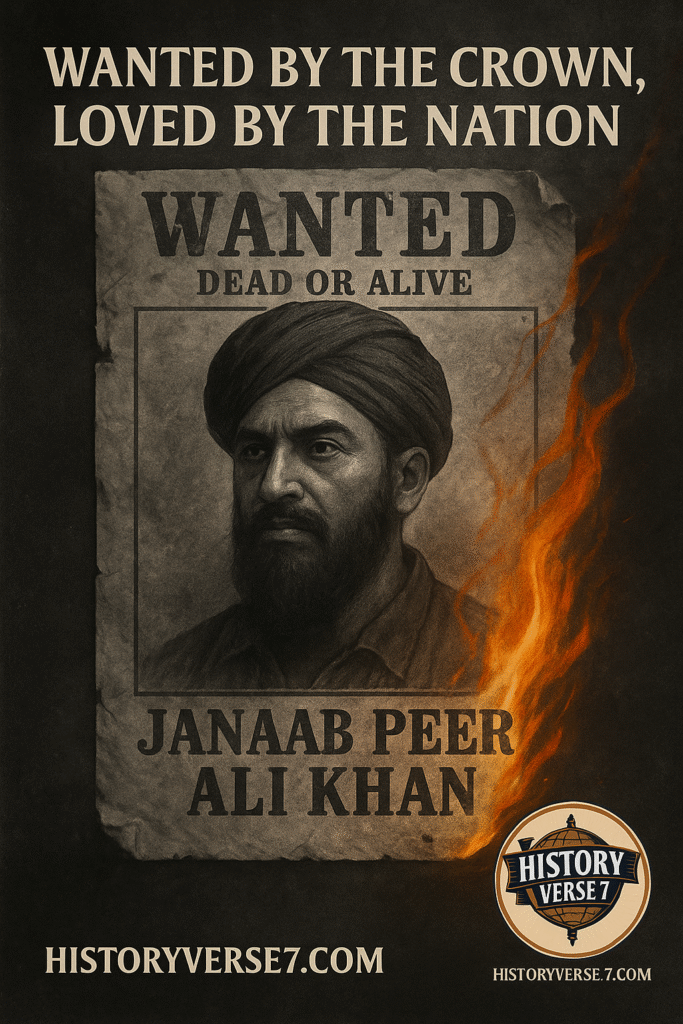
But it was his final act that immortalized him.
On July 7, 1857, when the British offered him mercy in exchange for betrayal, he smiled and refused. He chose the noose over compromise. He chose silence over surrender. And in doing so, he gave India one of its earliest martyrs—not of war, but of unwavering will.
His final words weren’t just defiance—they were prophecy:
“You can hang me or those like me every day, but thousands will rise in our place.”
And thousands did rise. From Mangal Pandey to Bhagat Singh, from Azad to Bose—the spirit of Janaab Peer Ali Khan echoed in every act of rebellion that followed.
Today, his grave in Patna stands quietly, but his legacy roars louder than ever. The park named in his honor, the textbooks that now carry his name, and the tributes like yours, Abhishek, ensure that his story is no longer forgotten.
Because Janaab Peer Ali Khan wasn’t just a man. He was a movement. A reminder that revolutions begin in silence. That courage doesn’t need a crowd. And that history is shaped not just by those who speak—but by those who refuse to speak when silence is resistance.
Let his story be more than a memory. Let it be a mirror.
For every creator, every thinker, every rebel in today’s India—Janaab Peer Ali Khan is proof that even the quietest voice, when guided by truth, can shake an empire.
Internal Link: 1https://historyverse7.com/alluri-sitarama-raju/ 2https://historyverse7.com/lakshmi-sahgal/
📘 FAQ: Understanding Janaab Peer Ali Khan
1. Why did Janaab Peer Ali Khan choose bookbinding over a more visible form of resistance?
Answer:
Because he understood that revolutions begin in the mind before they reach the battlefield. Bookbinding gave Janaab Peer Ali Khan access to ideas, networks, and narratives. It allowed him to quietly circulate revolutionary thought, build trust, and weaponize literature without drawing immediate suspicion. His shop became a silent arsenal—where ink replaced gunpowder, and pages carried the weight of rebellion.
2. Was Janaab Peer Ali Khan’s silence during interrogation an act of strategy or sacrifice?
Answer:
It was both. His silence was a shield—for his comrades, for the movement, and for the future. By refusing to name names, Janaab Peer Ali Khan protected an entire network of revolutionaries. But it was also a spiritual sacrifice. He knew the cost of silence was death, yet he embraced it with dignity. His silence wasn’t emptiness—it was defiance in its purest form.
3. How did Janaab Peer Ali Khan’s actions influence future freedom fighters?
Answer:
Though his name was buried for decades, his methods echoed through time. The use of underground literature, coded messaging, and decentralized networks became hallmarks of later movements—from the Ghadar Party to Bhagat Singh’s Naujawan Bharat Sabha. Janaab Peer Ali Khan proved that resistance didn’t need rifles—it needed resolve, and a printing press.
4. What does Janaab Peer Ali Khan teach us about the power of anonymity in activism?
Answer:
In an age where visibility is often equated with impact, Janaab Peer Ali Khan reminds us that anonymity can be a form of power. He didn’t seek fame. He sought freedom. His legacy wasn’t built on speeches or statues, but on sacrifice. He teaches us that true change-makers often work in the shadows—quietly, consistently, and courageously.
5. If Janaab Peer Ali Khan were alive today, what would his message be to young Indians?
Answer:
He would say: “Don’t wait for history to remember you. Live in a way that honors those it forgot.”
He’d urge today’s youth to read deeply, question boldly, and act with integrity. For Janaab Peer Ali Khan, patriotism wasn’t performance—it was principle. And he’d remind us that every generation has its own noose to resist, and its own truth to print.
Share this content:

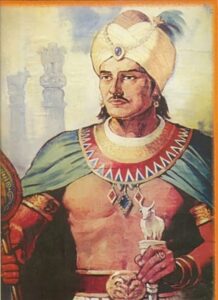
Janaab Peer Ali Khan was not just a revolutionary. He was a reminder that resistance begins with truth—and that even the smallest voice can shake an empire….🚩🚩✨🔥🔥
“You can hang me or those like me every day, but thousands will rise in our place.”janaab peer ali khan 💪👍👌