
🔥 This Isn’t Just History—It’s the Rise of a Legacy Builder
If you came seeking a quiet tale of devotion, prepare to be awakened. This is the story of Jijabai Bhosale—the strategist behind Swarajya, the administrator of Pune, and the mother who shaped a king. She didn’t wait for permission. She carved destiny with her own hands.
🔱 Discover Her Legacy →🩸 Before You Read: This Isn’t Just History—It’s the Story of How One Woman Changed India’s Destiny
When historians write about the Maratha Empire, they speak of Shivaji Maharaj’s military genius, his strategic brilliance, his guerrilla warfare tactics. But they often forget to ask: Who created the man who created the empire?
The answer stands in the shadows of Shivneri Fort, wielding not just a sword, but a vision that would reshape the Deccan for centuries..
Her name was Jijabai Bhosale.
She was not born a queen. She became one through grief, determination, and an unbreakable dream of Swarajya—self-rule. While her husband served foreign sultans, she raised a son who would serve no one but his motherland. While Maratha warriors fought for Mughal gold, she taught her child to fight for Maratha pride.
This is not a story of maternal devotion alone. This is the story of a warrior, an administrator, a strategist, and a revolutionary who disguised her battlefield as a cradle.
If you’re here for a gentle tale of motherhood, you’re in the wrong place. This is the story of how Jijabai Bhosale took revenge—not with a sword, but with a son.
Let’s begin.
🔥 Who Was Jijabai Bhosale? The Yadava Princess Who Became Rajmata
Full Name: Jijabai Shahaji Bhosale (Jadhav)
Born: January 12, 1598, Sindkhed Raja, Buldhana District, Maharashtra
Died: June 17, 1674, Pachad Village, near Raigad Fort
Father: Lakhuji Jadhavrao, a prominent Maratha nobleman and military commander under Nizam Shah
Mother: Mahalasabai Jadhav
Husband: Shahaji Bhosale, military commander serving various sultanates
Children: Shivaji Maharaj (founder of Maratha Empire), Sambhaji (elder son, killed by Afzal Khan)
Also Known As: Rajmata Jijabai, Jijamata, Jijai, Rastramata (Mother of the Nation)
Jijabai Bhosale was born into the illustrious Jadhav family, descendants of the Yadava dynasty of Devagiri. Her father, Lakhuji Jadhavrao, served the Nizam Shahi sultanate with distinction. Her lineage traced back to the legendary Yadavas—the same bloodline that produced Lord Krishna.
But lineage alone doesn’t create legends. Jijabai Bhosale transformed her royal blood into revolutionary fire.
From childhood, she witnessed the humiliation of Hindus under sultanate rule—temples destroyed, women abducted, warriors forced to bow before foreign rulers. While others accepted this as fate, Jijabai burned with a singular question:
“Why are Marathas dying for someone else’s kingdom when they could be building their own?”
This question would become her life’s mission. And its answer would be named Shivaji.
🌅 Early Life: Born into a World of Betrayal and Blood (1598-1616)
The Sindkhed Princess Who Refused to Remain Silent
Born on January 12, 1598, in Sindkhed Raja (present-day Buldhana district), Jijabai bhosale entered a world where Maratha warriors had become mercenaries for Islamic sultanates. Her father, Lakhuji Jadhavrao, commanded respect in the Nizam Shahi court. Her childhood was comfortable, privileged, educated.
But privilege could not shield her from reality.
As a young girl, Jijabai Bhosale witnessed the daily degradation of Hindu society under sultanate rule. She heard stories of temples razed to the ground, of Brahmin priests forced to seek justice from Muslim sultans, of Kshatriya warriors bribing sultans to return their abducted wives.
Scholar accounts note that Jijabai’s education extended beyond traditional women’s learning. She studied:
- Sanskrit scriptures and philosophy
- Military strategy and administration
- Horsemanship and sword fighting
- Political diplomacy and statecraft
Her mother, Mahalasabai, and the family’s spiritual advisor introduced her to the teachings of dharma and the legacy of the Yadava kings who once ruled from Devagiri (later renamed Daulatabad by invaders).
But what shaped Jijabai bhosale most was not what she learned—it was what she witnessed.
Every day brought new stories of humiliation. Hindu festivals suppressed. Sacred sites desecrated. Maratha youth dying in battles that enriched foreign rulers while their own families starved.
Jijabai Bhosale heart filled not with hatred, but with a burning question: “When will we fight for ourselves?”
That question had no answer. Yet.
The Childhood Prayer That Became a Prophecy
According to oral traditions preserved in Maratha households, young Jijabai would pray daily to Bhavani Devi (Goddess Durga):
“Bless me with a son like Lord Rama who will destroy evil, or a daughter like Goddess Durga who will slay demons and restore dharma.”
This wasn’t the prayer of a naive child. This was a revolutionary’s manifesto, wrapped in the language of devotion.
💔 Marriage and Heartbreak: The Bhosale-Jadhav Feud That Tore Families Apart
The Union That Should Have United Maratha Power
Around 1605-1606, at approximately 7-8 years old (as was customary in that era), Jijabai Bhosale was married to Shahaji Bhosale, son of Maloji Bhosale of Verul. The Bhosale family, though of lesser noble rank than the Jadhavs, had risen through military service.
Shahaji was brave, diplomatic, ambitious. The marriage should have united two powerful Maratha families. Instead, it became the stage for tragedy.
The Elephant Incident: When Pride Destroyed Lives
Shortly after the wedding celebrations, all Maratha sardars gathered for festivities. During the event, an elephant belonging to the Khandagle family suddenly went berserk, charging through the crowd.
Maratha warriors, in their attempt to protect everyone, attacked and killed the elephant. What should have been a moment of unity became a flashpoint of ego and misunderstanding.
The Jadhav and Bhosale families blamed each other. Accusations flew. Insults were exchanged. And then, weapons were drawn.
Jijabai Bhosale and Shahaji watched in horror as their relatives killed each other—not over territory, not over ideology, but over pride and a dead elephant.

The young bride stood between two bleeding families and made a desperate place:
“Maratha swords should cut through Mughal chains, not Maratha flesh. If our warriors united against the sultanates instead of against each other, we could reclaim our freedom.”
But wounded pride is harder to heal than wounded flesh. The feud continued.
The Ultimate Betrayal: When Father Turned Against Daughter’s Husband
The rift deepened when Lakhuji Jadhavrao, Jijabai Bhosale father, grew resentful of Shahaji’s rising influence. In a devastating decision, he defected to the Mughal forces—specifically to oppose the Nizamshahi and, by extension, his own son-in-law.
Jijabai Bhosale faced an impossible choice: her father or her husband. Her birth family or her married family.
She chose principle over both.
She remained with Shahaji at Shivneri Fort, standing by her husband’s side. But her heart broke with each report from the battlefield, knowing that Maratha warriors—her family—were killing each other while foreign rulers laughed.
This pain would become her purpose.
The Final Tragedy: Massacre in the Nizam’s Court
In 1629, the Nizam Shah called Lakhuji Jadhavrao and three of Jijabai Bhosale brothers to his court—unarmed, under the pretense of consultation.
It was a trap.
All four were murdered in cold blood.
When the news reached Jijabai Bhosale at Shivneri, she was pregnant. The grief was unbearable. Her father—despite their political differences—dead. Her brothers—slaughtered like animals—gone.
Historical accounts say she almost gave up. Almost.
But something inside her refused to break. She placed her hand on her swollen belly and made a vow:
“If my family must die for sultanates, then my child will live to destroy them.”
On February 19, 1630, at Shivneri Fort, Jijabai gave birth to a son.
She named him Shivaji—after Lord Shiva, the destroyer and transformer.
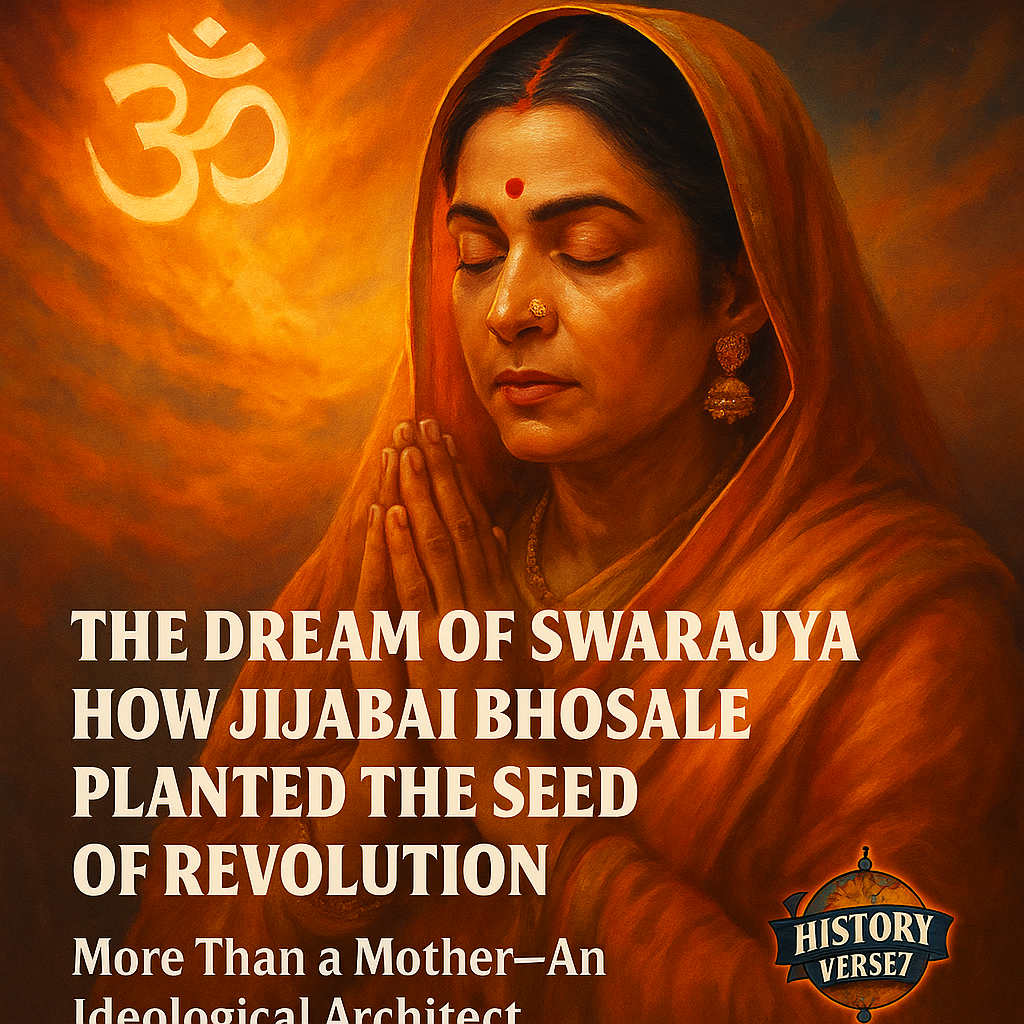
🕉️ The Dream of Swarajya: How Jijabai Bhosale Planted the Seed of Revolution
More Than a Mother—An Ideological Architect
While Shahaji served various sultanates out of political necessity, moving between the Nizamshahi, Adilshahi, and eventually even considering Mughal service, Jijabai Bhosale remained fixed on one dream:
Hindavi Swarajya—self-rule for the people of Hindustan, especially Maharashtra.
This wasn’t just nationalism. It was a comprehensive political philosophy that Jijabai developed and instilled in young Shivaji:
- Self-governance over foreign rule — Even benevolent slavery is still slavery
- Religious tolerance and respect — All faiths coexist peacefully under just governance
- Protection of women’s dignity — No woman, regardless of faith, should fear abduction or assault
- Equality before law — Justice must be blind to caste, wealth, and status
- Marathi as administrative language — Cultural identity begins with linguistic pride
These weren’t abstract concepts. Jijabai made them real through stories.
The Ramayana Method: Teaching Revolution Through Epics
Every evening at Shivneri Fort, Jijabai Bhosale would tell young Shivaji stories from the Ramayana and Mahabharata. But these weren’t bedtime stories—they were strategic lessons.
From Ramayana:
- How Rama honored his word even when it cost him his throne (teaching: integrity over comfort)
- How Hanuman served without expecting reward (teaching: devotion to cause over personal gain)
- How Rama fought Ravana to protect Sita (teaching: defending the defenseless is a king’s duty)
From Mahabharata:
- How Bhima killed Bakasura to protect villagers (teaching: strength must serve the weak)
- How Krishna used diplomacy before war (teaching: strategy before violence)
- How Abhimanyu fought alone against overwhelming odds (teaching: courage when outnumbered)
But Jijabai Bhosale always ended with the same question:
“Shivaji Raje, what would you do if you were Rama? If you were Bhima? If you were Krishna?”
She wasn’t teaching him mythology. She was training him to think like a king.
The Political Education: Understanding Enemy Psychology
Jijabai understood that military strength alone wouldn’t defeat the sultanates and Mughals. Shivaji needed to understand:
- Mughal military structure — Their strengths and fatal weaknesses
- Sultanate politics — The constant internal conflicts Shivaji could exploit
- Maratha psychology — Why his own people served foreign rulers
- Hindu resentment — The simmering anger that could be channeled into revolution
She didn’t teach hatred. She taught analysis.
She would tell Shivaji Raje: “The Mughals are not invincible. They are far from their capital. Their supply lines are long. Their soldiers fight for payment, not belief. When you create an army that fights for Swarajya, you will defeat armies ten times your size.”
These lessons, delivered in the quiet of Shivneri Fort, would later become the foundational strategy of the Maratha Empire.
The Dream That Kept Her Alive
After every tragedy—her father’s murder, her brothers’ deaths, her eldest son Sambhaji’s death at the hands of Afzal Khan, her husband’s death in 1664—Jijabai had every reason to give up.
But she didn’t.
Because Swarajya wasn’t just a political goal. It was her revenge.
Not revenge through violence, but through creation. She would build something the sultans and Mughals could never destroy—an idea that outlived swords, a kingdom built on justice rather than conquest.
And when she finally saw Shivaji Raje crowned as Chhatrapati in 1674, she knew:
Her revenge was complete.
👑 Raising Shivaji: The Education of an Empire Builder
The Curriculum of a Revolutionary
Jijabai Bhosale education of Shivaji Raje was comprehensive, strategic, and unprecedented for its time. She divided his training into multiple disciplines:
1. Spiritual and Moral Foundation
Daily Practices:
- Morning prayers to Bhavani Devi and Lord Shiva
- Recitation of Sanskrit shlokas emphasizing dharma and courage
- Meditation and self-discipline exercises
Philosophical Teaching:

- The concept of Dharma Yuddha (righteous warfare)
- Why protecting the weak is a king’s highest duty
- How to balance compassion with strength
Jijabai Bhosale often quoted scriptures, but always with political context:
“Just as Rama protected his kingdom without compromising his principles, you must build Swarajya without becoming like those you oppose.”
2. Military Training
Though Jijabai Bhosale was a woman, she was also a skilled warrior. Historical records confirm she was an expert horse rider and swordsperson. She personally oversaw Shivaji’s early military education:
Physical Training:
- Horse riding (Shivaji could ride before he could read)
- Sword fighting techniques
- Spear throwing and archery
- Shield combat and hand-to-hand fighting
Tactical Education:
- Reading terrain for military advantage
- Understanding fort architecture and vulnerabilities
- Guerrilla warfare concepts (before the term existed)
- The importance of speed, surprise, and intelligence gathering
Later, this training was formalized under Dadoji Konddev and martial experts like Baji Pasalkar and Kanhoji Jedhe.
3. Administrative Skills
Jijabai Bhosale knew that conquering forts was easy—governing justly was hard. She taught Shivaji:
- Revenue administration — Fair taxation systems that don’t crush farmers
- Justice delivery — How to settle disputes without bias
- Personnel management — Choosing capable ministers over loyal incompetents
- Record-keeping — The importance of written documentation
Many of these lessons came from observing the failures of sultanate administration, which was often corrupt, arbitrary, and oppressive.
4. Diplomatic Intelligence
Perhaps Jijabai Bhosale greatest gift to Shivaji was teaching him to think strategically:
- When to fight and when to negotiate
- How to build alliances with former enemies
- The value of intelligence networks
- How to turn enemy psychology against them
She would say: “Every sultan believes Marathas are simple hillfolk. Let them believe it. Then strike when they’re comfortable.”
This approach would define Shivaji’s entire military career.
5. Respect for Women and All Faiths
In an era when women were treated as war spoils, Jijabai instilled in Shivaji something revolutionary:
“Never dishonor a woman, regardless of her faith. Respect all places of worship. Your enemy is injustice, not Islam.”
This teaching would later manifest in Shivaji’s famous gesture of returning Badi Begum Sahiba with full respect after capturing her in battle, and his protection of mosques even in conquered territory.
The Result: A Man Who Could Build Empires
By the time Shivaji Maharaj was 16, he had:
- Captured his first fort (Torna) — using strategy, not just force
- Built a loyal band of Mavlas (mountain warriors) who saw him as one of their own
- Demonstrated administrative ability in managing Pune jagir
- Shown diplomatic maturity beyond his years
This wasn’t luck. This was the result of Jijabai Bhosale deliberate, systematic preparation.
She had taken a child born in a crumbling fort and shaped him into the architect of an empire.
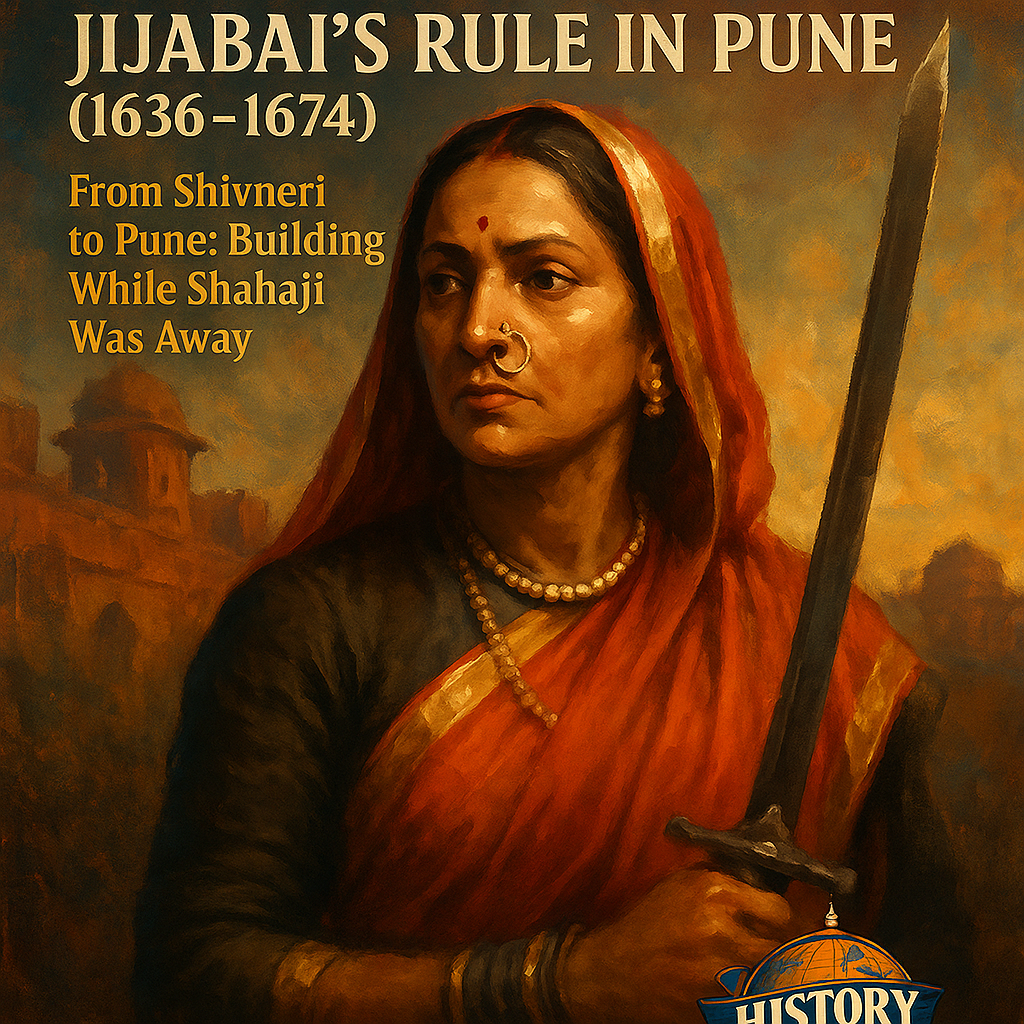
⚔️ Administrator and Warrior: Jijabai’s Rule in Pune (1636-1674)
From Shivneri to Pune: Building While Shahaji Was Away
When Shahaji Raje had to travel for military campaigns or administrative duties, it was Jijabai Bhosale who held everything together. Around 1636, when Shahaji Raje received the Pune and Supe jagirs, he entrusted their administration to Jijabai Bhosale and appointed Dadoji Konddev as the administrative officer.
But make no mistake—Dadoji was the executive, Jijabai was the visionary.
Pune: A City Rebuilt by a Woman’s Vision
When Jijabai Bhosale arrived in Pune, the city was in ruins. Multiple raids by the Adilshahi forces in 1630 and 1636 had left it devastated. Fields were barren, people had fled, infrastructure was destroyed.
Jijabai Bhosale transformed Pune from ashes to administration capital.
Her Development Initiatives:
- Agricultural Revival
- Ploughed the first field herself with a golden plough (symbolic act to inspire farmers)
- Provided seeds and tools to returning farmers
- Established fair revenue collection that didn’t crush peasants
- Created irrigation systems to secure water supply
- Infrastructure Development
- Oversaw construction of Lal Mahal (Red Palace) as administrative center
- Developed market areas: Kasba Peth, Somwar Peth, Raviwar Peth, Shaniwar Peth
- Improved roads connecting Pune to surrounding villages
- Strengthened fort defenses around the city
- Religious and Cultural Institutions
- Founded the Kasba Ganapati Temple (the presiding deity of Pune even today)
- Renovated the Tambadi Jogeshwari Temple and Kevareshwar Temple
- Patronized Sanskrit scholars and Marathi poets
- Established dharmashalas (rest houses) for travelers
- Justice Administration
- Created accessible systems for common people to seek justice
- Protected women from abduction and assault by local chieftains
- Resolved disputes fairly, regardless of caste or status
- Became known as someone incorruptible—a rarity in that era
The Warrior Administrator: When Shivaji Was Absent
Jijabai Bhosale wasn’t just an administrator during peacetime. When Shivaji Raje had to leave for military campaigns, she governed in his place. Historical records document several critical periods when Jijabai Bhosale held authority:
1666 — Agra Crisis: When Shivaji Maharaj was imprisoned in Aurangzeb’s Agra palace, Jijabai Bhosale managed state affairs and maintained morale among the Maratha forces. She coordinated intelligence networks that ultimately helped plan Shivaji’s daring escape.
1660s — Multiple Military Campaigns: During Shivaji Maharaj prolonged campaigns against the Adilshahi and Mughal forces, Jijabai Bhosale ensured:
- Revenue continued flowing to support military operations
- Recruitment of new soldiers continued uninterrupted
- Supplies reached Shivaji’s forces on time
- Internal stability was maintained
Post-1664 — After Shahaji’s Death: When her husband died in a hunting accident, Jijabai was prepared to commit sati (ritual self-immolation). Shivaji begged her to continue living and guiding him toward completing their shared dream of Swarajya.
She agreed. And for the next ten years, she remained his closest advisor.
The Mother Who Never Stopped Being a Strategist
Even in her 60s and 70s, Jijabai Bhosale remained sharp. She counseled Shivaji Raje on:
- Diplomatic strategy — Which alliances to pursue, which to avoid
- Fort governance — Appointment of killedars (fort commanders) based on merit
- Economic policy — Balancing military spending with agricultural investment
- Succession planning — Preparing for institutional continuity beyond individuals
She had transformed from a bride who watched helplessly as families fought each other to a stateswoman who built institutions that would outlive her.
This was Jijabai Bhosale true triumph: She didn’t just raise a king. She built a system.
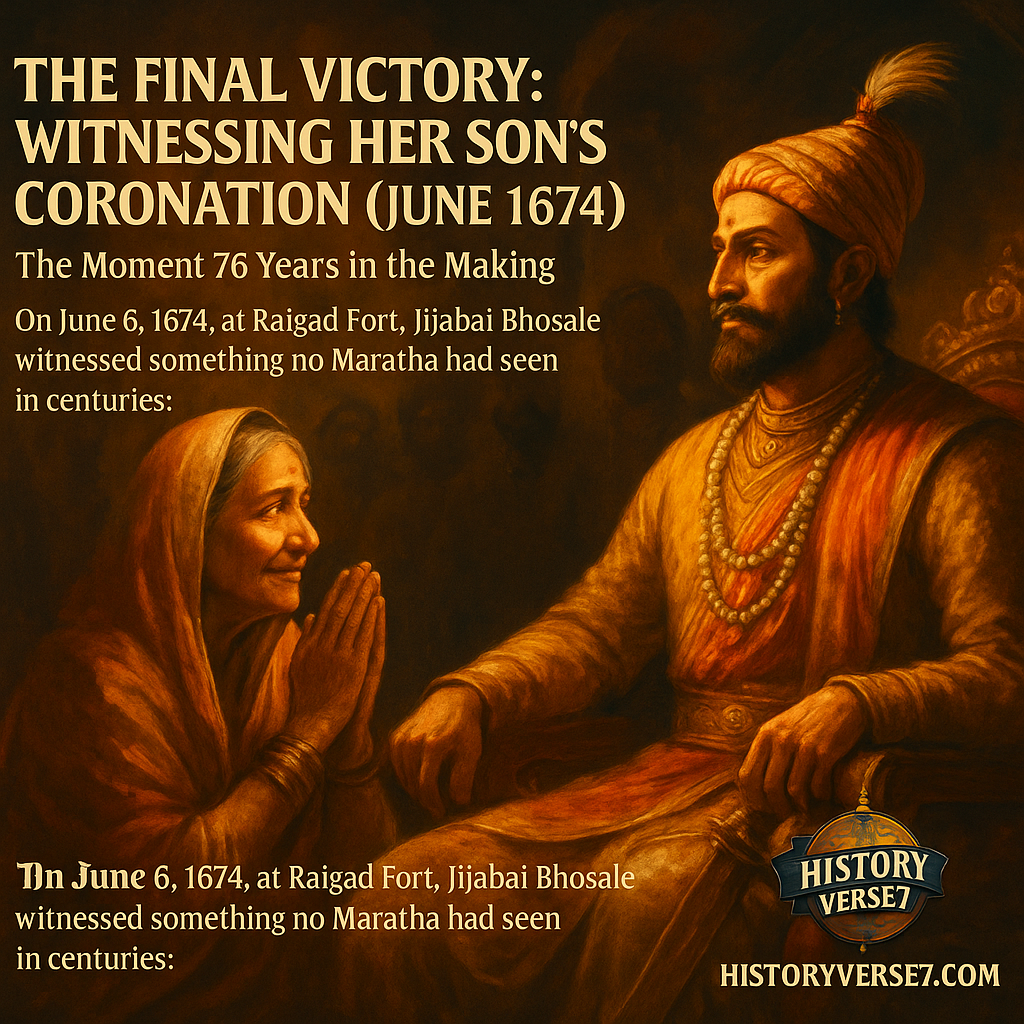
👑 The Final Victory: Witnessing Her Son’s Coronation (June 1674)
The Moment 76 Years in the Making
On June 6, 1674, at Raigad Fort, Jijabai Bhosale witnessed something no Maratha had seen in centuries:
A coronation. A Hindu king. An independent Maratha Empire.
Shivaji Maharaj was anointed as Chhatrapati—the supreme sovereign—by Pandit Gaga Bhatt, with all traditional Vedic rites. The title wasn’t inherited from a sultanate or granted by a Mughal emperor.
It was earned. And it was hers as much as his.
What She Felt—In Her Own Silent Way
There are no recorded speeches of Jijabai Bhosale from that day. She wasn’t one for grand declarations. But those who were present noted:
- She wept silently through the entire ceremony
- She touched Shivaji’s feet and blessed him with words no one else heard
- She looked out at the assembled sardars—many of them grandsons of those who once fought for sultanates—and saw vindication
For 76 years, Jijabai Bhosale had carried the weight of Swarajya. She had:
- Survived family feuds that killed her father and brothers
- Endured the loss of her eldest son, Sambhaji, to Afzal Khan’s treachery
- Witnessed her husband’s death far from home
- Lived through years of uncertainty, poverty, and exile
And now, it was real. Swarajya wasn’t a dream anymore—it was a state.
The Dream She Could Finally Release
After the coronation, Jijabai Bhosale lived only 12 more days.
On June 17, 1674, just days after witnessing her life’s work completed, Rajmata Jijabai Bhosale passed away at Pachad village near Raigad Fort.
Some say she died of old age. Others believe she had simply held on long enough to see the dream fulfilled, and then let go.
Her samadhi (memorial) at Pachad is still visited by thousands every year—a testament that her legacy never died.
🔱 Legacy of Jijabai Bhosale: The Mother of Swarajya
What She Left Behind
Jijabai Bhosale didn’t write books. She didn’t lead armies into battle herself. She didn’t sit on a throne.
But she created all of it.
Her Tangible Legacy:
- Chhatrapati Shivaji Maharaj — The founder and architect of the Maratha Empire
- The Concept of Hindavi Swarajya — Self-rule with justice, tolerance, and dignity
- Pune’s Infrastructure — Temples, markets, and administrative systems she built
- Maratha Administrative Practices — Fair revenue systems, merit-based appointments, accessible justice
- Cultural Renaissance — Patronage of Marathi language, Sanskrit learning, and regional arts
Her Ideological Legacy:
- Women’s Leadership in Indian History — Proof that women could be warriors, administrators, and kingmakers
- Moral Governance — The idea that power must be paired with principle
- Strategic Patience — Knowing when to wait and when to strike
- Maternal Influence as Political Power — Redefining motherhood as a revolutionary act
How History Remembers Her
In Maharashtra:
- Schools, colleges, and institutions named “Rajmata Jijabai” or “Veermata Jijabai”
- Annual commemorations on her birth and death anniversaries
- Statues depicting Jijabai teaching young Shivaji (symbolizing knowledge transfer)
- The Veermata Jijabai Technological Institute (VJTI) in Mumbai, one of India’s premier engineering colleges
In Popular Culture:
- Multiple films and TV series depicting her life (Rajmata Jijau, Swarajya Janani Jijamata, Swarajyarakshak Sambhaji)
- Literature, poetry, and folk songs celebrating her courage
- The character has inspired portrayals in historical dramas and Marathi theater
In Scholarly Discourse:
- Recognized as a political strategist who shaped Maratha nationalism
- Studied as an example of women’s leadership in pre-colonial India
- Cited in discussions of maternal influence on political movements
The Question She Forces Us to Ask
Jijabai Bhosale life poses an uncomfortable question to history:
How many empires were actually built by women whose names were written in invisible ink?
If Jijabai Bhosale had not existed, would Shivaji have become Chhatrapati? If she had not instilled the dream of Swarajya, would the Maratha Empire have risen?
We can’t know. But we know this: She existed. And she mattered.
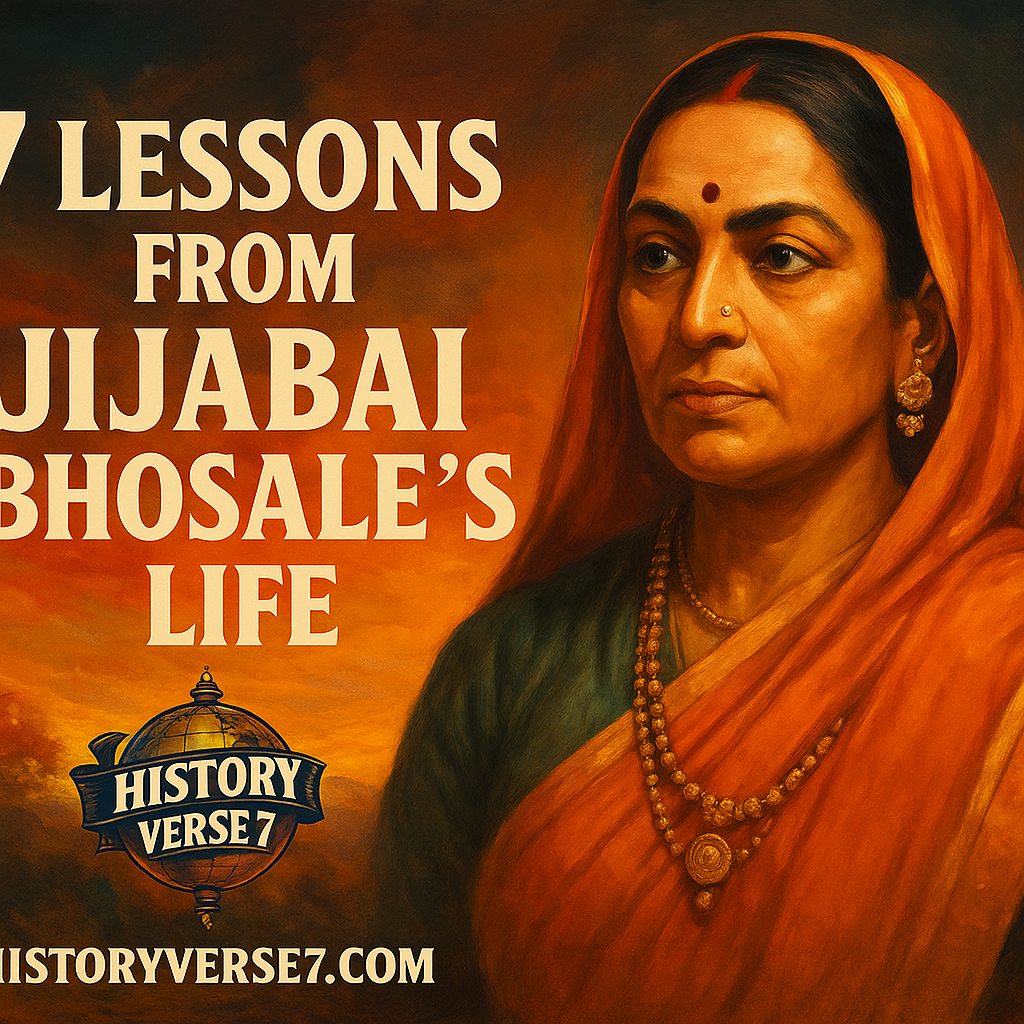
💡 7 Lessons from Jijabai Bhosale’s Life
1. Patience Paired with Purpose is Unstoppable
Jijabai Bhosale waited decades for Swarajya. She didn’t see results in years 1, 10, or even 30. But she never stopped preparing.
Modern Application: Your goals may take decades. Keep building even when no one sees progress.
2. Education is the Longest Revenge
Instead of teaching Shivaji to hate enemies, she taught him to outthink them. This produced sustainable victory.
Modern Application: Knowledge is power, but applied knowledge is transformation.
3. Women Can Lead Without Seeking Credit
Jijabai Bhosale could have demanded public recognition. She didn’t. She worked behind the scenes because the mission mattered more than her name on it.
Modern Application: True leadership is often invisible. Impact matters more than applause.
4. Grief Can Become Fuel, Not Poison
Every tragedy—her father’s death, her brothers’ murders, her son’s death—could have broken her. Instead, she transmuted pain into purpose.
Modern Application: Your wounds can become wisdom. Your losses can become lessons.
5. Never Underestimate the Power of Daily Discipline
Jijabai Bhosale revolution wasn’t one dramatic moment. It was daily stories, daily lessons, daily preparation.
Modern Application: Consistency over decades beats intensity over months.
6. Respect Creates Loyalty That Fear Never Can
Jijabai Bhosale influence over Shivaji wasn’t through control—it was through respect. He listened to her because she had earned it.
Modern Application: Authority that lasts is always earned, never imposed.
7. Your Legacy is What You Build, Not What You Inherit
Jijabai Bhosale wasn’t born into empire. She married into service to sultanates. But she built something that outlived every sultanate.
Modern Application: Your starting point doesn’t determine your ending point. Your choices do.
🕉️ Conclusion: The Woman Behind the Warrior
Jijabai Bhosale was born in 1598 as the daughter of a Maratha nobleman serving foreign rulers. She died in 1674 as Rajmata—the Queen Mother—of an independent Maratha Empire.
In between those 76 years, she:
- Survived family feuds that killed her loved ones
- Endured decades of instability and uncertainty
- Raised a son who would become one of India’s greatest kings
- Administered territories when men were away at war
- Built infrastructure that served generations
- Never wavered from her dream of Swarajya
She didn’t fight on battlefields, but she won the war.
Today, when we speak of the Maratha Empire, we speak of Shivaji Maharaj military genius, Tanaji’s sacrifice, Bajirao’s conquests. All true. All deserved.
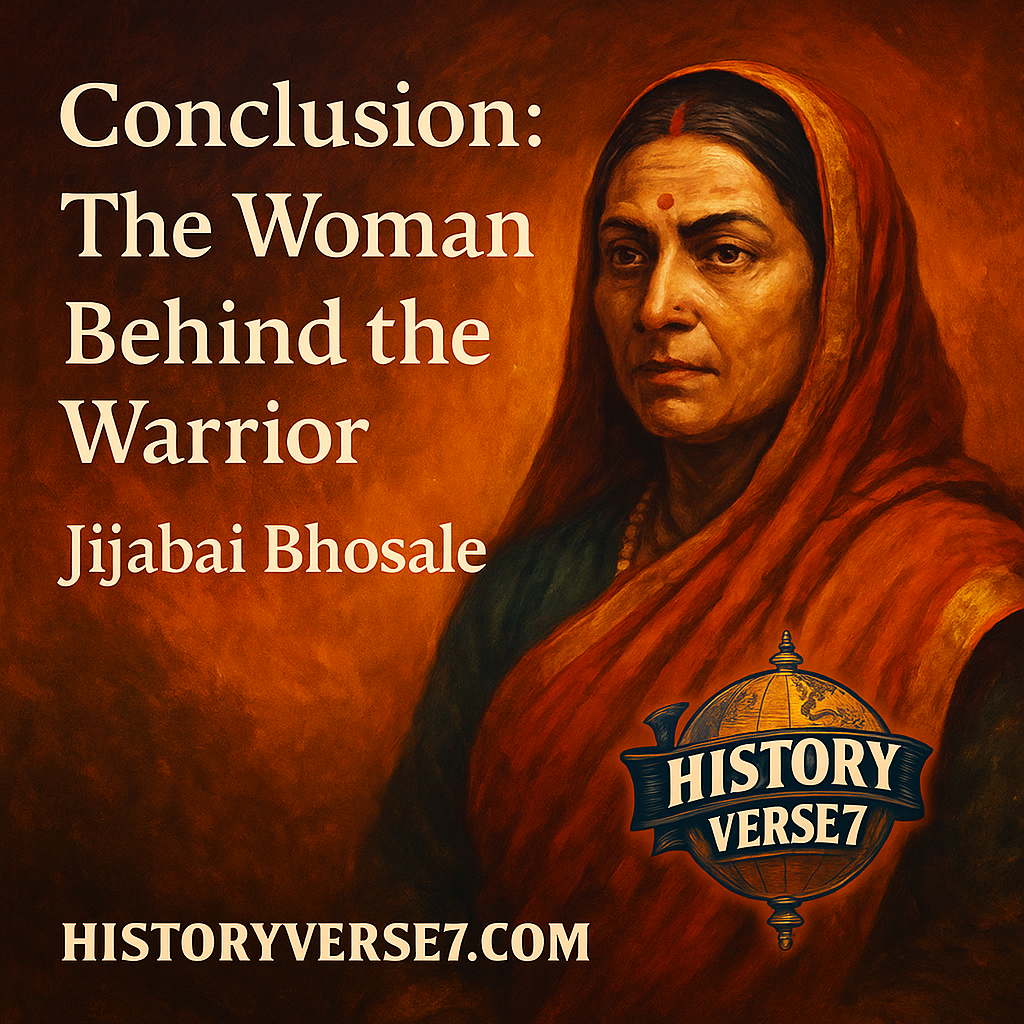
But behind every sword that was raised for Swarajya, there was a mother who taught her son why to raise it.
Jijabai Bhosale didn’t just give birth to Shivaji. She gave birth to an idea: that Marathas deserved to rule themselves.
And that idea, once planted, could never be uprooted.
Internal Links: 1https://historyverse7.com/shahaji-raje-bhosale/ 2https://historyverse7.com/chhatrapati-shivaji-maharaj-quotes/ 3https://historyverse7.com/%e0%a4%85%e0%a4%a7%e0%a5%8d%e0%a4%af%e0%a4%be%e0%a4%af-2-%e0%a4%b6%e0%a4%bf%e0%a4%b5%e0%a4%be%e0%a4%9c%e0%a5%80-%e0%a4%ae%e0%a4%b9%e0%a4%be%e0%a4%b0%e0%a4%be%e0%a4%9c/
External Links: 1 https://varadabooks.com/blogs/news/unraveling-the-life-and-legacy-of-rajmata-jijabai?srsltid=AfmBOopvItEH3aP8OuGyBe3ap4P8R4d7CNOWtcuLJjTVuc3sRn_stxFD 2https://www.hindujagruti.org/articles/37_jijabai-jijamata.html
🔥 Join the Movement: Share This Story
If this story moved you, share it. Not for us—for history. Because stories like Jijabai Bhosale’s deserve to be told, retold, and never forgotten.
📌 Follow HistoryVerse7 for more untold stories of Maratha warriors who changed India’s destiny.
👉 Next in the series: The unsung warriors who fought beside Dadoji Konddeo, the forgotten battles that shaped the Maratha Empire, and the women who ruled from behind the throne.
Because history isn’t just what happened. It’s who we choose to remember.
🔱 Jai Bhavani, Jai Shivaji!
📌 Follow HistoryVerse7
Get weekly stories of unsung Maratha warriors who changed India’s destiny.
Share this content:



The Warrior Queen 👑🚩✨..JIJAU🙇🏻♀️
जिजाऊ आऊसाहेबांचा विजय असो…🚩🚩