🚩 Before You Read: This Is More Than History. It’s a Call to Remember.
He wasn’t just hanged. He was silenced so that we never speak of courage again. But today, we break that silence.
This blog isn’t just about Rajendra Lahiri’s timeline. It’s about the fire he carried, the discipline he lived, and the defiance he died for.
If you believe forgotten heroes deserve more than footnotes— If you want to feel history, not just read it— Then scroll down. Because this isn’t a tribute. It’s a resurrection.
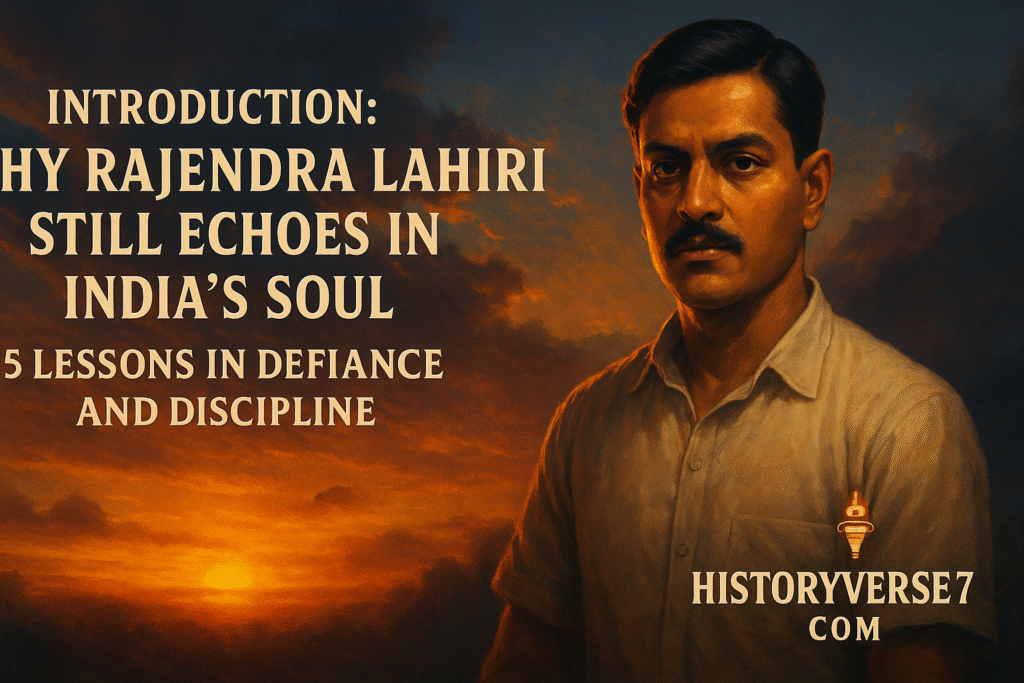
👉 Let’s Relive the Legacy🕊️ Introduction: Why Rajendra Lahiri Still Echoes in India’s Soul — 5 Lessons in Defiance and Discipline
If you’ve never heard of Rajendra Lahiri, you’re not alone. But once you do, you won’t forget him.
In a world where freedom fighters are often reduced to textbook footnotes, Rajendra Lahiri stands out as a silent thunder—calm in demeanor, fierce in conviction. He wasn’t the loudest voice in India’s revolution, but he was one of the sharpest minds and bravest hearts. And today, his legacy is rising again—not just in history blogs and tribute reels, but in the conscience of a generation seeking purpose, pride, and courage.
Born on 29 June 1901 in Lahiri Mohanpur village (now in Bangladesh), Rajendra Lahiri grew up in a household where rebellion wasn’t just discussed—it was lived. His father, Kshitish Mohan Lahiri, had already faced imprisonment for revolutionary activities. That fire ran in the family. But Rajendra Lahiri wasn’t just a product of rage—he was a student of history, a thinker, and a disciplined revolutionary.
While pursuing his Master’s in History at Banaras Hindu University, Rajendra Lahiri came under the influence of Sachindranath Sanyal, co-founder of the Hindustan Republican Association (HRA). This wasn’t a casual friendship—it was a mentorship that shaped Lahiri’s ideology. He believed that armed resistance wasn’t just a tactic—it was a moral necessity. For him, revolution was not chaos—it was clarity..
And then came Kakori.
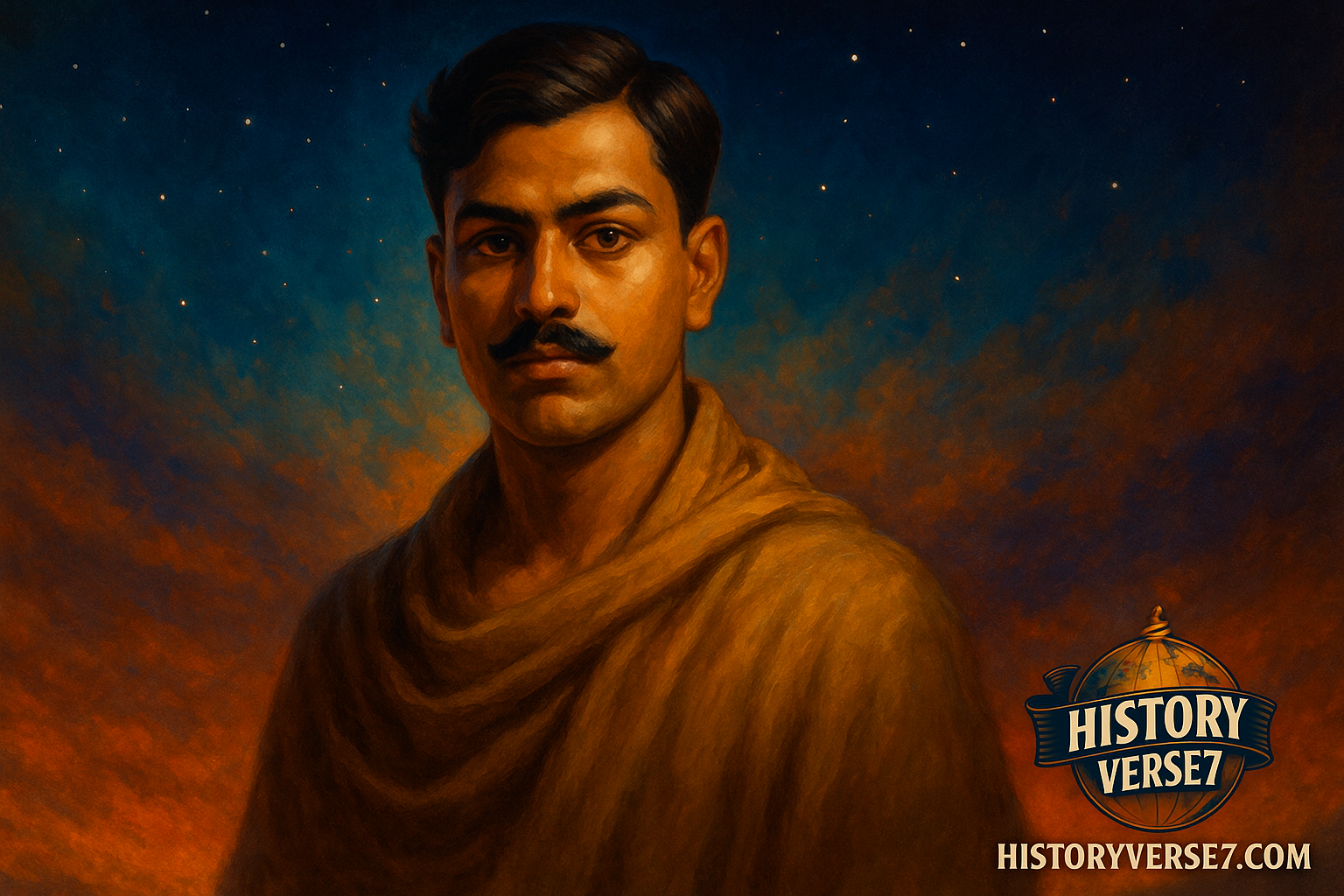
In 1925, the British treasury train was looted near Lucknow in what became known as the Kakori Conspiracy. Though Rajendra Lahiri wasn’t physically present during the robbery, he was deeply involved in its planning. Alongside legends like Ram Prasad Bismil, Ashfaqulla Khan, and Roshan Singh, Lahiri helped orchestrate one of the boldest acts of defiance in colonial India. It wasn’t just about money—it was about sending a message: India will not beg for freedom. It will claim it.
But the British struck back. Lahiri was first arrested in connection with the Dakshineswar Bombing, and later linked to the Kakori case. He was transferred to Lucknow Jail, where he stood trial with his comrades. The courtroom wasn’t just a place of judgment—it became a battlefield of ideals. Rajendra Lahiri never pleaded for mercy. He stood tall, knowing that his death would be a spark for millions.
On 17 December 1927, at just 26 years old, Rajendra Lahiri was executed by hanging in Gonda Jail. His death was swift, but his legacy was not. He became one of the four Kakori martyrs, and his name became a whisper of courage in every corner of India.
So why does Rajendra Lahiri still matter?
Because in an age of noise, he was silence that roared.
Because in a time of fear, he chose fire.
Because in a world of compromise, he chose conviction.
Today, as India stands tall as a sovereign nation, we must ask: what do we owe to men like Rajendra Lahiri?
We owe them remembrance.
We owe them respect.
And most importantly, we owe them the courage to speak truth, to challenge injustice, and to live with purpose.
This blog isn’t just a tribute. It’s a resurrection.
It’s a call to every reader, every youth, every patriot—
To learn from Rajendra Lahiri, to live like him, and to carry forward the legacy he died for.
If you’re looking for real inspiration—beyond slogans and speeches—
If you want to understand what true discipline, defiance, and dignity look like—
Then keep reading.
Because Rajendra Lahiri didn’t just fight for freedom.
He defined what it means to be free.
Table of Contents
🧒 1901 – Birth and Early Life of Rajendra Lahiri: The Making of a Revolutionary Mind
🔶 1. The Soil That Birthed Defiance
On 29 June 1901, in the serene village of Lahiri Mohanpur, nestled in the Pabna District of Bengal Presidency, a child was born into a Bengali Brahmin family. His name was Rajendra Lahiri. But history would later remember him not for his lineage—but for his legacy.
The Bengal of 1901 was not just a geographical entity. It was a crucible of ideas, resistance, and awakening. The Partition of Bengal was still a few years away, but the air was already thick with unrest. Into this charged atmosphere, Rajendra Lahiri was born—not into silence, but into simmering potential.
His family belonged to the landowning class, a position of privilege that often bred complacency. But not in this household. The Lahiris were culturally rich, intellectually inclined, and quietly rebellious. His father, Kshitish Mohan Lahiri, had already faced imprisonment for his revolutionary leanings. The message was clear: in this home, courage was inherited.
🔶 2. A Childhood of Contrasts
Rajendra Lahiri’s early years were shaped by dual forces—tradition and transformation. On one hand, he was raised in a Brahmin household steeped in rituals, Sanskrit texts, and philosophical discourse. On the other, he was exposed to the whispers of rebellion, the stories of resistance, and the quiet rage against colonial rule.
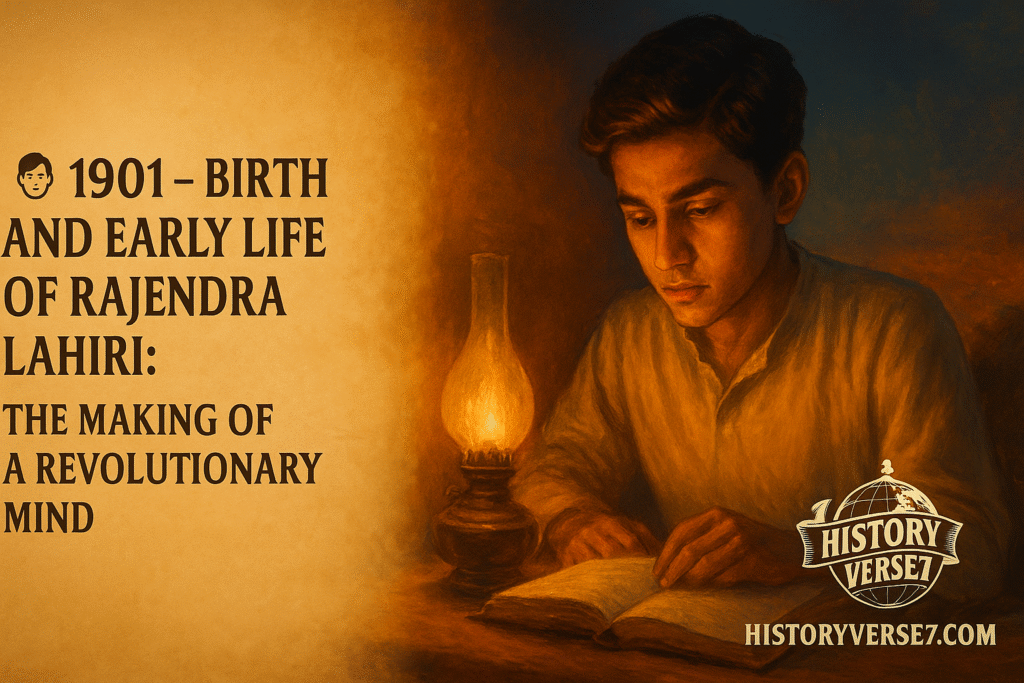
This contrast didn’t confuse him—it clarified him. From a young age, Rajendra Lahiri displayed a sharp intellect, a disciplined demeanor, and a deep sense of justice. He wasn’t loud. He wasn’t impulsive. He was observant, thoughtful, and quietly intense.
🔶 3. Bengal Presidency: A Land of Fire
To understand Rajendra Lahiri, one must understand the Bengal Presidency of the early 20th century. It was the nerve center of India’s intellectual and revolutionary awakening. Thinkers like Bankim Chandra Chattopadhyay, Rabindranath Tagore, and Aurobindo Ghosh were shaping minds. Simultaneously, underground movements were gaining momentum.
In this environment, Rajendra Lahiri didn’t just grow—he absorbed. The cultural richness of Bengal, combined with its political volatility, became the foundation of his revolutionary consciousness.
🔶 4. The Influence of Family Legacy
The role of Kshitish Mohan Lahiri, Rajendra’s father, cannot be overstated. His imprisonment for anti-British activities wasn’t just a personal sacrifice—it was a political statement. Young Rajendra Lahiri witnessed firsthand the cost of conviction. He saw his father not as a victim, but as a warrior.
This exposure instilled in him a unique blend of discipline and defiance. He learned that rebellion wasn’t about noise—it was about strategy. That courage wasn’t about anger—it was about clarity.
🔶 5. Seeds of Scholarship
Even as a child, Rajendra Lahiri was drawn to books, history, and philosophical inquiry. His early education was rigorous, rooted in both traditional Hindu learning and modern subjects. He wasn’t just preparing for exams—he was preparing for revolution.
His love for history wasn’t academic—it was personal. He saw in India’s past the blueprint for its future. He believed that understanding the roots of oppression was the first step toward uprooting it.
Here are some reliable sources you can reference for deeper research on Rajendra Lahiri’s early life and revolutionary contributions:
📚 Verified Source Links
- Wikipedia – Rajendra Lahiri
https://en.wikipedia.org/wiki/Rajendra_Nath_Lahiri - Indian Culture Portal – Ministry of Culture, Government of India
https://indianculture.gov.in/node/2815814 - BYJU’S IAS Prep – Rajendra Lahiri Biography
https://byjus.com/free-ias-prep/rajendra-lahiri/ - Book Reference:
“The Revolutionary Movement in India” by Manmath Nath Gupta
(Available in libraries and online archives; includes firsthand accounts of Lahiri’s role in HRA and Kakori)
🚩 Ready to Discover the Fire Within?
Rajendra Lahiri’s birth wasn’t just the start of a life—it was the ignition of a legacy. His early years shaped a mind that would later challenge an empire. If this glimpse moved you, the next chapter will shake you.
👉 Continue to His Revolutionary Education🎓 Chapter 2: Rajendra Lahiri’s Education and Ideological Awakening (1919–1923)
Rajendra Lahiri didn’t just study history—he chose to rewrite it. Between 1919 and 1923, his journey from a quiet scholar to a committed revolutionary unfolded in the heart of Varanasi, where books met bullets and ideas turned into action.
🔶 1. Arrival in Varanasi: A City of Fire and Faith
In 1919, Rajendra Lahiri moved to Varanasi, one of India’s oldest spiritual cities, to pursue higher education. But Varanasi wasn’t just a center of learning—it was a crucible of revolution. The city was buzzing with nationalist fervor, underground networks, and intellectual resistance against British rule.

Rajendra Lahiri enrolled at Banaras Hindu University (BHU), founded by Pandit Madan Mohan Malaviya, a nationalist himself. The university was more than an academic institution—it was a breeding ground for patriotic thought. Here, Rajendra Lahiri began his Master’s in History, a subject that would become both his academic pursuit and revolutionary weapon.
🔶 2. The Scholar with a Rebel’s Heart
At BHU, Rajendra Lahiri was known for his sharp intellect, quiet discipline, and deep curiosity. He wasn’t drawn to fame or flamboyance. He was drawn to truth. And history, for him, wasn’t just about kings and empires—it was about oppression, resistance, and the possibility of change.
His professors admired his analytical mind. His peers respected his integrity. But few knew that beneath the calm exterior was a storm waiting to rise.
🔶 3. Meeting Sachindranath Sanyal: The Turning Point
During his time at BHU, Rajendra Lahiri came into contact with Sachindranath Sanyal, a veteran revolutionary and co-founder of the Hindustan Republican Association (HRA). This wasn’t just a meeting—it was a mentorship that would shape Lahiri’s destiny.
Sanyal was a man of action and ideology. He believed in armed resistance as a legitimate path to freedom. Under his guidance, Rajendra Lahiri began to see revolution not as chaos, but as organized defiance. He studied revolutionary tactics, underground communication, and the art of strategic rebellion.
This was the moment Rajendra Lahiri crossed the threshold—from student to soldier.
🔶 4. The Rise of Hindustan Republican Association (HRA)
In 1923, the HRA was formally established with the goal of overthrowing British rule through armed struggle. Rajendra Lahiri became one of its core members, contributing not just manpower but intellectual strategy.
He helped draft pamphlets, organize secret meetings, and build networks across Bengal, Uttar Pradesh, and Punjab. His historical knowledge gave him insight into British vulnerabilities. His discipline made him a trusted planner. And his silence made him dangerous.
Rajendra Lahiri wasn’t just part of the revolution—he was shaping it.
🔶 5. Ideological Clarity: Why He Chose the Path of Fire
Unlike many who were swept into revolution by emotion, Rajendra Lahiri made a conscious, calculated choice. He believed that non-violence alone could not shake the foundations of colonial power. He respected Gandhi, but he followed Sanyal.
For Lahiri, freedom was not a request—it was a right. And rights, he believed, must be claimed, not begged for.
His ideology was rooted in discipline, sacrifice, and strategic defiance. He didn’t seek martyrdom. He sought momentum.
📚 Sources and References
- Wikipedia – Rajendra Lahiri
- Indian Culture Portal – Ministry of Culture
- “The Revolutionary Movement in India” by Manmath Nath Gupta – includes firsthand accounts of Lahiri’s role in HRA and Kakori.
🔥 From Books to Bullets: The Revolution Begins
Rajendra Lahiri’s time in Varanasi wasn’t just about education—it was about evolution. From a history student to a revolutionary strategist, he chose fire over fear. The next chapter reveals how he helped ignite one of India’s boldest acts of defiance.
👉 Continue to Chapter 3: The Kakori Conspiracy💣 Chapter 3: Rajendra Lahiri and the Kakori Conspiracy — The Strike That Shook the Empire
Rajendra Lahiri didn’t fire the gun—but he loaded the revolution.
In 1925, the British Empire witnessed a daring act of defiance that would echo across generations. It wasn’t just a robbery—it was a declaration. And behind its planning stood a quiet strategist named Rajendra Lahiri.
🔶 1. The Context: Why Kakori Was More Than a Heist
By the mid-1920s, the Hindustan Republican Association (HRA) was growing in strength but struggling with resources. The revolution needed funds—not for luxury, but for liberty. The British government transported money via trains, and the revolutionaries saw an opportunity.
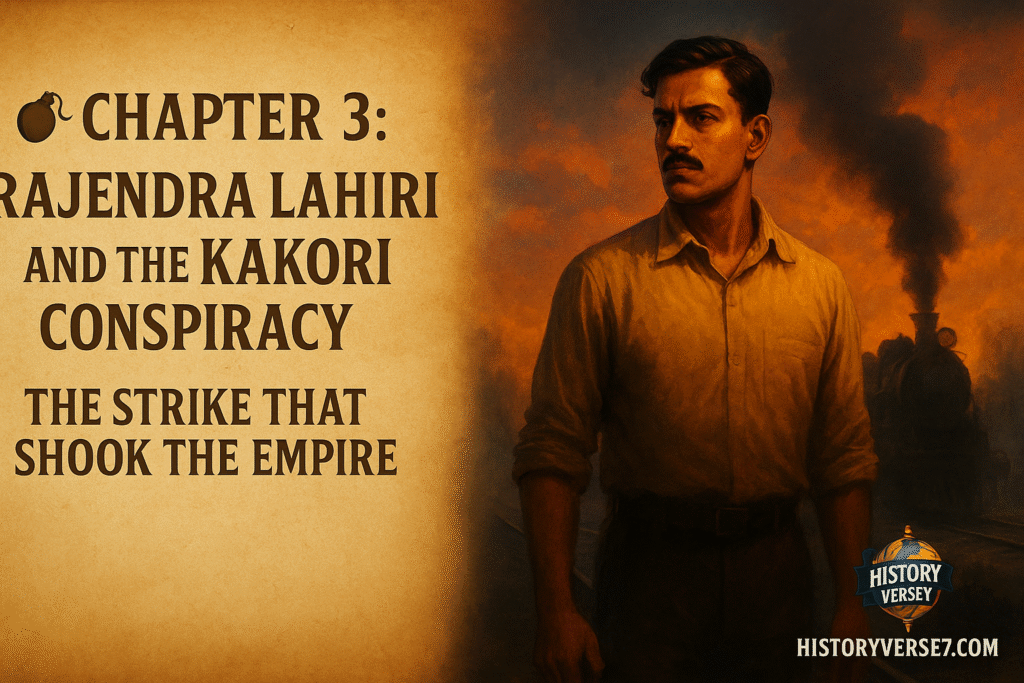
Rajendra Lahiri, already a trusted planner within the HRA, was deeply involved in the strategic blueprint of what would become the Kakori Train Robbery. His role wasn’t to pull the trigger—it was to ensure the plan was airtight.
🔶 2. The Plan: Precision Over Panic
On 9 August 1925, a group of revolutionaries stopped the Saharanpur–Lucknow train near Kakori, a small town in Uttar Pradesh. They looted the government treasury, making off with thousands of rupees. The operation was swift, calculated, and symbolic.
Though Rajendra Lahiri wasn’t physically present at the site, his fingerprints were all over the plan. He helped coordinate logistics, select operatives, and ensure communication across cells. His historical knowledge gave him insight into British vulnerabilities. His discipline made him a trusted architect of rebellion.
🔶 3. The Message: India Will Not Beg
The Kakori Conspiracy wasn’t just about money—it was about sending a message. The revolutionaries, including Ram Prasad Bismil, Ashfaqulla Khan, Chandrashekhar Azad, and Rajendra Lahiri, believed that India must claim freedom—not request it.
For Rajendra Lahiri, Kakori was a turning point. It proved that strategic defiance could shake the colonial system. It showed that revolution wasn’t just emotion—it was execution.
🔶 4. The Aftermath: British Retaliation Begins
The British government was stunned. What they dismissed as scattered resistance had now become organized rebellion. They launched a massive crackdown, arresting dozens of suspected revolutionaries.
Rajendra Lahiri was initially arrested in connection with the Dakshineswar Bomb Case in Bengal. But soon, his involvement in Kakori surfaced. He was transferred to Lucknow Jail, where he faced trial alongside his comrades.
🔶 5. The Trial: Courage in Chains
The Kakori Trial was one of the most high-profile cases of the freedom movement. The British tried to paint the revolutionaries as criminals. But Rajendra Lahiri and his comrades turned the courtroom into a stage for patriotism.
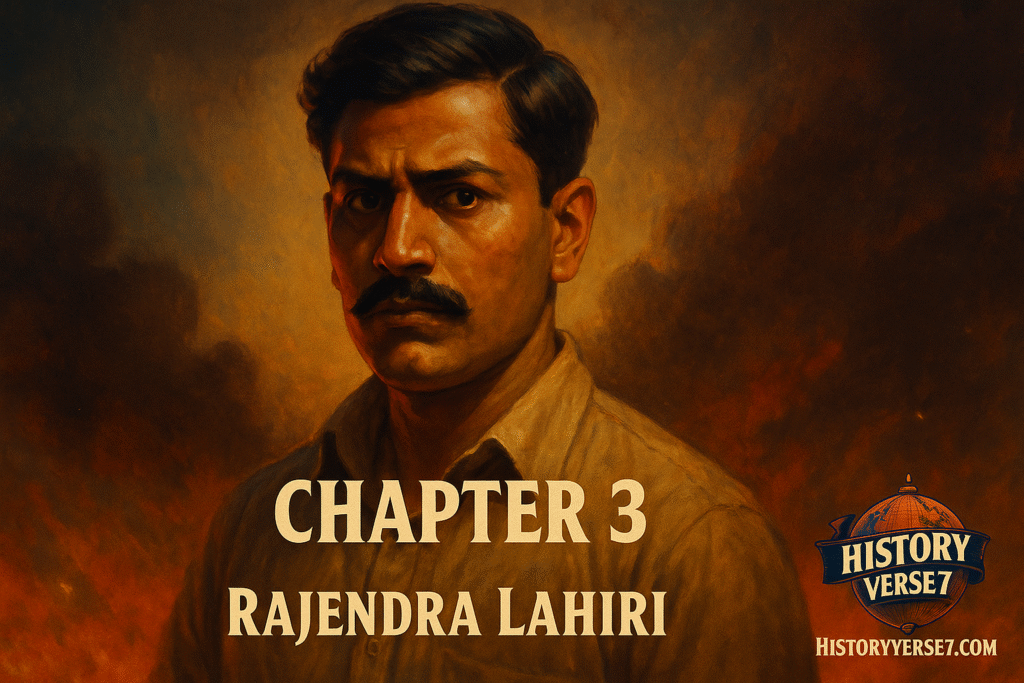
Lahiri never pleaded for mercy. He stood firm, defending the moral right to resist oppression. His statements weren’t just legal—they were ideological. He believed that armed resistance was a duty, not a crime.
🔶 6. The Verdict: Death for Defiance
In 1927, the court sentenced Rajendra Lahiri, Ram Prasad Bismil, Ashfaqulla Khan, and Roshan Singh to death. The verdict was meant to crush the revolution. Instead, it immortalized it.
Rajendra Lahiri, just 26 years old, accepted the sentence with calm dignity. He knew that his death would be a spark—not a silence.
📚 Sources and References
- Wikipedia – Rajendra Lahiri
- Indian Culture Portal – Ministry of Culture
- “The Revolutionary Movement in India” by Manmath Nath Gupta – includes firsthand accounts of Lahiri’s role in HRA and Kakori.
💥 The Empire Trembled, But the Revolution Roared Louder
Rajendra Lahiri didn’t just plan Kakori—he proved that courage needs no permission. The next chapter reveals how he faced trial, embraced martyrdom, and became a symbol of disciplined defiance.
👉 Continue to Chapter 4: Trial and Martyrdom⚖️ Chapter 4: Rajendra Lahiri’s Trial and Martyrdom — When Silence Spoke Louder Than Chains
Rajendra Lahiri didn’t just face a trial—he faced an empire.
Between 1925 and 1927, the British Raj tried to crush a revolution by sentencing its brightest minds to death. But what they couldn’t silence was the courage of men like Rajendra Lahiri, whose calm defiance in court became a lesson in legacy.
🔶 1. The Arrest: From Bengal to the Heart of Repression
After the Kakori Conspiracy shook the colonial administration, the British launched a sweeping crackdown. While many revolutionaries were arrested in Uttar Pradesh, Rajendra Lahiri was initially detained in Bengal for his alleged role in the Dakshineswar Bomb Case.
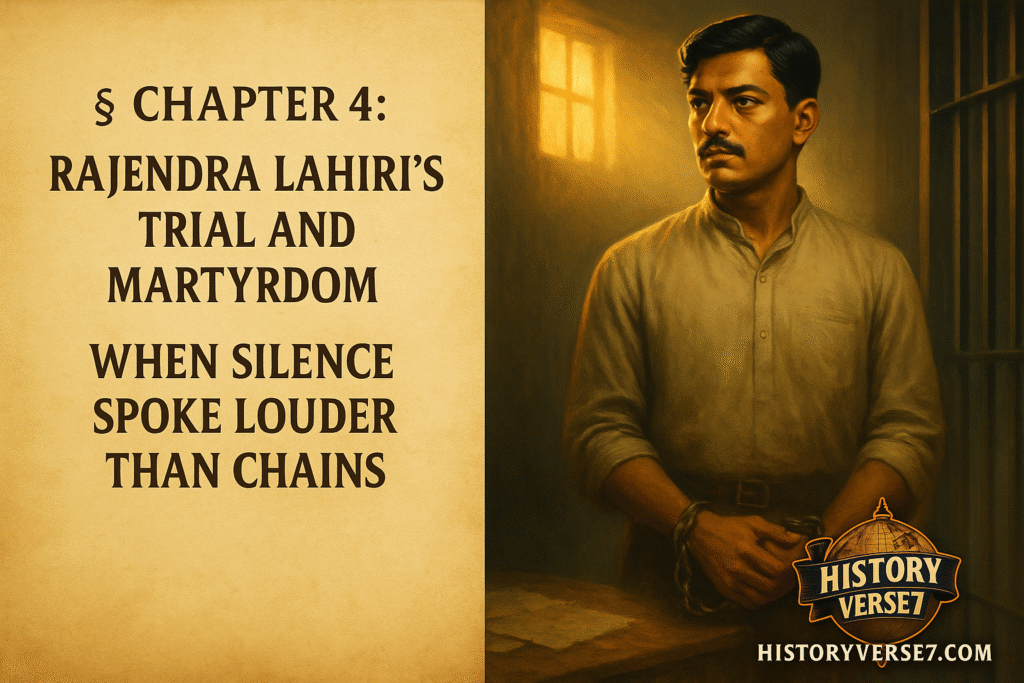
But soon, his deeper involvement in the Kakori plot came to light. The British realized that Rajendra Lahiri wasn’t just a foot soldier—he was a strategist. He was transferred to Lucknow Jail, where the main Kakori trial was being prepared.
🔶 2. The Courtroom: A Stage for Conviction
The Kakori Trial began in 1926 and quickly became one of the most high-profile legal battles of the Indian freedom movement. The British aimed to portray the revolutionaries as criminals. But Rajendra Lahiri, along with Ram Prasad Bismil, Ashfaqulla Khan, and Roshan Singh, turned the courtroom into a platform for patriotism.
Rajendra Lahiri remained composed, articulate, and unshaken. He didn’t deny his role. He didn’t beg for mercy. Instead, he defended the moral legitimacy of armed resistance against colonial tyranny.
His statements were not just legal arguments—they were ideological declarations. He believed that when a government becomes oppressive, revolution becomes a duty.
🔶 3. The Sentence: Death for Daring to Dream
In April 1927, the verdict was announced. Rajendra Lahiri, along with three of his comrades, was sentenced to death by hanging. The British hoped this would send a message of fear. But it sent a message of fire.
Rajendra Lahiri, just 26 years old, accepted the sentence with quiet dignity. He wrote letters, read scriptures, and prepared for death—not with sorrow, but with strength.
🔶 4. The Execution: A Day Stained in Silence
On 17 December 1927, Rajendra Lahiri was hanged in Gonda Jail, Uttar Pradesh. His execution was carried out two days before the scheduled date, in secret, to avoid public unrest.
But the British miscalculated. The silence of his hanging only amplified the sound of his sacrifice. Across India, students walked out of classrooms. Workers halted machines. Poets wrote elegies. And the name Rajendra Lahiri became a whisper of courage in every corner of the country.
🔶 5. The Aftershock: A Nation Awakens
The martyrdom of Rajendra Lahiri and his comrades didn’t end the revolution—it intensified it. Young revolutionaries like Bhagat Singh, Batukeshwar Dutt, and Chandrashekhar Azad drew inspiration from their sacrifice.
The British had hoped to bury a rebellion. Instead, they had sown a revolution.
🔶 6. The Legacy: Why Rajendra Lahiri Still Matters
Today, Rajendra Lahiri is remembered as one of the four Kakori martyrs, but his story is still underrepresented in mainstream narratives. His life teaches us that:
- Discipline is a form of defiance.
- Silence can be louder than slogans.
- True revolution begins with clarity of purpose.

He didn’t seek martyrdom. He embraced it when it became the price of freedom.
📚 Sources and References
- Wikipedia – Rajendra Lahiri
- Indian Culture Portal – Ministry of Culture
- “The Revolutionary Movement in India” by Manmath Nath Gupta – includes firsthand accounts of Lahiri’s trial and execution.
- “Kakori Conspiracy” – National Archives of India
🕯️ He Walked to the Gallows, We Must Walk to the Truth
Rajendra Lahiri didn’t die in vain—he died so we could live with dignity. The next chapter explores how his legacy shaped future revolutionaries and why his name still ignites pride.
👉 Continue to Chapter 5: Legacy and Impact🕊️ Chapter 5: Rajendra Lahiri’s Legacy and Impact — The Fire That Never Faded
Rajendra Lahiri didn’t just die for freedom—he defined it.
His execution in 1927 was meant to silence a revolutionary. Instead, it amplified a movement. Today, nearly a century later, Rajendra Lahiri still inspires youth, historians, and patriots alike—not through speeches, but through sacrifice.
🔶 1. The Martyrdom That Sparked a Generation
When Rajendra Lahiri was hanged in Gonda Jail, the British believed they had extinguished a threat. But across India, his death became a rallying cry. Students walked out of classrooms. Newspapers mourned his loss. Underground cells invoked his name as a symbol of disciplined defiance.
His martyrdom, alongside Ram Prasad Bismil, Ashfaqulla Khan, and Roshan Singh, transformed the Kakori Conspiracy from a tactical strike into a legendary chapter of India’s freedom struggle.
🔶 2. Influence on Future Revolutionaries
The impact of Rajendra Lahiri was most visible in the actions of the next wave of revolutionaries:
- Bhagat Singh admired the Kakori martyrs and modeled his own ideological clarity on their example.
- Chandrashekhar Azad, who escaped arrest during Kakori, continued the fight with renewed intensity, often invoking Lahiri’s discipline.
- Batukeshwar Dutt and others in the Hindustan Socialist Republican Association (HSRA) saw Lahiri as a symbol of strategic resistance.
Rajendra Lahiri became a blueprint—not just for rebellion, but for revolutionary ethics.
🔶 3. Cultural Memory and Neglect
Despite his sacrifice, Rajendra Lahiri remains underrepresented in mainstream narratives. His name is often overshadowed by louder figures. But in Bengal, Uttar Pradesh, and among serious historians, his legacy is revered.
Statues, memorials, and local tributes exist—but they are few. His story is rarely taught in schools, and his writings are not widely circulated. This silence is not accidental—it’s a reflection of how quiet courage is often overlooked.
That’s why platforms like HistoryVerse7 matter. They resurrect voices like Rajendra Lahiri, giving them the space they deserve in India’s collective memory.
🔶 4. Lessons from Rajendra Lahiri’s Life
Rajendra Lahiri didn’t leave behind manifestos or memoirs. But his life itself offers powerful lessons:
- Discipline is Revolutionary: He was methodical, focused, and strategic. His calm was his weapon.
- Sacrifice Is Not Surrender: He chose death over compromise, proving that true freedom demands cost.
- Legacy Is Built in Silence: He didn’t seek fame. He sought impact. And he achieved it.
These lessons are timeless. They apply not just to revolutionaries, but to anyone seeking purpose, pride, and principle.
🔶 5. Why Rajendra Lahiri Still Matters Today
In an age of noise, Rajendra Lahiri reminds us that quiet conviction can move mountains. His story is not just history—it’s a mirror. A challenge to every Indian to ask:
- What do I stand for?
- What am I willing to sacrifice?
- What legacy will I leave behind?

Rajendra Lahiri matters because he represents the kind of patriotism that doesn’t shout—it acts.
📚 Sources and References
- Wikipedia – Rajendra Lahiri
- Indian Culture Portal – Ministry of Culture
- “The Revolutionary Movement in India” by Manmath Nath Gupta
- “Kakori Conspiracy” – National Archives of India
- “India’s Struggle for Independence” by Bipan Chandra – contextualizes Lahiri’s role in the broader movement
🌟 His Legacy Is Our Responsibility
Rajendra Lahiri didn’t ask to be remembered—he earned it. His story isn’t just about the past—it’s a call to shape the future. The next chapter explores 5 timeless lessons from his life that every Indian youth should carry forward.
👉 Continue to Chapter 6: Lessons in Defiance and Discipline🔥 Chapter 6: 5 Timeless Lessons from Rajendra Lahiri — Defiance, Discipline, and the DNA of Revolution
Rajendra Lahiri didn’t just fight the British—he fought fear, compromise, and silence.
His life, though brief, offers powerful lessons that transcend time. These aren’t just historical insights—they’re personal challenges to every Indian who seeks purpose, pride, and legacy.
🧭 1. Discipline Is Revolutionary
In an age of chaos, Rajendra Lahiri chose order.
He wasn’t impulsive. He was methodical. From his student days at BHU to his role in the Kakori Conspiracy, Lahiri’s actions were rooted in clarity and control.
Lesson: True revolution begins with self-mastery.
Whether you’re building a movement or a career, discipline is your foundation.
🗣️ 2. Silence Can Be Louder Than Slogans
Rajendra Lahiri wasn’t known for fiery speeches. He was known for quiet conviction. In court, he didn’t plead. He didn’t protest. He simply stood firm, letting his actions speak louder than any rhetoric.
Lesson: You don’t need noise to make impact.
Integrity, consistency, and courage often speak louder than words.
⚔️ 3. Defiance Must Be Strategic
Lahiri didn’t believe in blind rebellion. He believed in calculated resistance. His role in planning the Kakori train robbery was a masterclass in revolutionary strategy—targeting British economic control with surgical precision.
Lesson: Don’t just resist—plan your resistance.
Whether it’s injustice or inertia, fight with focus.
🕯️ 4. Sacrifice Is Not Surrender
At just 26 years old, Rajendra Lahiri walked to the gallows with calm dignity. He didn’t seek martyrdom—but when it came, he embraced it. His death wasn’t the end—it was ignition.
Lesson: Great lives are measured not by length, but by legacy.
What you’re willing to give up defines what you truly stand for.
🌱 5. Legacy Is Built in the Shadows
Rajendra Lahiri is not a household name. But among historians, revolutionaries, and patriots, he is revered. He didn’t chase fame. He chased freedom. And in doing so, he became immortal.
Lesson: You don’t need applause to build impact.
Do the work. Let history echo your name.
🧠 Why These Lessons Matter Today
In a world of distractions, Rajendra Lahiri reminds us to focus.
In a culture of shortcuts, he teaches us sacrifice.
In a time of noise, he shows us the power of silence.

These lessons aren’t just for revolutionaries. They’re for creators, leaders, students, and dreamers. They’re for anyone who wants to live with purpose and leave behind pride.
📚 Sources and References
- Wikipedia – Rajendra Lahiri
- Indian Culture Portal – Ministry of Culture
- “The Revolutionary Movement in India” by Manmath Nath Gupta
- “India’s Struggle for Independence” by Bipan Chandra
💡 Ready to Carry His Legacy Forward?
Rajendra Lahiri didn’t just teach us how to fight—he taught us how to live. These 5 lessons are your blueprint for purpose, pride, and power. The next chapter explores how his story is being revived today—and how you can be part of it.
👉 Continue to Chapter 7: Rajendra Lahiri’s Modern Resonance🌟 Chapter 7: Rajendra Lahiri’s Modern Resonance — Reviving a Forgotten Flame
Rajendra Lahiri didn’t fade into history—he was buried beneath it.
But today, his story is rising again. In classrooms, social media, documentaries, and grassroots movements, the legacy of Rajendra Lahiri is being rediscovered—not as a relic, but as a roadmap.
🔶 1. The Digital Resurrection
In the age of reels, blogs, and viral storytelling, Rajendra Lahiri is finding new life. Platforms like HistoryVerse7, independent creators, and patriotic educators are crafting emotionally charged content that brings his legacy to the forefront.
- Instagram carousels now feature his quotes and trial moments.
- YouTube shorts narrate his Kakori role with cinematic flair.
- Podcasts explore his ideological depth and strategic brilliance.
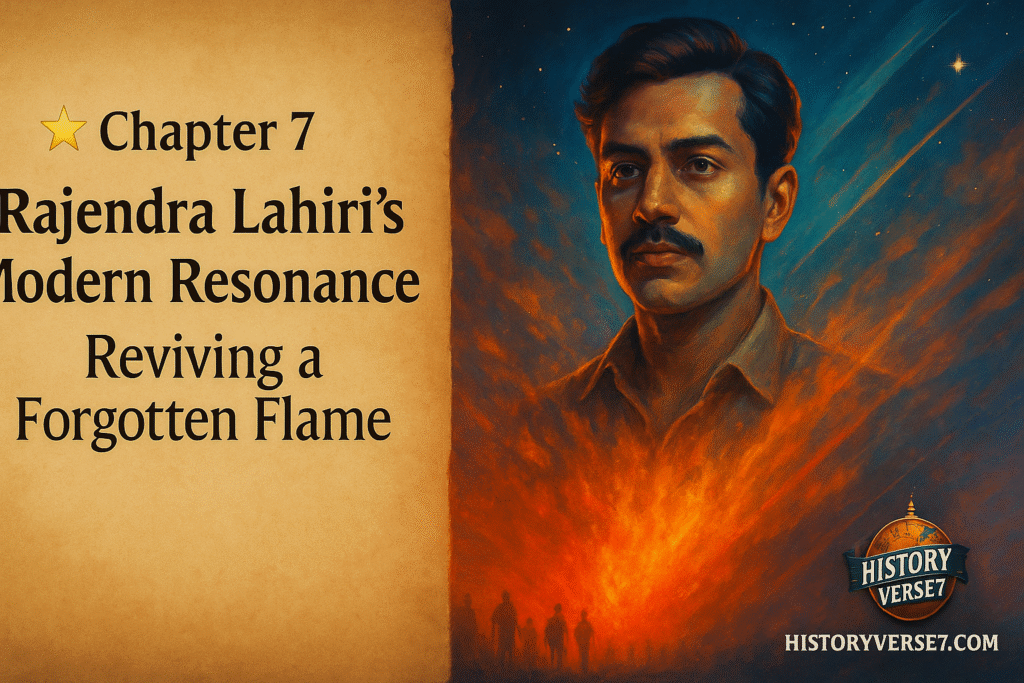
This isn’t nostalgia—it’s narrative justice.
🔶 2. Youth Awakening: Why Gen Z Is Listening
Today’s youth are hungry for authenticity. They’re tired of filtered patriotism and textbook heroes. Rajendra Lahiri, with his quiet defiance and disciplined sacrifice, offers something real.
- He wasn’t loud—but he was lethal.
- He didn’t chase fame—but he built legacy.
- He didn’t speak much—but every action was a statement.
In a world of noise, Rajendra Lahiri is the silence that inspires.
🔶 3. Educational Reform and Cultural Inclusion
Some progressive schools and universities are now including Rajendra Lahiri in their freedom movement modules. His role in the Kakori Conspiracy, his ideological clarity, and his martyrdom are being studied not just as history—but as philosophy.
Cultural institutions are also reviving his memory through:
- Statues and memorials in Uttar Pradesh and Bengal.
- Documentaries and short films funded by regional governments.
- Public lectures and seminars on lesser-known revolutionaries.
This is the beginning of a long-overdue recognition.
🔶 4. Political and Civic Tributes
While Rajendra Lahiri has not been politicized like some other figures, his legacy is quietly honored during Independence Day and Martyrs’ Day events. Civic bodies in Gonda, Lucknow, and Varanasi have hosted tribute ceremonies, poetry readings, and youth parades in his name.
These tributes are not about politics—they’re about pride.
🔶 5. Why His Story Still Matters
In a time of global unrest, rising authoritarianism, and cultural confusion, Rajendra Lahiri offers clarity:
- Fight oppression, but do it with discipline.
- Seek freedom, but earn it with sacrifice.
- Build legacy, not popularity.
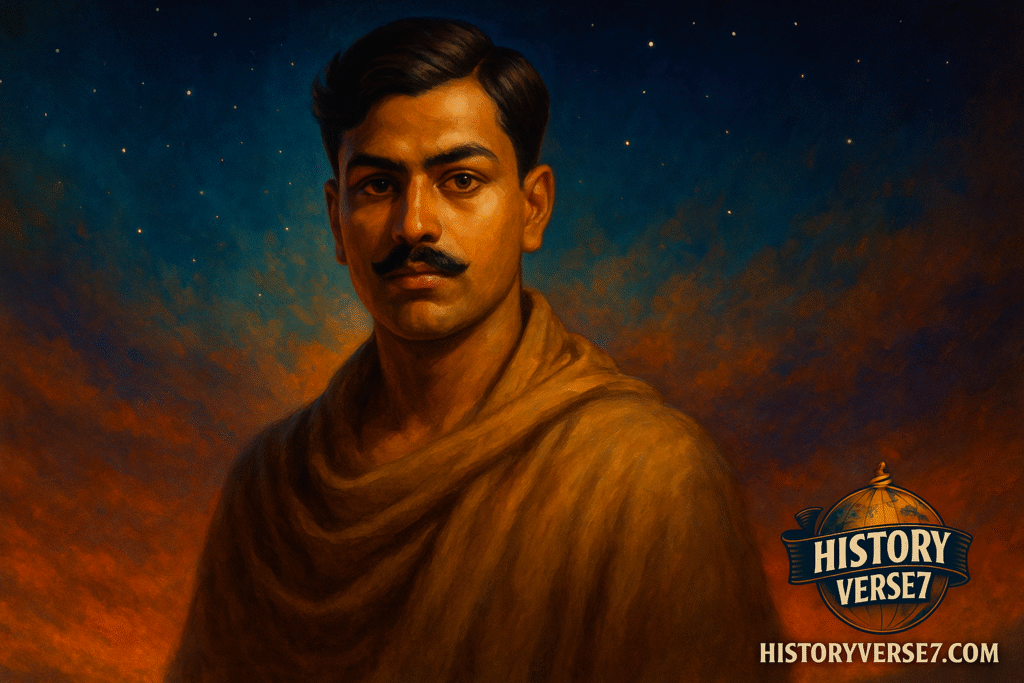
His life is a blueprint for every youth who wants to live with purpose and die with pride.
📚 Sources and References
- Wikipedia – Rajendra Lahiri
- Indian Culture Portal – Ministry of Culture
- “The Revolutionary Movement in India” by Manmath Nath Gupta
- “India’s Struggle for Independence” by Bipan Chandra
- Regional news archives from Uttar Pradesh and Bengal on civic tributes and memorials
🕊️ His Timeline Is Complete. Our Tribute Is Just Beginning.
Rajendra Lahiri didn’t ask for remembrance—he earned it. His life is a lesson, a legacy, and a light for every Indian who dares to dream. Share this tribute. Teach his story. Carry his fire.
👉 Join the Legacy Movement with HistoryVerse7🏁 Conclusion: Rajendra Lahiri — The Quiet Flame That Lit a Nation
Rajendra Lahiri was not a man of many words, but his life spoke volumes. In a freedom movement filled with thunderous voices and fiery slogans, he stood apart—calm, composed, and unshakably committed. His journey from a scholarly youth in Varanasi to a revolutionary strategist in the Hindustan Republican Association was not driven by ego or applause. It was driven by purpose.
At just 26, Rajendra Lahiri walked to the gallows with the serenity of a sage and the resolve of a warrior. He didn’t flinch. He didn’t falter. He didn’t plead. Because he knew that his death would not be the end—it would be the beginning of something far greater. And it was.
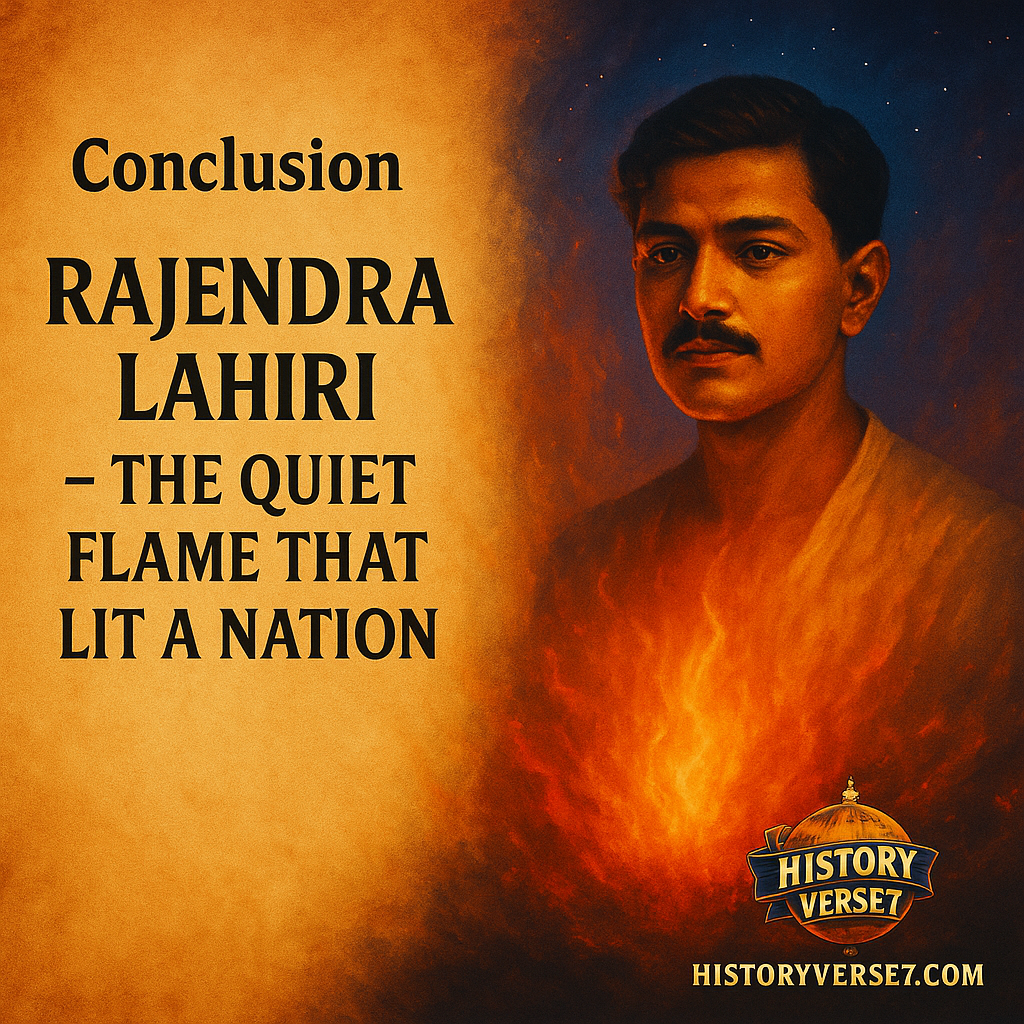
His execution, alongside fellow Kakori martyrs, became a spark that ignited the hearts of countless young Indians. Revolutionaries like Bhagat Singh and Chandrashekhar Azad drew strength from his sacrifice. His name became a whisper of courage in the underground cells of resistance, a symbol of what it meant to fight with discipline, dignity, and defiance.
But over time, the name Rajendra Lahiri faded from the mainstream. Overshadowed by louder legends, his story was buried beneath the noise of history. That silence is not just unfortunate—it’s unjust. Because Rajendra Lahiri represents a kind of patriotism that is rare: one that is quiet but unyielding, humble but heroic.
Today, as India navigates its identity in a complex world, the legacy of Rajendra Lahiri is more relevant than ever. He reminds us that freedom is not a gift—it is a responsibility. That revolution is not about chaos—it is about clarity. And that true legacy is not built in the spotlight—it is built in sacrifice.
This blog is not just a tribute. It is a resurrection. A call to remember the man who chose fire over fear, silence over spectacle, and death over dishonor. It is a reminder that Rajendra Lahiri still lives—in every act of courage, every voice of dissent, and every heart that beats for justice.
Let us not reduce him to a paragraph in a textbook. Let us raise him as a standard. Let us teach his name, tell his story, and carry his fire.
Because Rajendra Lahiri didn’t die for remembrance.
He died for responsibility.
And now, it’s ours to carry forward.
📘 FAQ: Understanding Rajendra Lahiri — The Man Behind the Martyrdom
1. Why did Rajendra Lahiri choose history as his academic path while planning a revolution?
Ans: Because history wasn’t just a subject—it was his strategy. Rajendra Lahiri believed that understanding the patterns of oppression and resistance across centuries was essential to dismantling British rule. His Master’s in History wasn’t academic—it was tactical. He studied empires not to admire them, but to learn how they fall.
2. What made Rajendra Lahiri different from other revolutionaries of his time?
Ans: Discipline. While many revolutionaries were driven by emotion, Rajendra Lahiri was driven by precision. He didn’t seek the spotlight. He didn’t crave martyrdom. He operated like a strategist—quiet, methodical, and deeply committed. His silence was sharper than slogans.
3. Did Rajendra Lahiri ever express regret or doubt about his revolutionary path?
Ans: Never. Even in prison, even facing death, Rajendra Lahiri remained unwavering. His letters and courtroom demeanor reflected calm conviction. He didn’t see revolution as rebellion—he saw it as responsibility. For him, dying for freedom wasn’t tragic. It was necessary.
4. How did Rajendra Lahiri’s upbringing shape his revolutionary mindset?
Ans: He was born into resistance. His father, Kshitish Mohan Lahiri, had already been jailed for anti-British activities. From childhood, Rajendra Lahiri saw courage not as an ideal, but as a daily practice. His home was his first battlefield—where values were forged in silence and sacrifice.
5. What would Rajendra Lahiri say to today’s youth if he were alive?
Ans: He’d say: “Don’t wait for applause. Build legacy in silence. Learn your history—not to memorize it, but to rewrite it. Freedom isn’t a festival—it’s a fire. Carry it with discipline. Defy with dignity. And never forget that courage begins when comfort ends.”
Share this content: