
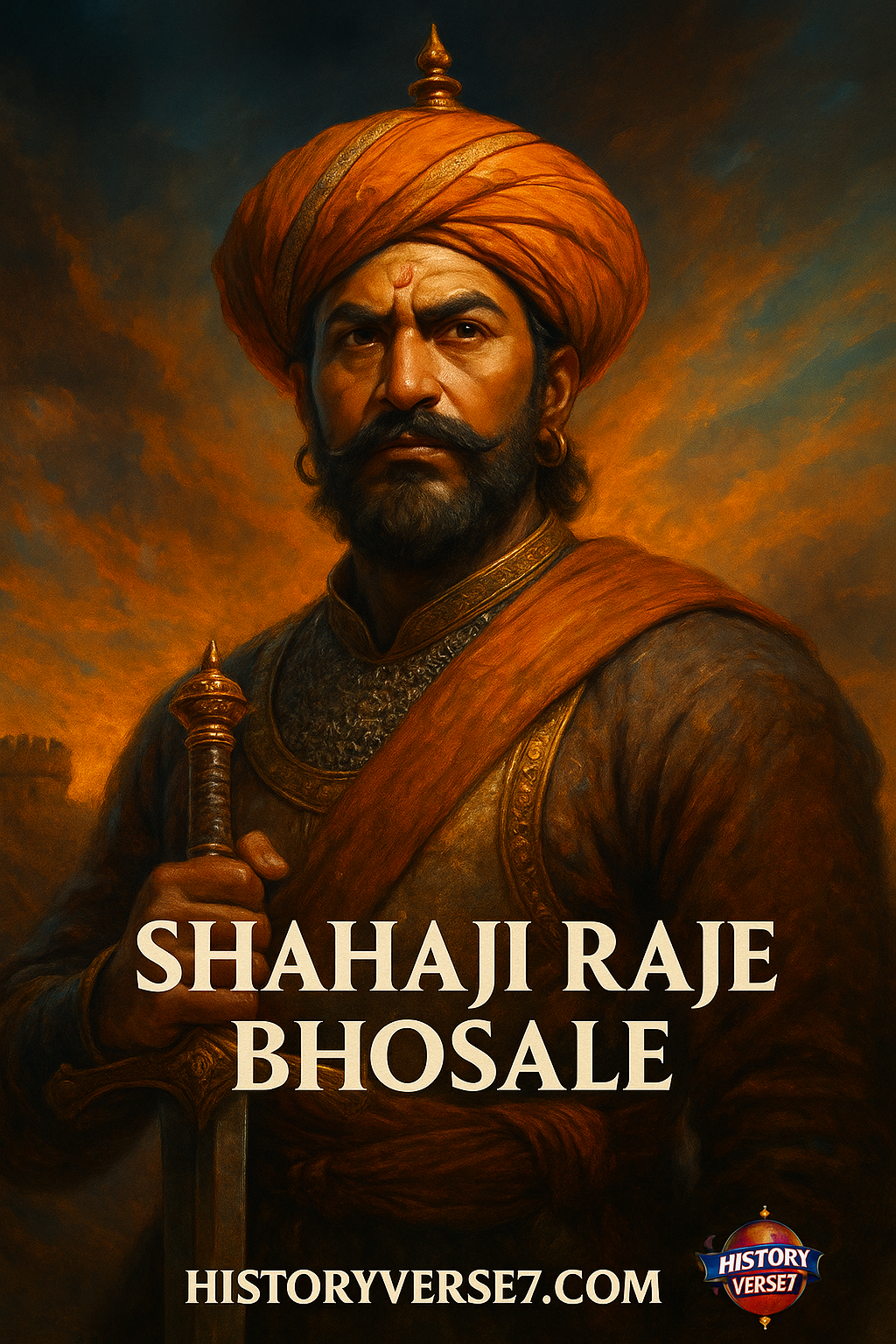
Before Shivaji Maharaj roared, Shahaji Raje Bhosale had already carved the battlefield. He wasn’t just a father—he was the blueprint of rebellion, the strategist of survival, and the silent storm behind the sword.
🚩 A New Dawn: Unsung Maratha Warriors Series Begins
Welcome to “Unsung Maratha Warriors”—a tribute series dedicated to the forgotten architects of Swarajya. These are the legends who fought without fanfare, built without applause, and led with vision. Every day, we resurrect one warrior’s story to restore pride, identity, and historical truth.
Today, we begin with the flame that lit the path—Shahaji Raje Bhosale. The father of Shivaji Maharaj. The strategist who shaped empires. The silent force behind the roar of Swarajya. His legacy is not just remembered—it is reignited.
This is more than a blog. It’s a movement. A daily salute to valor, vision, and the Maratha soul.
🔥 First Warrior: Shahaji Raje Bhosale
📅 New Tribute Every Day: Only on HistoryVerse7.com
Table of Contents
🔥 Introduction: The Forgotten Flame
In the grand saga of Maratha history, one name deserves to be etched in gold—Shahaji Raje Bhosale. He was not merely the father of Chhatrapati Shivaji Maharaj; he was the visionary warrior who laid the foundation of Swarajya. His life was a masterclass in diplomacy, warfare, and resilience. This blog captures the key events that shaped his legacy, using powerful language and emotional depth to reconnect modern readers with his timeless valor.

⚔️ 1. Born to Lead (1594) – The Spark Before the Flame
Shahaji Raje Bhosale was born on 15 March 1594 into the Bhosale clan, a lineage rooted in valor and loyalty. Mother Umabai Bhosale His father, Maloji Bhosale and , was a trusted commander under the Ahmadnagar Sultanate, and his rise from a modest background to nobility laid the foundation for Shahaji’s destiny. From childhood, Shahaji was immersed in the rhythms of war, diplomacy, and honor. He wasn’t raised in luxury—he was raised in legacy.
As a boy, Shahaji witnessed the shifting sands of Deccan politics. The Mughals were expanding, the Deccan Sultanates were fracturing, and Maratha identity was still undefined. In this chaos, Shahaji absorbed the art of survival—not through submission, but through strategy. He learned that loyalty must be earned, not demanded. That courage must be cultivated, not inherited. And that leadership begins not with command, but with conviction.

By his teenage years, Shahaji was already commanding troops under Malik Ambar, the Ethiopian-origin Prime Minister of Ahmadnagar, known for his guerrilla warfare tactics. Shahaji didn’t just follow orders—he studied them. He understood terrain, timing, and morale. He saw how fortresses could be symbols of resistance, and how alliances could be forged not just with swords, but with words.
This early exposure to military life shaped Shahaji into a fearless tactician. He wasn’t reckless—he was calculated. He didn’t seek glory—he sought impact. Every battle he fought, every decision he made, was rooted in a vision far greater than personal gain. He believed in the idea of Swarajya long before it had a name.
He didn’t inherit courage—he cultivated it. He didn’t wait for history—he prepared to shape it.
Shahaji’s birth wasn’t just the arrival of a warrior—it was the ignition of a legacy. Before Shivaji Maharaj roared, Shahaji had already carved the battlefield. His story begins not with conquest, but with character. And that character would go on to define the soul of Maratha resurgence.
🛡️ 2. Rise in Ahmadnagar Sultanate – Loyalty in a Land of Betrayals
In the early 1600s, the Deccan was a chessboard of ambition. The Ahmadnagar Sultanate, under constant threat from the Mughals, relied on the brilliance of generals like Shahaji Raje Bhosale. Under Malik Ambar’s mentorship, Shahaji learned the art of guerrilla warfare, fort defense, and political maneuvering. He wasn’t just a soldier—he was a strategist in the making.
Shahaji’s loyalty to the Nizamshahi was unwavering, even as the Sultanate crumbled under pressure. He led daring raids, defended forts like Junnar and Paranda, and negotiated with rival factions. His ability to adapt to shifting alliances without compromising his values made him a rare figure in a time of betrayal and opportunism.
When the Mughals intensified their campaign in the Deccan, Shahaji stood firm. He refused to surrender Pune, holding it as a bastion of Maratha pride. His resistance wasn’t just military—it was symbolic. He was fighting for the right of his people to exist with dignity.

But the fall of Ahmadnagar was inevitable. Shahaji, ever the realist, knew that survival required flexibility. He negotiated terms with the Mughals but never gave them his soul. His loyalty to Maratha identity remained intact, even as he shifted allegiances for strategic survival.
In a world of shifting loyalties, Shahaji Raje Bhosale remained loyal to one cause—Maratha pride.
This phase of his life reveals the complexity of his character. He was not a blind loyalist, nor a reckless rebel. He was a man who understood that the road to Swarajya would not be straight. It would require patience, sacrifice, and the ability to play the long game.
Shahaji’s rise in the Ahmadnagar Sultanate was not just about military rank—it was about laying the groundwork for a future where Marathas would no longer serve, but rule. He was the first to envision a Maratha-led state, even if he wouldn’t live to see it fully realized.
💍 3. Marriage to Jijabai – A Union of Fire and Grace
The marriage of Shahaji Raje Bhosale to Jijabai Jadhav was more than a political alliance—it was the convergence of two legacies destined to shape Swarajya. Jijabai, daughter of Lakhuji Jadhav, came from a proud Maratha lineage known for valor and spiritual depth. Shahaji, already rising as a formidable commander, found in Jijabai not just a partner, but a pillar of purpose.
Their union symbolized strength and sacrifice. At a time when Maratha pride was under siege, this marriage became a sanctuary of vision. Jijabai’s unwavering devotion to dharma and Shahaji Raje Bhosale’s strategic brilliance created a household where resistance was nurtured, not feared.

One of the most defining moments came when Jijabai, pregnant with Shivaji Maharaj, witnessed the betrayal and murder of her father by the Nizamshahi. Instead of succumbing to grief, she transformed pain into resolve. Shahaji Raje Bhosale stood by her, shielding her spirit and channeling their shared anguish into legacy.
Together, they raised Shivaji not as a prince, but as a protector. Jijabai instilled values; Shahaji trained in warfare. Their home was a crucible of courage.
This wasn’t just a marriage—it was the birthplace of Swarajya’s soul.
🧨 4. Service Under Bijapur Sultanate – Strategy in Shadows
After the fall of the Ahmadnagar Sultanate, Shahaji Raje Bhosale made a calculated move—he entered the service of the Bijapur Sultanate, one of the dominant powers in the Deccan. This wasn’t surrender—it was survival with strategy. Shahaji knew that to protect Maratha interests, he needed to operate from within the system.
The Bijapur rulers recognized his brilliance and granted him the jagir of Bangalore, a vast territory in South India. From this southern stronghold, Shahaji Raje Bhosale built a parallel legacy—fortifying cities, training armies, and planting the seeds of Swarajya far from Maharashtra. His governance in Bangalore was marked by discipline, cultural patronage, and military innovation.
One of the most important events during this period was Shahaji’s campaigns in Mysore and Tanjore, where he expanded Maratha influence and proved his pan-Indian strategic vision. He wasn’t just defending territory—he was building a future base for Maratha resurgence.
Despite serving Bijapur, Shahaji Raje Bhosale never compromised his identity. He maintained Marathi administration, supported local temples, and ensured that Maratha warriors under him retained their pride. His ability to balance loyalty and autonomy made him a master of political chess.
He didn’t serve kingdoms—he served a vision.
🏹 5. The South Campaign – Warrior Without Borders
When entrusted with the jagir of Bangalore by the Bijapur Sultanate, Shahaji Raje Bhosale didn’t just settle—he expanded. His campaigns in Mysore, Tanjore, and Trichy showcased his military brilliance beyond the Deccan. These weren’t mere conquests; they were strategic moves to extend Maratha influence deep into South India.
One of the most significant events was his successful siege of Srirangapatna, a fortified city in Mysore. Shahaji Raje Bhosale’s tactics combined speed, terrain mastery, and psychological warfare. His victories weren’t just about land—they were about legacy. He built forts, established Marathi administration, and ensured cultural integration with local rulers.

In Bangalore, he created a southern bastion of Swarajya, training Maratha warriors and mentoring commanders who would later serve Shivaji Maharaj. His governance blended discipline with diplomacy, proving that a warrior could also be a visionary.
Shahaji Raje Bhosale didn’t recognize borders—he recognized opportunity.
For today’s viewer, this chapter reveals how Swarajya wasn’t born in one region—it was seeded across India by leaders like Shahaji. His southern campaigns were not detours—they were declarations. He was a warrior without borders, and his legacy echoes in every fort that still stands in Karnataka.
🕊️ 6. Arrest and Release – The Unbreakable Spirit
In 1649, a turning point tested the resilience of Shahaji Raje Bhosale. Amid rising tensions between the Bijapur Sultanate and Maratha forces, Shahaji was arrested under suspicion of supporting Shivaji Maharaj’s growing independence movement. His capture was a political maneuver—an attempt to suppress the roots of Swarajya before they could bloom.
Held in confinement, Shahaji Raje Bhosale faced immense pressure to denounce his son’s actions. But he remained silent, composed, and unyielding. His dignity in captivity became a symbol of Maratha endurance. Even without weapons, he wielded strength through restraint.

The turning event came when Bijapur realized Shahaji’s strategic value. His military expertise, southern command, and influence over Maratha factions were irreplaceable. After intense negotiations, he was released, but the message was clear—his loyalty was conditional, his spirit unconquered.
You can cage a warrior—but never his will.
For today’s viewer, this episode reveals the depth of Shahaji Raje Bhosale’s character. He wasn’t just a fighter—he was a father protecting a revolution. His arrest didn’t weaken the Maratha cause—it strengthened its resolve. His silence spoke louder than surrender, and his release marked the beginning of a legacy that no prison could contain.
👑 7. Royal Seal to Shivaji Maharaj – A Father’s Silent Declaration
In the mid-17th century, as the idea of Swarajya began to take root, Shahaji Raje Bhosale made a gesture that would echo through history—he sent a royal seal (mudra) to his son, Shivaji Maharaj. This wasn’t just a symbolic act; it was a powerful endorsement of Shivaji’s mission to establish an independent Maratha rule.
The seal bore the words:
“This seal of Shivaji, the son of Shahaji, shines forth for the welfare of the people and is meant to command increasing respect from the entire world.”
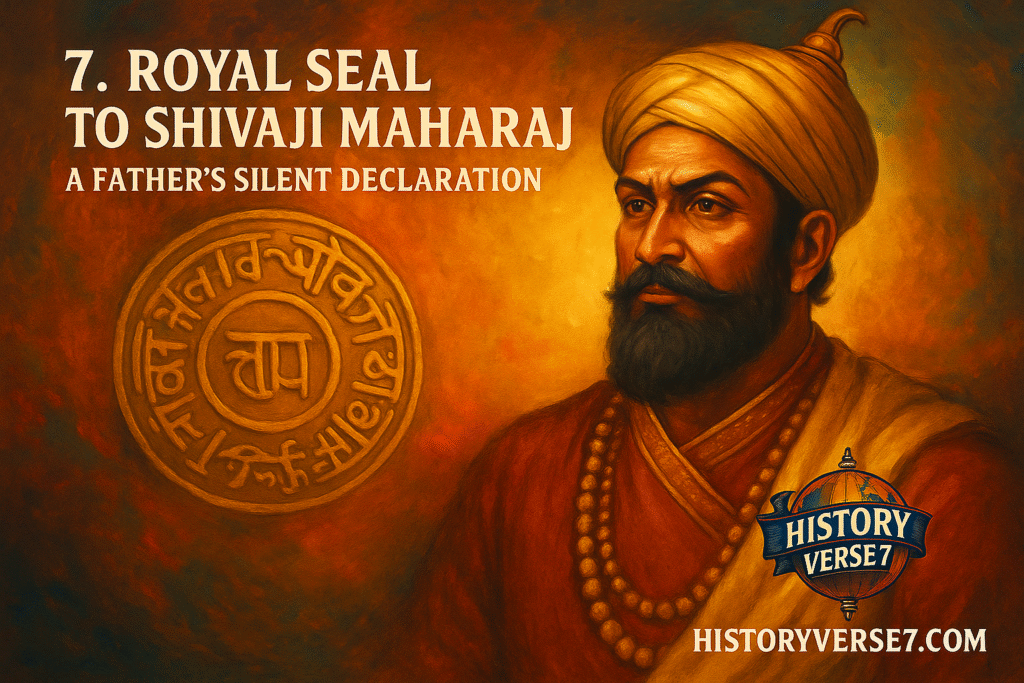
By allowing his name to be inscribed on the seal, Shahaji Raje Bhosale gave Shivaji not only legitimacy but also a mantle of ancestral authority. It was a silent yet thunderous declaration: the time for Swarajya had come.
This moment marked a turning point. It showed that Shahaji, though serving the Bijapur Sultanate, was spiritually aligned with his son’s vision. He could not openly rebel, but he could bless the rebellion.
He didn’t just pass the torch—he engraved it in history.
For today’s viewer, this act reveals the depth of Shahaji Raje Bhosale’s foresight. He empowered Shivaji not with armies, but with identity—and that made all the difference.
🏔️ 8. Legacy in Bangalore – The Southern Stronghold
When granted the jagir of Bangalore by the Bijapur Sultanate, Shahaji Raje Bhosale transformed it into a strategic and cultural fortress. Far from his native Maharashtra, he built a Maratha bastion in the South, proving that Swarajya’s spirit knew no boundaries.
He fortified key locations like Bangalore and Kolar, established Marathi administration, and supported local temples and scholars. His governance blended military discipline with cultural revival, earning respect across communities.

A pivotal moment came when Shahaji Raje Bhosale led successful campaigns in Mysore, securing Maratha influence in the region. His southern legacy laid the groundwork for future expansion and gave Shivaji Maharaj a model of decentralized power.
He didn’t just conquer land—he cultivated legacy.
For today’s viewer, Bangalore stands as a testament to Shahaji’s foresight. His southern stronghold wasn’t a retreat—it was a launchpad. His legacy lives not only in Maharashtra, but in every stone he laid in Karnataka.
📜 9. Letters, Diplomacy, and Vision – The Mind Behind the Sword
Beyond the battlefield, Shahaji Raje Bhosale was a master of diplomacy and long-term vision. His letters to Shivaji Maharaj weren’t just paternal—they were strategic blueprints. In one notable exchange, Shahaji advised Shivaji to balance ambition with caution, urging him to avoid unnecessary conflict with powerful sultanates while strengthening internal governance.
These letters reveal a leader who understood that Swarajya required more than swords—it needed structure, patience, and alliances. Shahaji Raje Bhosale emphasized the importance of fort architecture, local support, and ethical rule. His words shaped Shivaji’s leadership style, embedding values of justice, resilience, and tactical brilliance.
His ink was as sharp as his blade.
For today’s viewer, these letters offer a glimpse into the mind of a visionary. Shahaji didn’t just fight for Swarajya—he mentored it into existence. His diplomacy laid the foundation for a kingdom that would rise not just in power, but in principle.
🧠 10. Military Philosophy – Strategy Over Strength
Unlike many commanders of his time, Shahaji Raje Bhosale believed that true victory came not from brute force, but from strategic brilliance. He mastered the art of terrain warfare, psychological tactics, and minimal confrontation. His campaigns in the Deccan and South India were marked by precision, not chaos.
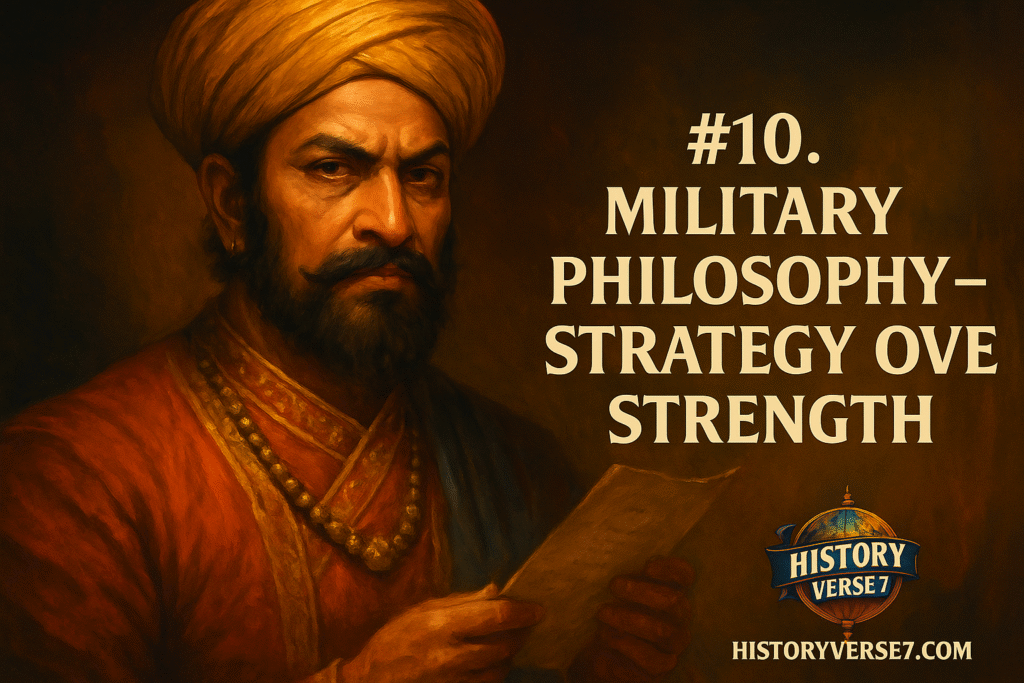
One notable example was his use of fort architecture to control regions without constant warfare. By securing key forts like Bangalore and Srirangapatna, Shahaji Raje Bhosale created defensive ecosystems that allowed Maratha forces to thrive with limited resources.
He trained his men to fight smart—using speed, surprise, and local support. This philosophy deeply influenced Shivaji Maharaj’s guerrilla warfare tactics, which later became legendary.
He didn’t just fight battles—he designed them.
For today’s viewer, Shahaji’s military philosophy is a lesson in leadership. He proved that intellect, timing, and vision can outmatch sheer strength—and that’s what made him a true architect of Swarajya.
🧬 11. Influence on Shivaji Maharaj’s Leadership – Legacy in Blood and Thought
The leadership of Shivaji Maharaj was not born in a vacuum—it was forged in the shadow of Shahaji Raje Bhosale. From military discipline to political foresight, Shahaji’s influence shaped Shivaji’s worldview. He taught his son that Swarajya wasn’t just about territory—it was about justice, identity, and dharma.
A defining moment came when Shahaji Raje Bhosale entrusted Shivaji with the Pune jagir. This wasn’t merely land—it was a test of leadership. Shivaji, under Jijabai’s guidance and Shahaji’s distant mentorship, began fortifying forts, building alliances, and sowing the seeds of rebellion.
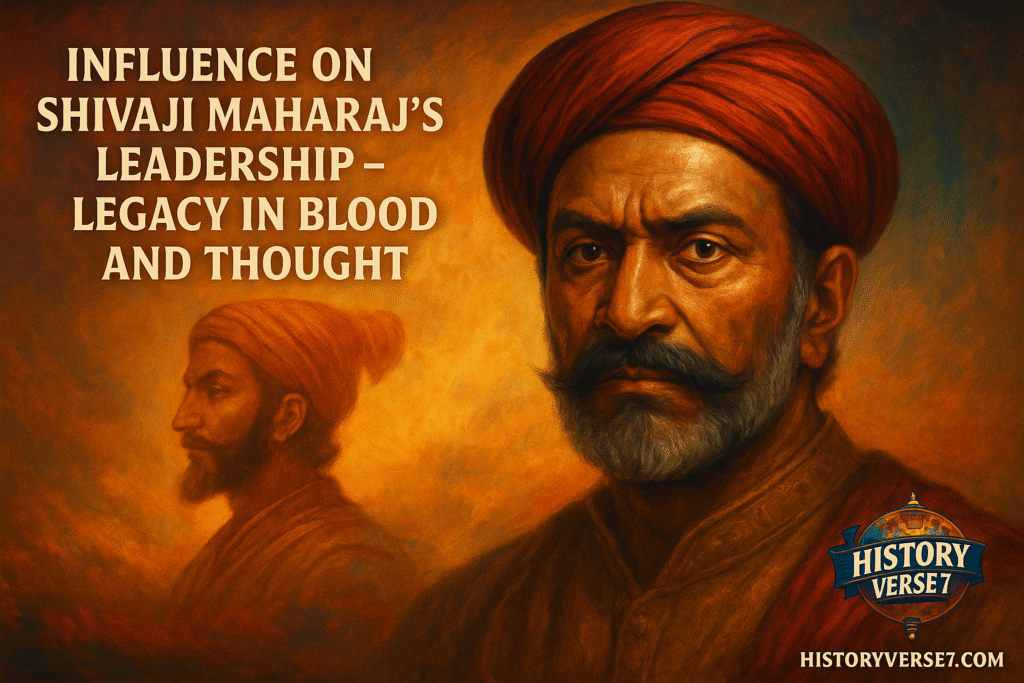
Shahaji’s emphasis on guerrilla tactics, fort-centric defense, and local governance became the blueprint for Shivaji’s military campaigns. Even from afar, Shahaji’s letters and decisions echoed in Shivaji’s actions.
He didn’t just raise a son—he raised a sovereign.
For today’s viewer, understanding Shahaji Raje Bhosale’s role is essential. He was the silent architect behind the lion’s roar—the father who built a king.
🏛️ 12. Cultural Patronage and Administration – The Warrior Who Built Wisdom
While commanding armies and fortifying regions, Shahaji Raje Bhosale also nurtured culture and governance. In Bangalore, he supported Sanskrit scholars, restored temples, and encouraged Marathi literary traditions. His court welcomed poets and thinkers, proving that a sword could coexist with a scroll.
One notable event was his patronage of the Karnataka school of music and literature, where he funded local artists and ensured Maratha values were preserved in southern lands. His administration emphasized justice, efficient revenue systems, and respect for local customs.
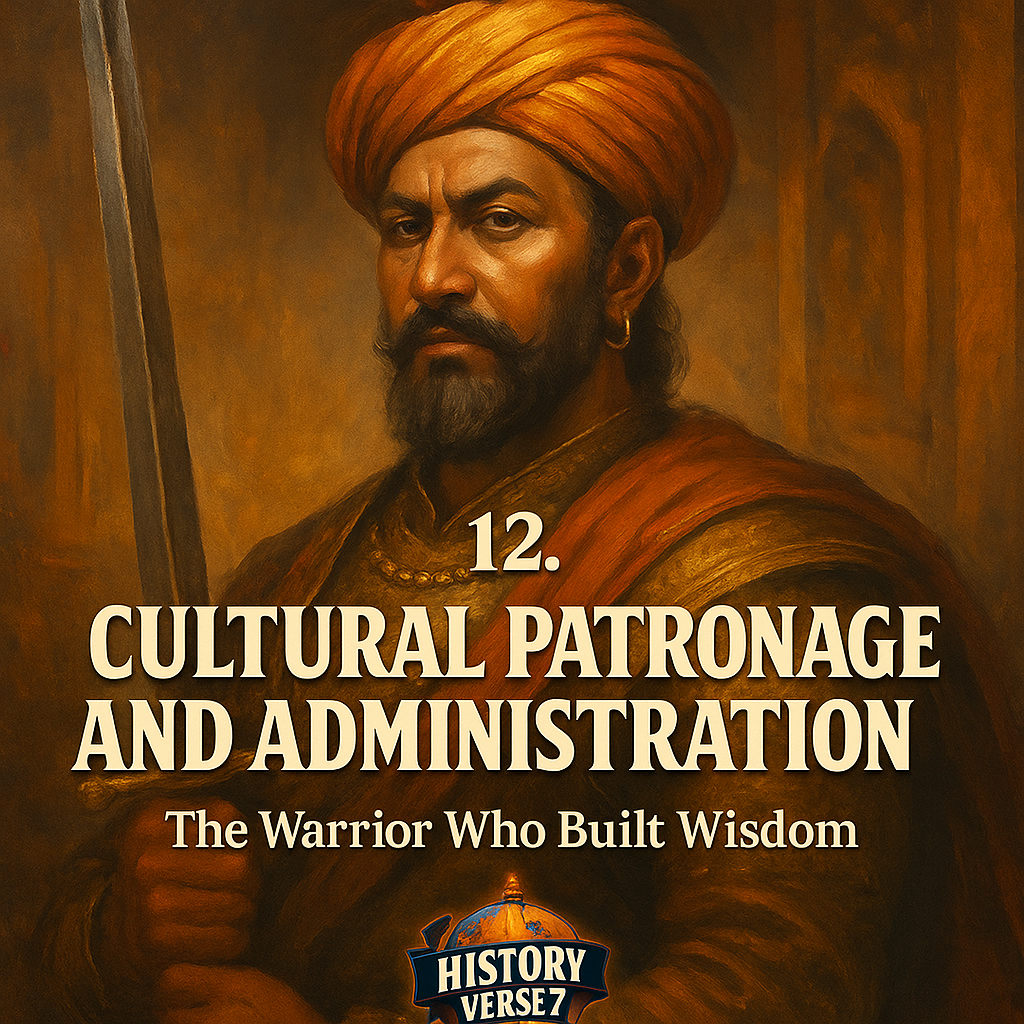
Shahaji Raje Bhosale didn’t rule with fear—he ruled with foresight. His governance laid the foundation for Shivaji Maharaj’s later policies of inclusive rule and cultural revival.
He didn’t just defend Swarajya—he defined its soul.
For today’s viewer, Shahaji’s cultural legacy is a reminder that true leadership uplifts minds, not just territories. His forts protected people, but his patronage protected identity.
⚡ 13. Death of a Titan (1664) – The End That Became a Beginning
On 23 January 1664, the Maratha world mourned the passing of Shahaji Raje Bhosale in Hodigere, Karnataka. His death marked the end of an era—but not the end of his influence. As news spread, warriors, poets, and nobles paid tribute to the man who had shaped the soul of Swarajya.
His funeral was conducted with royal honors, reflecting his stature across the Deccan and South India. Even Bijapur, his former patron, acknowledged his unmatched legacy. But the true tribute came from Shivaji Maharaj, who carried forward his father’s vision with renewed fire.
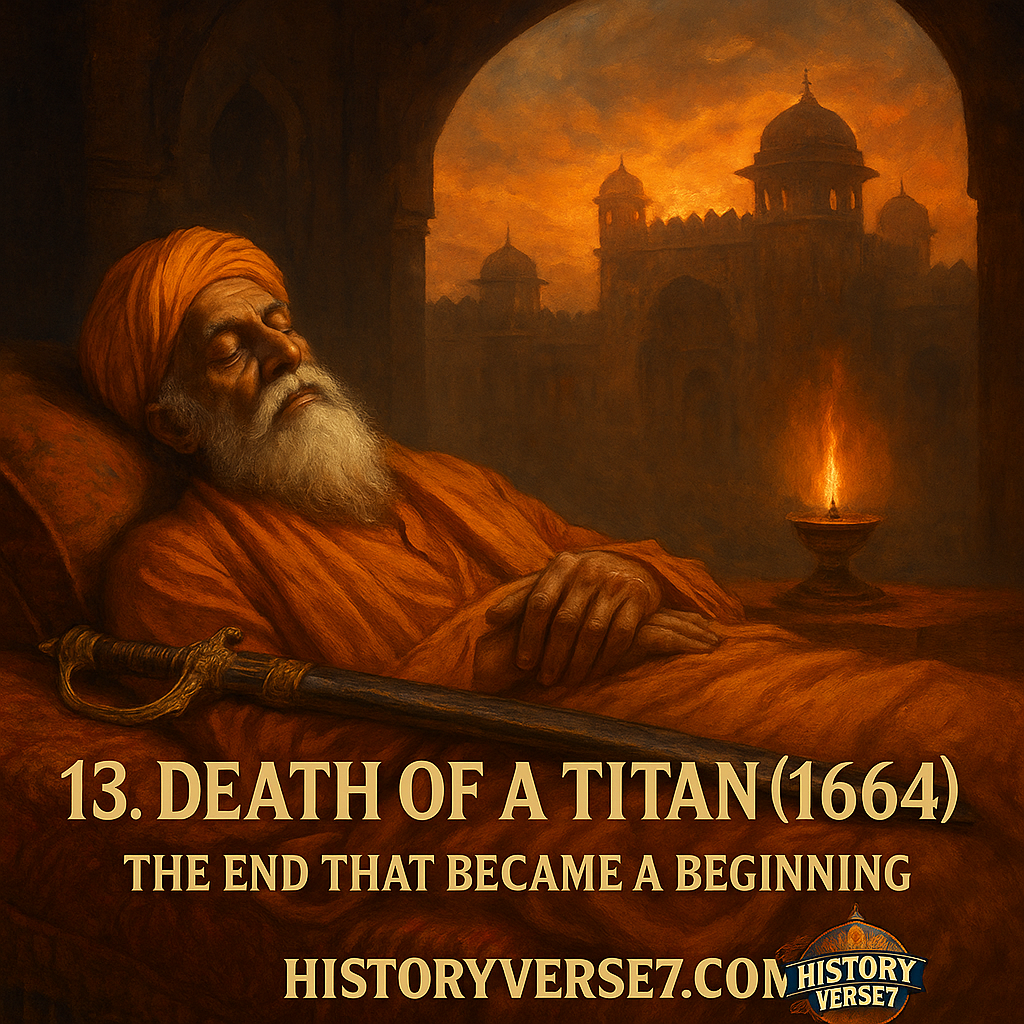
The loss of Shahaji Raje Bhosale was a blow to Maratha morale, yet it became a catalyst. His teachings, letters, and strategies lived on in every campaign Shivaji led. His death didn’t silence the movement—it amplified it.
He didn’t die—he multiplied. In every sword raised for Swarajya, his spirit lives on.
For today’s viewer, Shahaji’s final chapter is a reminder: true legacy begins where life ends.
🌄 Legacy: Why Shahaji Raje Bhosale Matters Today
Shahaji Raje Bhosale is not just a name in history—he is the blueprint of Swarajya’s foundation. His ability to serve the Ahmadnagar and Bijapur Sultanates while fiercely preserving Maratha identity is a masterclass in leadership. He proved that loyalty to one’s people can coexist with tactical diplomacy.
A defining legacy moment was his decision to send the royal seal to Shivaji Maharaj, symbolizing the birth of a sovereign Maratha vision. That act wasn’t ceremonial—it was revolutionary.
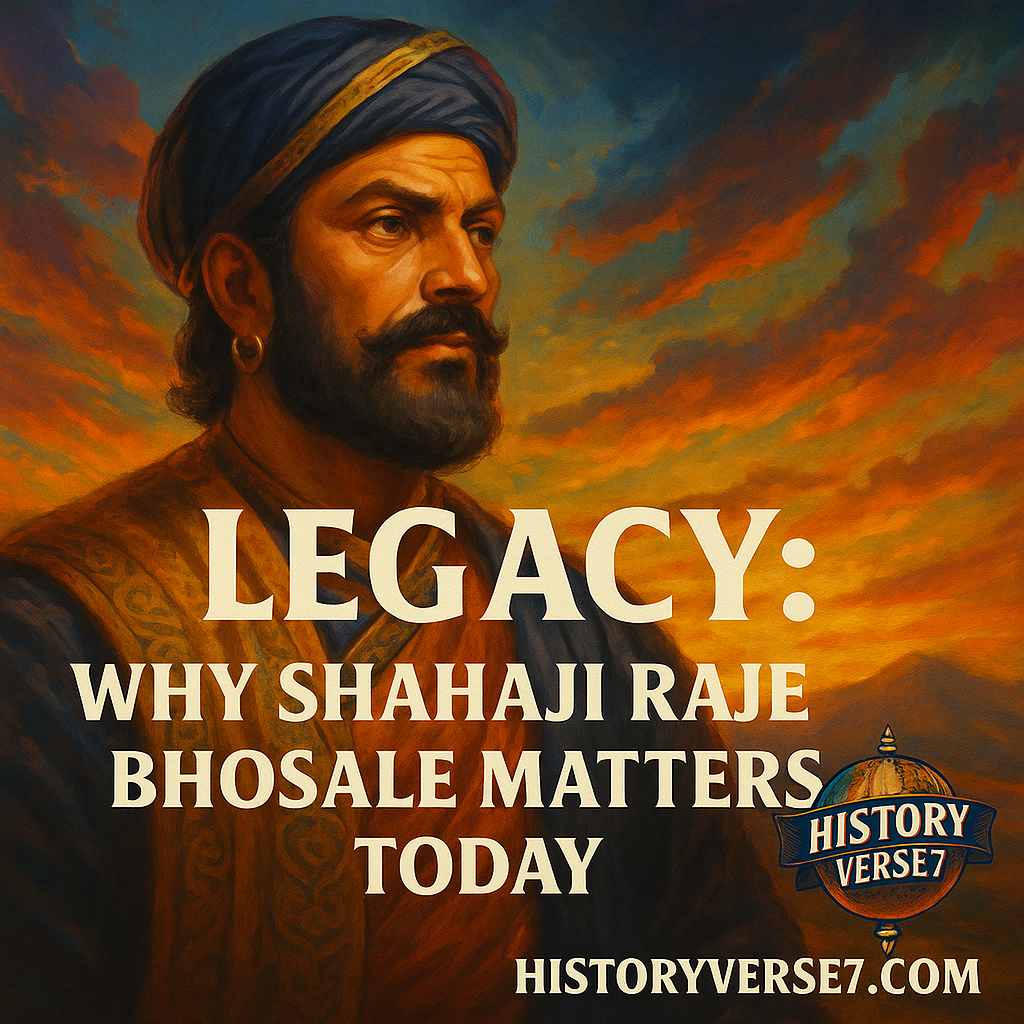
His influence echoes in Shivaji’s governance, the architecture of Maratha forts, and the resilience of Marathi culture across regions. Shahaji Raje Bhosale taught us that true warriors build systems, not just empires.
In every fort stone, in every battle cry, his spirit endures.
For today’s viewer, Shahaji’s story is a reminder: integrity, foresight, and cultural pride are timeless weapons. He is the unsung architect of Swarajya’s soul—and that soul still breathes.
🔚 Conclusion – The Silent Architect of Swarajya
History often celebrates the kings who wore the crown, but rarely the hands that built the throne. Shahaji Raje Bhosale was one such hand—firm, visionary, and unshakable. Though he never ruled as a sovereign, his legacy shaped the very foundation of Swarajya. His life was a mosaic of courage, strategy, and sacrifice, woven across the Deccan and South India.
From his rise under Malik Ambar to his campaigns in Mysore, from his arrest to his royal seal sent to Shivaji Maharaj, Shahaji Raje Bhosale proved that true leadership is not about titles—it’s about timeless impact. He balanced diplomacy with defiance, loyalty with legacy. His governance in Bangalore, his cultural patronage, and his mentorship of Shivaji Maharaj reveal a man who built quietly but powerfully.
Today, as we walk the paths of Pune, gaze upon the forts of Karnataka, or speak of Maratha valor, we echo his spirit. He is the unsung architect of Swarajya, the father of a king, and the kingmaker of a nation. His story is not just history—it’s heritage.

Shahaji Raje Bhosale didn’t seek monuments. He built minds, movements, and memories.
For every viewer, his life is a reminder that greatness isn’t always loud. Sometimes, it’s the quiet force behind the revolution. And in every act of pride, resistance, and cultural revival, Shahaji’s legacy lives on—unshaken, undefeated, unforgettable.
Internal Links: 1https://historyverse7.com/chhatrapati-shivaji-maharaj-quotes/ 2https://historyverse7.com/shivaji-maharaj/
External Links: 1https://en.wikipedia.org/wiki/Shahaji 2 https://historicindia.org/article/shahaji-raje-bhonsle
📘 FAQ: Shahaji Raje Bhosale
1. Why did Shahaji Raje Bhosale never openly rebel, despite mentoring Shivaji Maharaj’s revolutionary path?
Answer:
Because Shahaji Raje Bhosale understood that timing is the true weapon of a visionary. While Shivaji Maharaj ignited Swarajya from the frontlines, Shahaji operated from the shadows—shielding, guiding, and preserving Maratha strength within enemy systems. His silence wasn’t submission; it was strategy. He knew that one open rebellion could cost the movement its roots. So, he chose to be the silent architect, ensuring the soil was fertile before the seed of Swarajya could bloom.
2. What was Shahaji Raje Bhosale’s greatest legacy beyond Shivaji Maharaj?
Answer:
His greatest legacy was the creation of a decentralized Maratha consciousness across regions. From Pune to Bangalore, Shahaji Raje Bhosale didn’t just command—he cultivated identity. He proved that Maratha pride could thrive under any banner, in any geography, as long as the soul remained unshaken. His forts, his letters, his governance—they weren’t just acts of survival. They were blueprints for a nation yet to be born.
Share this content:

Jay shivray…..🚩🚩