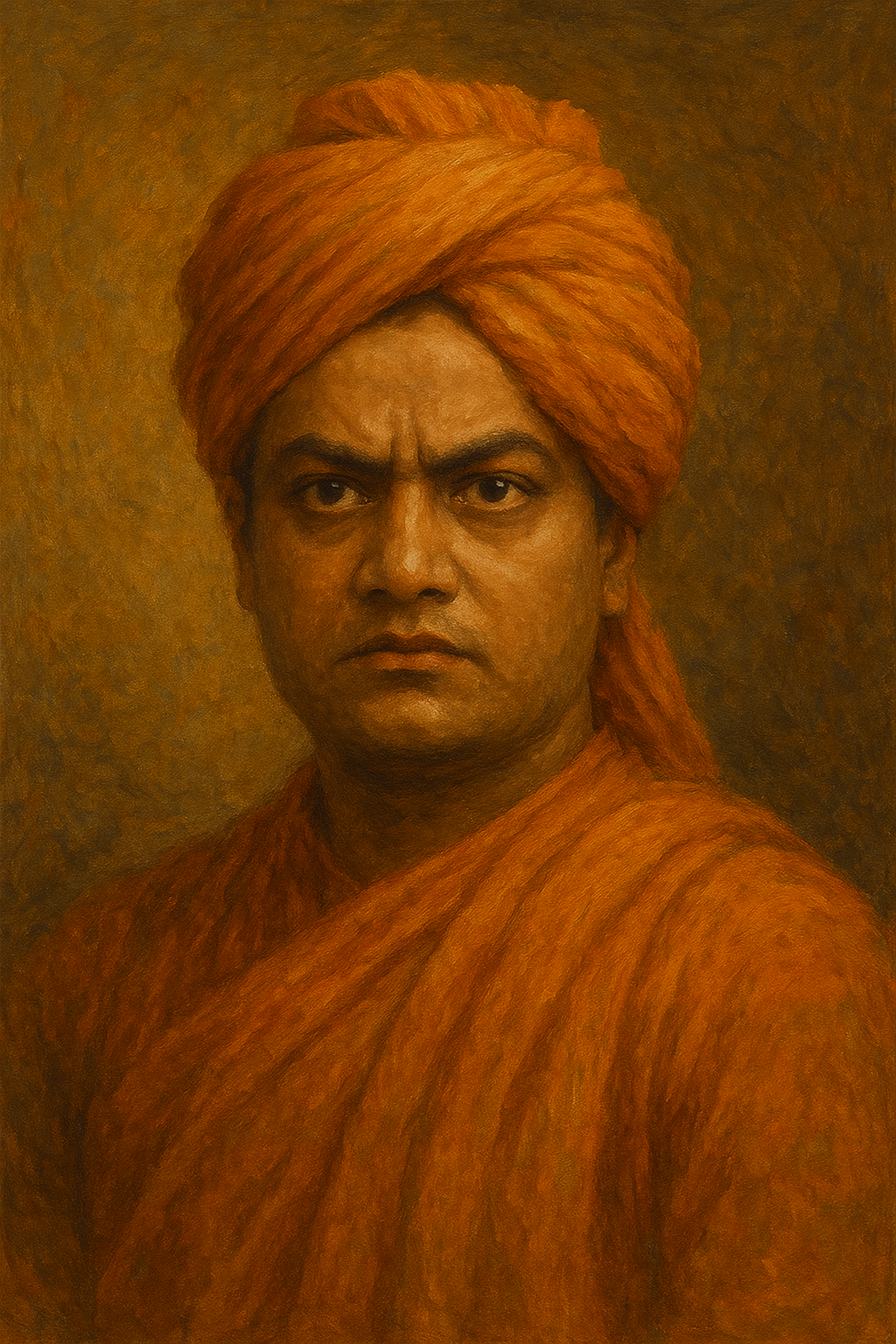
🕉️ Awaken the Fire Within
Before you read the life of Swami Vivekananda, pause and ask yourself: Are you ready to rise? This is not just a biography—it’s a mirror, a mantra, a mission.
💬 His words ignited revolutions. 🧘 His silence shaped civilizations. 🇮🇳 His vision rebuilt a nation’s soul.
Dive into the journey of a monk who roared like a lion, served like a saint, and lived like a flame. Let this page be your first step toward fearless wisdom and eternal awakening.
👉 Scroll down to begin the biography of Swami Vivekananda—the radiant force behind India’s spiritual renaissance.
🧭 Introduction: 🔥 Swami Vivekananda: The Radiant Flame of Fearless Wisdom and National Awakening
Swami Vivekananda was one of the most influential spiritual leaders and philosophers of modern India, whose teachings continue to inspire millions across the globe. Born as Narendranath Datta in Kolkata in 1863, he emerged as a beacon of fearless wisdom, national pride, and spiritual awakening. His life was a journey of transformation—from a curious seeker questioning the nature of existence to a global ambassador of Vedanta and Yoga. The name Swami Vivekananda is now synonymous with courage, clarity, and compassion, and remains a powerful keyword in the realms of spirituality, education, and Indian heritage.
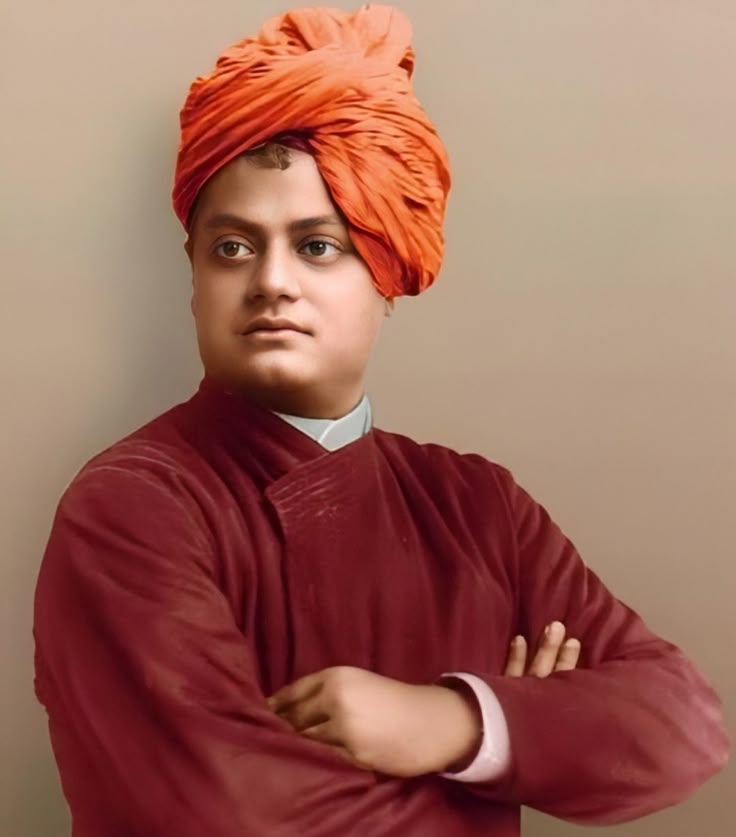
Swami Vivekananda’s early life was marked by intellectual brilliance and spiritual restlessness. He was deeply influenced by Western philosophy, science, and rational thought, yet he yearned for direct experience of the divine. This quest led him to Sri Ramakrishna Paramhamsa, a mystic saint who introduced him to the living reality of God. Under Ramakrishna’s guidance, Narendranath experienced profound spiritual states and realized that divinity resides within every soul. This realization became the foundation of his teachings and the cornerstone of his mission. He renounced worldly life and became Swami Vivekananda, dedicating himself to the upliftment of humanity through spiritual knowledge and selfless service.
The turning point in Swami Vivekananda’s life came in 1893 when he represented India at the Parliament of the World’s Religions in Chicago. His opening words, “Sisters and brothers of America,” received a standing ovation and marked the beginning of a new era in global spiritual discourse.
He spoke about the universality of religions, the importance of tolerance, and the depth of Indian philosophy. His message was clear: all paths lead to the same truth, and every soul is potentially divine. This speech not only introduced Hinduism and Vedanta to the Western world but also positioned India as a land of profound spiritual wisdom. Today, “Swami Vivekananda Chicago speech” remains one of the most searched and celebrated moments in Indian history.
Swami Vivekananda’s teachings emphasized the practical application of spirituality. He believed that religion should not be confined to rituals and dogmas but should manifest in character, strength, and service. He taught the principles of Karma Yoga, Bhakti Yoga, Raja Yoga, and Jnana Yoga, offering a comprehensive path to self-realization. His interpretation of Vedanta was revolutionary—it was not abstract philosophy but a call to action. He urged people to see God in every human being and to serve the poor, the weak, and the marginalized as manifestations of the divine. His famous quote, “Service to man is service to God,” became the guiding principle of the Ramakrishna Mission, which he founded in 1897.
Swami Vivekananda was also a visionary patriot who believed that India’s regeneration depended on the awakening of its spiritual and moral strength. He inspired countless freedom fighters, including Subhas Chandra Bose, Mahatma Gandhi, and Aurobindo Ghosh, with his message of self-confidence and national pride. He called upon the youth to “Arise, awake, and stop not till the goal is reached,” urging them to build character, acquire knowledge, and dedicate themselves to the nation. His vision of spiritual nationalism blended ancient wisdom with modern ideals, creating a blueprint for India’s cultural and intellectual resurgence.
The legacy of Swami Vivekananda is not limited to his speeches and writings—it lives on in the hearts of those who strive for excellence, integrity, and service. His teachings continue to resonate in educational institutions, spiritual centers, and social movements. Keywords like “Swami Vivekananda quotes,” “Swami Vivekananda biography,” “Swami Vivekananda teachings,” and “Swami Vivekananda philosophy” are among the most searched terms by seekers, students, and scholars alike. His influence extends beyond India, inspiring global leaders, thinkers, and spiritual aspirants.
Swami Vivekananda passed away in 1902 at the young age of 39, but his impact remains timeless. He redefined religion as a force for personal growth and social transformation. He bridged the gap between East and West, ancient and modern, spiritual and practical. His life was a testament to the power of inner realization and outer action. Today, as the world grapples with challenges of identity, division, and despair, Swami Vivekananda’s message offers hope, unity, and purpose.
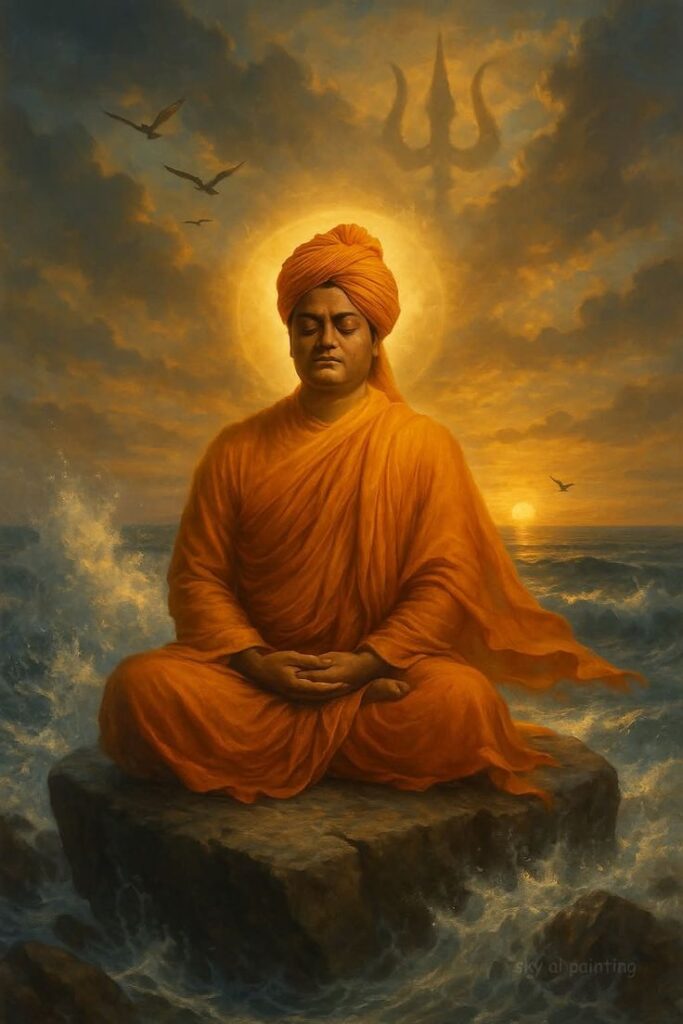
This biography of Swami Vivekananda is not just a record of events—it is a reflection of a soul that dared to dream, serve, and awaken a civilization. It invites readers to explore the depths of Vedanta, the strength of Yoga, and the beauty of selfless service. It reminds us that true greatness lies not in power or fame, but in the ability to uplift others and live with truth. Swami Vivekananda remains a guiding light for all who seek to live with courage, wisdom, and compassion.
🎙️ Swami Vivekananda’s Chicago Speech — September 11, 1893
Location: Art Institute of Chicago, USA
Date: September 11, 1893
Event: Parliament of the World’s Religions
Audience: Over 7,000 delegates, scholars, and spiritual leaders from across the globe
Motive: To represent Hinduism and India’s spiritual heritage on a global stage
🗣️ The Speech That Awakened the World
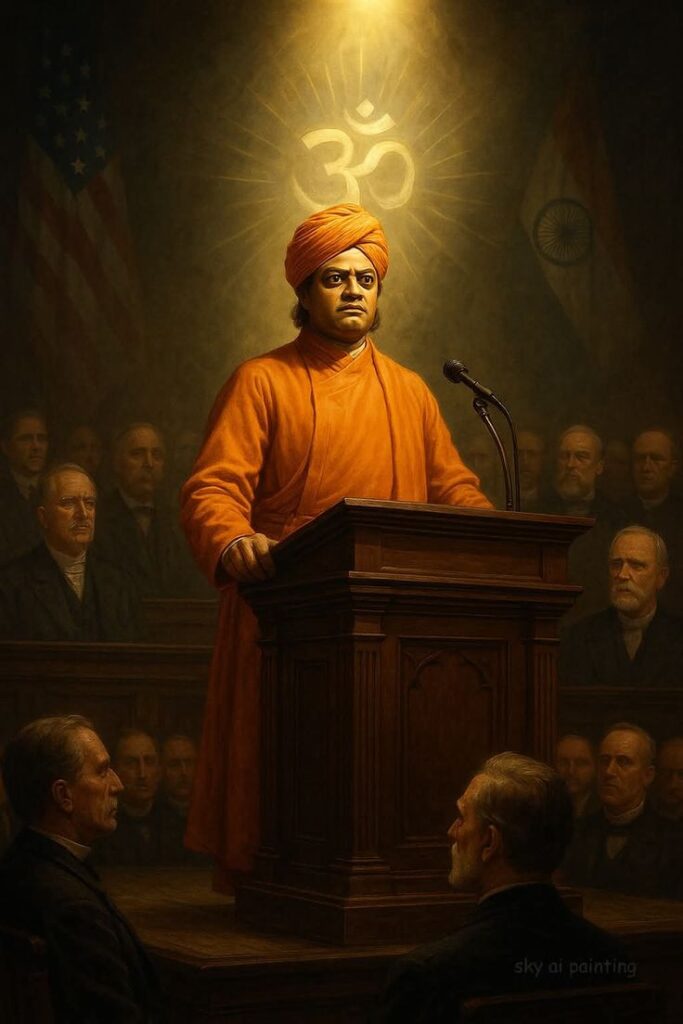
Swami Vivekananda rose from his seat, dressed in a saffron robe and turban, calm yet radiant. The hall was packed — thousands of delegates from every major religion had gathered to hear voices from the East. When he began with the words:
“Sisters and Brothers of America…”
The crowd erupted in applause — not for the words, but for the warmth, humility, and spiritual brotherhood they carried. It was a moment of connection, a bridge between civilizations.
He continued:
“I am proud to belong to a religion which has taught the world both tolerance and universal acceptance.”
Vivekananda spoke not as a preacher, but as a representative of Sanatana Dharma, the eternal way. He explained that Hinduism embraces all paths — that it sees truth in every religion, and divinity in every soul.
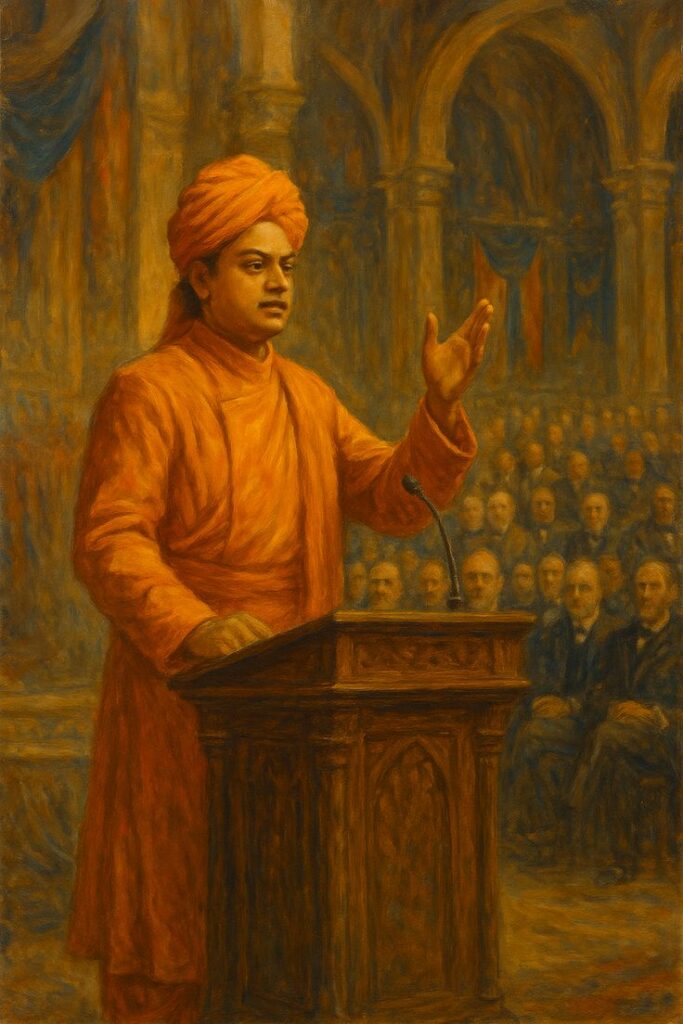
He quoted the ancient Vedas:
“As the different streams having their sources in different places all mingle their waters in the sea, so, O Lord, the different paths which men take… all lead to Thee.”
His voice was firm, his message clear: India was not a land of snake charmers and superstition — it was the cradle of spiritual wisdom.
He condemned religious fanaticism, saying:
“Sectarianism, bigotry, and its horrible descendant, fanaticism, have long possessed this beautiful earth… They have filled the earth with violence, drenched it often with human blood, destroyed civilization and sent whole nations to despair.”
But he didn’t stop at critique. He offered a solution — spiritual unity, mutual respect, and service to humanity.
🌍 Impact and Legacy
The crowd was stunned. Many had never heard such clarity, humility, and power from an Eastern voice. Newspapers called him “the cyclonic monk from India.” Western scholars sought him out. Eastern seekers found pride in their heritage.
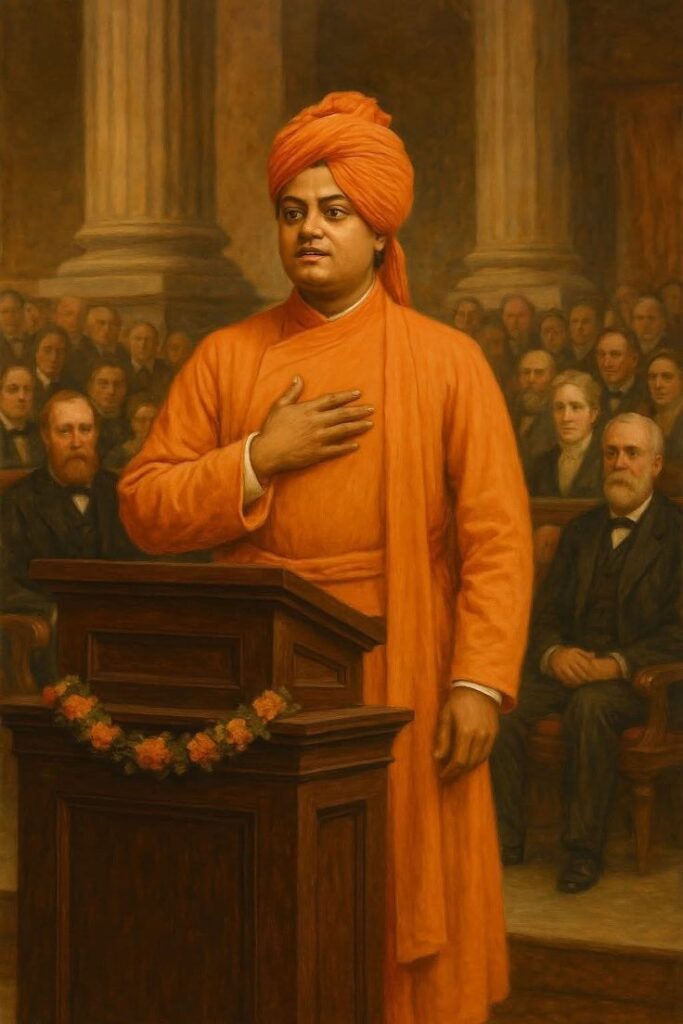
His speech marked the beginning of India’s spiritual diplomacy, and the birth of the global Vedanta movement.
Table of Contents
🧒 1863 – The Birth of Swami Vivekananda: A Soul Born to Awaken a Nation
Swami Vivekananda, born as Narendranath Datta on January 12, 1863, in Kolkata, then part of the Bengal Presidency under British India, was not just another child born into a privileged household—he was the beginning of a spiritual revolution. His birth marked the arrival of a force destined to redefine India’s identity, revive its spiritual heritage, and inspire generations across the globe. This blog explores the year 1863 in depth, tracing the roots of Vivekananda’s legacy through the lens of family, culture, and early impressions.
🏡 Birthplace and Historical Context
In 1863, Kolkata (then Calcutta) was the intellectual and political heart of British India. It was a city of contrasts—colonial power and native resistance, Western education and Eastern philosophy, material progress and spiritual depth. Into this vibrant, conflicted world was born Narendranath Datta, in the ancestral home of the Dattas on Gourmohan Mukherjee Street.
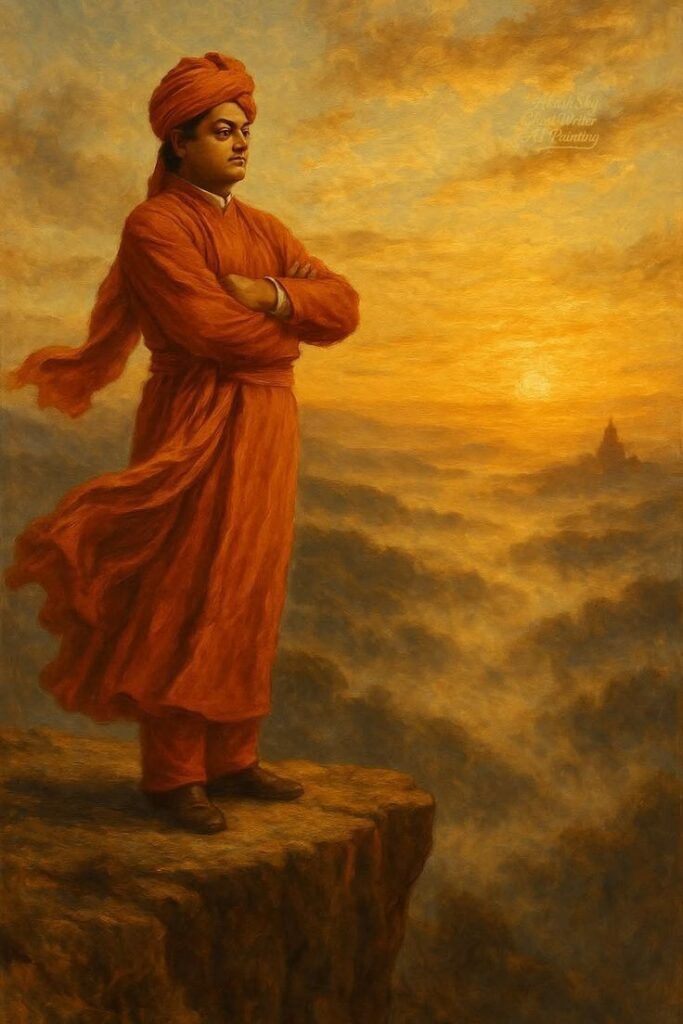
His birth was not just a personal event—it was a historical moment. India was under colonial rule, and the spiritual morale of the nation was waning. The Bengal Renaissance was stirring minds, but the soul of India needed a voice. That voice would rise from this very household.
👨👩👦 Family of Intellect and Devotion
Narendranath’s father, Vishwanath Datta, was a renowned attorney at the Calcutta High Court. Fluent in English and Persian, he was a man of liberal thought, progressive ideals, and deep engagement with Western philosophy. He encouraged debate, critical thinking, and exposure to global ideas. His library was vast, and his conversations were rich with intellectual fire.
His mother, Bhuvaneshwari Devi, was the spiritual anchor of the family. She was deeply religious, emotionally resilient, and steeped in the traditions of Hindu dharma. She would recite verses from the Ramayana, Mahabharata, and Bhagavad Gita, and often prayed for a son who would serve the nation. Her prayers were answered.
Together, they created a home that was both culturally rich and intellectually vibrant—a rare blend that shaped the young Narendra’s character. The environment was filled with books, music, spiritual stories, and philosophical discussions. It was a crucible of awakening.
🧠 Early Signs of Genius
Even as a toddler, Narendranath displayed remarkable qualities. He was curious, fearless, and intensely observant. He would ask profound questions about life, death, and God—questions that startled adults. His memory was sharp, his speech eloquent, and his presence magnetic.
He showed early signs of leadership, often organizing games and debates among his peers. He was drawn to stories of valor, sacrifice, and spiritual power. His favorite heroes were Shiva, Hanuman, and Bhagavan Krishna—symbols of strength, devotion, and wisdom.
These traits were not accidental. They were the early manifestations of a soul destined to become Swami Vivekananda, the lion of Vedanta.
🧘 Spiritual Temperament
Narendra’s spiritual instincts were evident from childhood. He would sit in meditation, chant mantras, and enter deep states of concentration. His mother once found him in a trance-like state, eyes closed, body still, lost in silence. He was not imitating—he was experiencing.
He often spoke of visions, dreams, and inner voices. He felt a connection to something vast and eternal. This yogic temperament was not taught—it was innate. It would later blossom under the guidance of Sri Ramakrishna Paramhamsa, but its seeds were sown in 1863.
📚 Cultural Influences and Education
The Bengal Renaissance was in full swing during Narendra’s birth year. Thinkers like Raja Ram Mohan Roy, Ishwar Chandra Vidyasagar, and Keshab Chandra Sen were challenging orthodoxy and promoting reform. The Brahmo Samaj was gaining momentum, advocating monotheism and rational spirituality.
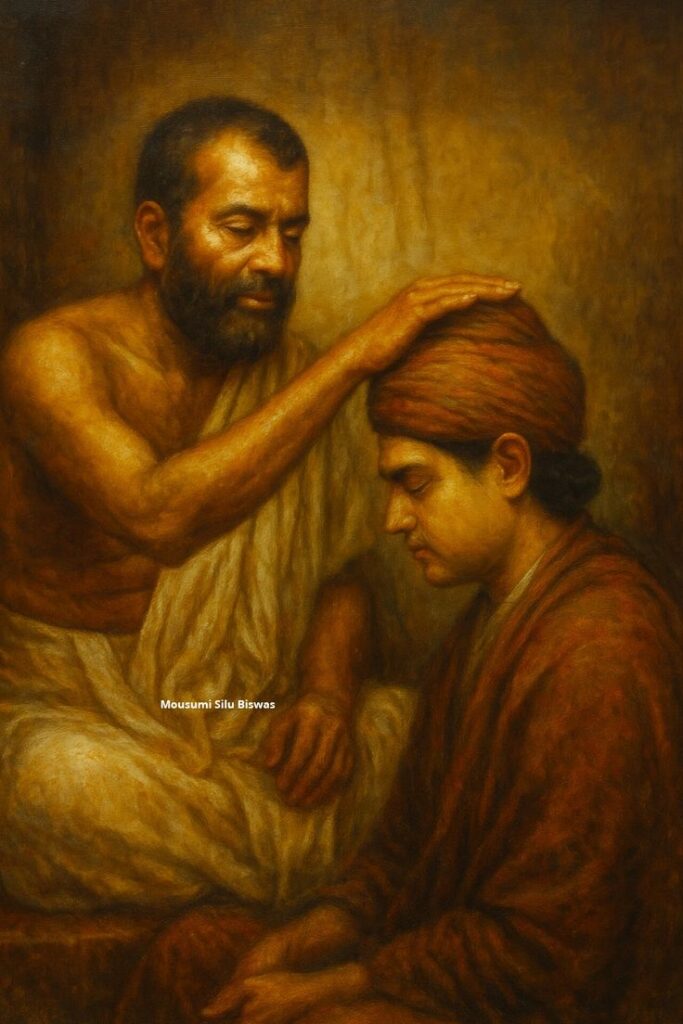
Narendra’s family was influenced by these movements. His father supported liberal education, and his mother upheld traditional values. This duality gave Narendra a balanced worldview—one that respected both reason and faith, science and spirituality, East and West.
📖Sources
To explore this phase of Swami Vivekananda’s life in greater depth, consider these authoritative sources:
- “The Life of Swami Vivekananda” by Romain Rolland
- “Swami Vivekananda: A Biography” by Swami Nikhilananda
- “Vivekananda: A Biography” by Swami Tapasyananda
- “Swami Vivekananda and the Making of Modern India” by Rajagopal Chattopadhyaya
- Wikipedia – Swami Vivekananda
- Cultural India – Biography
- Google Arts & Culture – Early Life
📘 Continue the Journey of Awakening
The birth of Swami Vivekananda in 1863 was not just the arrival of a child—it was the emergence of a soul destined to uplift a nation. From the vibrant streets of Kolkata to the spiritual silence of meditation, his early life laid the foundation for a legacy that would echo across centuries.
But this is only the beginning. In the next chapter, we explore how young Narendranath evolved into a fearless seeker, questioning the nature of God, truth, and existence. His encounter with Sri Ramakrishna would ignite the flame of transformation.
👉 Scroll down to read: “📚 1879–1884 – Education and Early Intellectual Formation”
📚 1879–1884: Swami Vivekananda’s Intellectual Crucible — The Making of a Fearless Mind
Between 1879 and 1884, Narendranath Datta—later known as Swami Vivekananda—underwent a profound transformation. These six years were not just about academic milestones; they were about the forging of a mind that would later shake the world with its clarity, courage, and conviction. From enrolling at Presidency College to transferring to General Assembly’s Institution (now Scottish Church College), and from mastering Western philosophy to enduring personal tragedy, this period shaped the intellectual and emotional foundation of India’s future spiritual lion.
🏫 1879: Entry into Presidency College — The Spark of Inquiry
In 1879, at the age of 16, Narendranath Datta enrolled at Presidency College, one of the most prestigious institutions in British India. The college was a hub of Western thought, liberal education, and colonial influence. For Narendra, it was a battlefield of ideas.
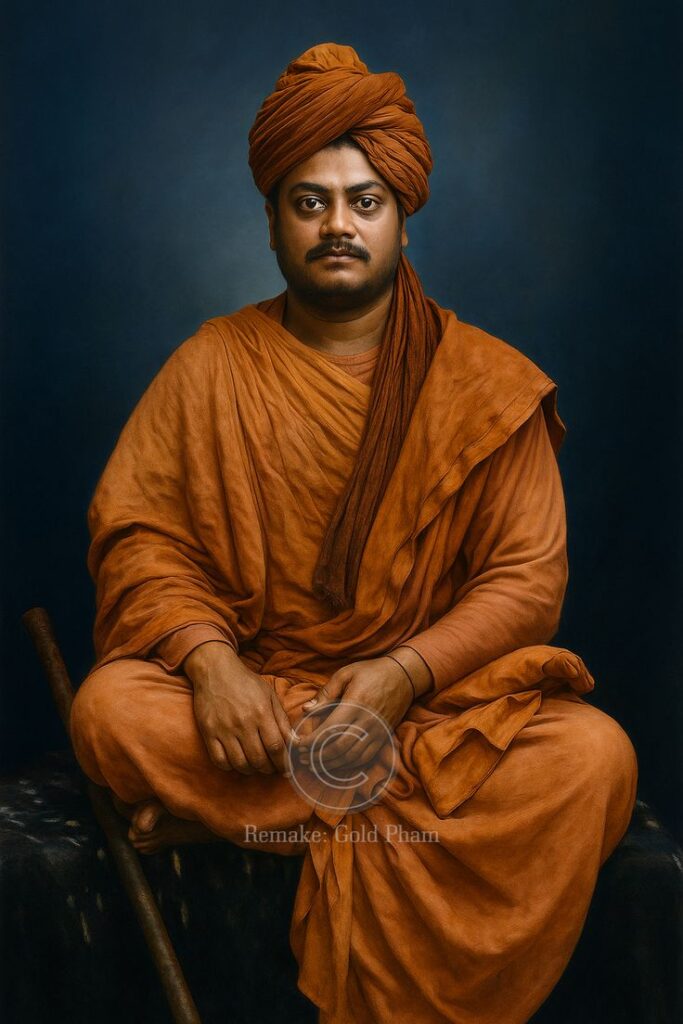
He was exposed to English literature, European philosophy, and modern science. He devoured the works of Herbert Spencer, John Stuart Mill, David Hume, and Immanuel Kant. He questioned everything—rituals, dogmas, and even the existence of God. His professors were stunned by his brilliance and boldness. He was not just a student—he was a challenger.
🔄 1881: Transfer to General Assembly’s Institution — The Shift Toward Depth
Though Presidency College offered prestige, Narendra sought deeper engagement. In 1881, he transferred to the General Assembly’s Institution, now known as Scottish Church College. This move was pivotal.
Here, he found a more balanced curriculum—one that respected both Western rationalism and Eastern spirituality. He continued his study of logic, psychology, and science, but also began exploring Indian scriptures, Upanishads, and Vedanta. His mind was a cauldron of synthesis—East and West, reason and faith, intellect and intuition.
His professors noted his ability to quote Spencer and Shankara in the same breath. He was becoming a bridge between civilizations.
📘 1882–1883: The Rise of a Public Speaker and Debater
During these years, Narendra’s reputation as a fearless debater and eloquent speaker grew. He participated in student forums, philosophical societies, and public discussions. His speeches were fiery, his logic razor-sharp, and his presence commanding.
He began to speak not just about philosophy, but about India’s spiritual heritage, social injustice, and the need for national awakening. His peers saw in him not just a scholar, but a leader.
This was the beginning of Swami Vivekananda’s oratorical genius, which would later electrify audiences in Chicago and beyond.
🎓 1884: Graduation and the Collapse of Comfort
In 1884, Narendra passed his B.A. examination with distinction. It was a moment of pride—but it was immediately followed by tragedy. His father, Vishwanath Datta, died suddenly, leaving the family in financial ruin.
The Datta household, once affluent and respected, now struggled to survive. Narendra had to fight for basic necessities. He walked miles for job interviews, often went hungry, and faced humiliation. Yet, he never gave up his studies or his spiritual quest.
This phase taught him resilience, compassion, and detachment. He began to meditate more deeply, question life’s purpose, and seek answers beyond the material world.
🧘 The Inner Fire: Questions That Would Shape a Monk
Amidst intellectual brilliance and personal suffering, Narendra’s spiritual hunger intensified. He asked everyone—from professors to priests—“Have you seen God?” No one could answer convincingly.
This question would lead him to Sri Ramakrishna Paramhamsa, a mystic who would change his life. But in these years, the question itself was the fire. It burned away illusions, pride, and superficiality.
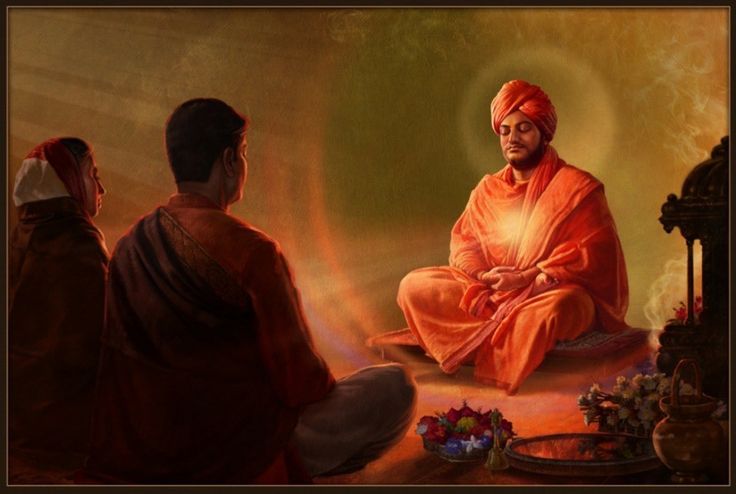
Narendra was not seeking comfort—he was seeking truth. And truth, he realized, was not in books alone. It was in experience, realization, and service.
📖 Book References and Sources
To explore this phase of Swami Vivekananda’s life in greater depth, consider these authoritative sources:
- “Swami Vivekananda: A Biography” by Swami Nikhilananda
- “The Life of Swami Vivekananda” by Romain Rolland
- “Swami Vivekananda and the Making of Modern India” by Rajagopal Chattopadhyaya
- VivekaVani – Education Life
- Cultural India – Biography
📘 The Seeker Meets the Master
These six years forged the mind of a monk, but the soul still searched. In the next chapter, we witness the historic meeting between Narendranath and Sri Ramakrishna—a moment that would ignite the flame of realization and reshape India’s spiritual destiny.
👉 Scroll down to read: “The Awakening: Ramakrishna and the Birth of Vivekananda”
🧘 1881–1886: Swami Vivekananda’s Spiritual Awakening — The Ramakrishna Era
Between 1881 and 1886, Swami Vivekananda—then known as Narendranath Datta—underwent a spiritual transformation that would shape the destiny of modern India. These six years were not just a chapter in his life; they were the crucible in which his soul was refined, his doubts dissolved, and his mission revealed. This blog explores, step by step, the profound journey of Swami Vivekananda during the Ramakrishna era, using rich keywords and emotionally resonant storytelling.
🕉️ 1881: The First Encounter — Meeting Sri Ramakrishna
In November 1881, a restless and intellectually brilliant Narendranath Datta visited Dakshineswar Temple, where he met Sri Ramakrishna Paramhamsa for the first time. Narendra’s question was direct and piercing:
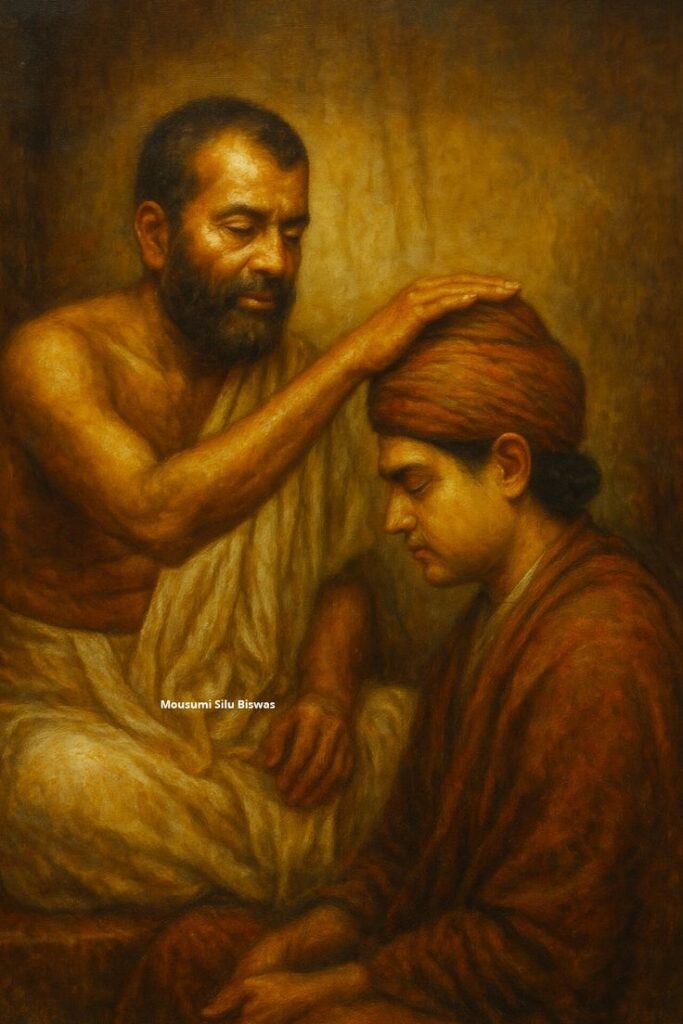
“Sir, have you seen God?”
Ramakrishna’s reply was equally powerful:
“Yes, I have seen Him. I see Him as clearly as I see you, only more intensely.”
This moment was not just a meeting—it was a collision of two cosmic forces. Ramakrishna saw in Narendra the future torchbearer of Sanatana Dharma, and Narendra saw in Ramakrishna the living embodiment of God-realization.
🔥 1882–1884: The Inner Struggle — Doubt, Surrender, and Transformation
Narendra was not an easy disciple. He challenged Ramakrishna’s visions, questioned his mysticism, and tested his teachings. But Ramakrishna, with infinite patience and unconditional love, guided him through meditation, bhakti, and self-inquiry.
During these years, Swami Vivekananda experienced samadhi, visions of divine light, and mystical states that shattered his rational resistance. He began to see that God was not a theory—He was a living presence.
This period marked the spiritual rebirth of Swami Vivekananda. He surrendered—not out of weakness, but out of realization.
🧘 1885: The Final Test — Ramakrishna’s Illness and Devotion
In 1885, Sri Ramakrishna was diagnosed with throat cancer. As his physical body weakened, his spiritual radiance intensified. Swami Vivekananda, along with fellow disciples, served him day and night at Cossipore Garden House.
Narendra’s devotion deepened. He witnessed Ramakrishna’s divine ecstasy, his detachment from pain, and his unwavering love. Ramakrishna began to transfer his spiritual power to Narendra, often saying:
“Narendra will teach.”
This year was a test of service, faith, and spiritual inheritance. Swami Vivekananda emerged not just as a disciple—but as the chosen successor.
🌅 August 16, 1886: The Passing of the Master
On August 16, 1886, Sri Ramakrishna left his mortal body. His death was not an end—it was a beginning. Swami Vivekananda was devastated, yet spiritually empowered. Ramakrishna’s final instruction was clear:
“Serve humanity. See God in all.”
With this, Swami Vivekananda stepped into his role as the leader of Ramakrishna’s disciples. He was no longer just Narendra—he was the spiritual lion ready to roar.
🏛️ December 1886: Antpur Vows — Birth of the Monk
In December 1886, Swami Vivekananda and his brother disciples gathered at Antpur, a village in Bengal. There, in the silence of night and the fire of devotion, they took informal vows of sannyasa—renouncing worldly life and dedicating themselves to spiritual service.
Narendra led the group in chanting, meditation, and the declaration of their mission. This was the birth of the Ramakrishna Order, and the beginning of monastic life.
🧘 January 1887: Formal Vows and Baranagar Math
In January 1887, Swami Vivekananda and his fellow monks established the Baranagar Math, a humble monastery near the Ganges. They lived in poverty, meditated intensely, and studied scriptures. Swami Vivekananda took his formal vows of sannyasa, embracing the name that would echo across continents.
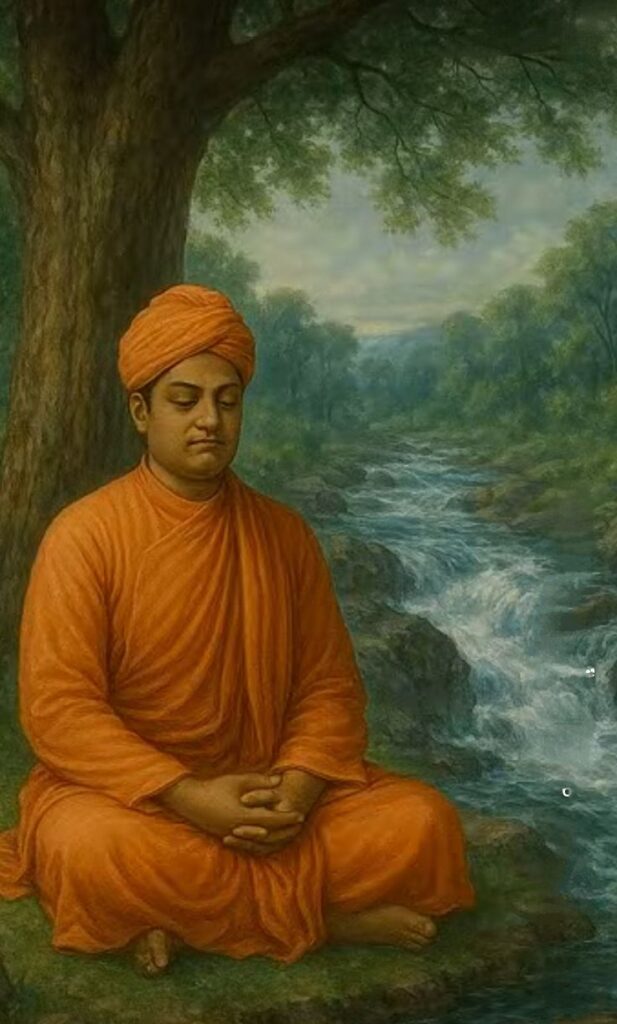
Baranagar Math became the spiritual laboratory where the ideals of Vedanta, service, and renunciation were forged. It was the seed that would grow into the Ramakrishna Mission.
📚 Book References and Sources
- “Swami Vivekananda: A Biography” by Swami Nikhilananda
- “The Life of Swami Vivekananda” by Romain Rolland
- “Swami Vivekananda and the Making of Modern India” by Rajagopal Chattopadhyaya
- Wikipedia – Swami Vivekananda
- Cultural India – Biography
- Architect of Spiritual Awakening
📘 The Monk Begins His Mission
These six years transformed Swami Vivekananda from a seeker into a spiritual warrior. With Ramakrishna’s blessings and the fire of renunciation, he was now ready to walk across India, awaken its soul, and carry Vedanta to the world.
👉 Scroll down to read: “The Wandering Monk: Vivekananda’s Journey Across India (1888–1893)”
🚶 Swami Vivekananda (1888–1893): The Wandering Monk Who Touched India’s Soul
Between 1888 and 1893, Swami Vivekananda walked across India—not as a preacher, not as a pilgrim, but as a parivrajaka, a wandering monk in search of truth, purpose, and the soul of a nation. These six years were not just a physical journey—they were a spiritual odyssey, a national survey, and a preparation for global awakening. With nothing but a staff, a water pot, and two books—the Bhagavad Gita and The Imitation of Christ—Swami Vivekananda set out to understand India from the ground up.
This blog traces his footsteps, his encounters, and his revelations—step by step, year by year—with emotional depth and historical clarity.
🧘 1888: The Departure — Renunciation and Resolve
After the passing of Sri Ramakrishna and the establishment of Baranagar Math, Swami Vivekananda felt a deep inner call. He had inherited Ramakrishna’s spiritual fire, but he needed to understand the land he was meant to serve. In early 1888, he renounced all ties and left the monastery, embracing the life of a parivrajaka—a wandering monk who lives on alms, sleeps under the sky, and walks wherever the soul leads.
He carried no money, no map, and no fear. His only goal: to see India with his own eyes, to feel its pulse, and to understand its pain and potential.
His first stop was Varanasi, the city of Shiva and spiritual fire. He meditated on the ghats, debated with scholars, and served the poor. From there, he traveled to Ayodhya, Lucknow, Agra, and Vrindavan, absorbing the essence of India’s sacred geography.
🏞️ 1889–1890: Northern India — Temples, Teachers, and Truth
Swami Vivekananda’s journey through North India was a blend of pilgrimage and philosophical inquiry. In Rishikesh, he meditated in caves and forests, seeking inner strength and divine clarity. In Haridwar, he observed the rituals of faith and the resilience of the poor. In Delhi, he engaged in deep discussions with scholars and reformers.
He met saints, sadhus, philosophers, and common villagers. He saw the glory of India’s spiritual heritage and the depth of its suffering. He realized that India’s soul was alive, but its body was broken.
In Punjab, he visited Amritsar, where he was deeply moved by the Sikh spirit of service and sacrifice. He saw unity in diversity, and strength in simplicity.
🕌 1890–1891: Western India — Dialogues with Kings and Reformers
Swami Vivekananda reached Rajasthan, where he met rulers like Maharaja Ajit Singh of Khetri, who became his admirer and supporter. In Ajmer, Mount Abu, and Udaipur, he engaged in deep philosophical discussions and inspired many with his vision of spiritual nationalism.
The Maharaja of Khetri gave him the name “Vivekananda,” meaning “the bliss of discernment.” This was not just a title—it was a recognition of his mission.
He visited Mumbai, where he met social reformers and thinkers. He spoke about Vedanta, service, and unity, urging Indians to rise above caste, creed, and colonial fear.
He lived on bhiksha (alms), slept in temples, and walked barefoot. Yet, his presence was regal, his speech magnetic, and his mission unstoppable.
🛕 1891–1892: Southern India — Cultural Depth and National Vision
Swami Vivekananda traveled through Mysore, Bangalore, Trivandrum, and Madurai. He was struck by the richness of South Indian temples, the depth of classical music, and the devotion of the people.
In Madurai, he received a divine call to go to Kanyakumari, the southernmost tip of India. He walked hundreds of kilometers, meditating, teaching, and absorbing India’s soul.
He saw untouchability, illiteracy, and poverty, but also faith, resilience, and spiritual fire. He realized that India’s regeneration must begin from its roots.
In Trivandrum, he met scholars of Advaita Vedanta and refined his understanding of non-dualism. In Rameswaram, he bowed before the ancient Shiva lingam, feeling the pulse of India’s timeless devotion.
🪨 December 1892: Kanyakumari — Meditation on the Rock
In December 1892, Swami Vivekananda reached Kanyakumari, where he swam across the sea to a mid-ocean rock. There, he meditated for three days and nights on India’s past, present, and future.
He saw the glory of ancient India, the pain of colonial India, and the possibility of a spiritually awakened India. He resolved to dedicate his life to uplifting the masses, uniting religions, and carrying India’s message to the world.
This meditation became the turning point. The rock is now the Vivekananda Rock Memorial, a symbol of vision, courage, and sacrifice.
His thoughts from the rock:
“I see before me the ancient Mother India, her arms outstretched, calling her children to rise.”
🗣️ 1893: Preparation for the West — The Call to Chicago
After his meditation in Kanyakumari, Swami Vivekananda traveled to Chennai, where a group of admirers urged him to represent India at the Parliament of the World’s Religions in Chicago. They raised funds, arranged travel, and prepared documents.
Swami Vivekananda accepted—not for fame, but for mission. He said:
“I am going to America to teach them that they are not sinners. I am going to make them see that divinity resides in every soul.”

He sailed from Mumbai on May 31, 1893, carrying the fire of India’s soul and the silence of its sages.
📚 Book References and Sources
- “Swami Vivekananda: A Biography” by Swami Nikhilananda
- “The Life of Swami Vivekananda” by Romain Rolland
- “Swami Vivekananda and the Making of Modern India” by Rajagopal Chattopadhyaya
- VivekaVani – Travels Across India
- Cultural India – Biography
- Vivekananda Rock Memorial
📘 The Monk Meets the World
These six years transformed Swami Vivekananda into the voice of India’s soul. From Kanyakumari’s rock, he rose with a mission to carry Vedanta to the West. In the next chapter, we follow his journey to Chicago, where he would awaken the world with the power of spiritual unity.
👉 Scroll down to read: “1893: Swami Vivekananda at the Parliament of Religions”
🌎 1893 – Swami Vivekananda’s Journey to the West: The Year India Spoke to the World
In the annals of spiritual history, few years shine as brightly as 1893—the year Swami Vivekananda crossed oceans, shattered stereotypes, and awakened the Western world to the soul of India. It was a year of courage, hardship, vision, and triumph. From his first public lecture in Secunderabad to his thunderous speech at the Parliament of the World’s Religions in Chicago, Swami Vivekananda transformed from a wandering monk into a global spiritual icon.
This blog explores that journey in depth—step by step, moment by moment—with emotional resonance and historical clarity.
🗣️ February 13, 1893 – The First Public Lecture in Secunderabad
Before embarking on his voyage, Swami Vivekananda delivered his first public lecture in Secunderabad on February 13, 1893. The topic was not politics or theology—it was universal spirituality. He spoke of the divine within, the unity of all religions, and the need for India to awaken from within.
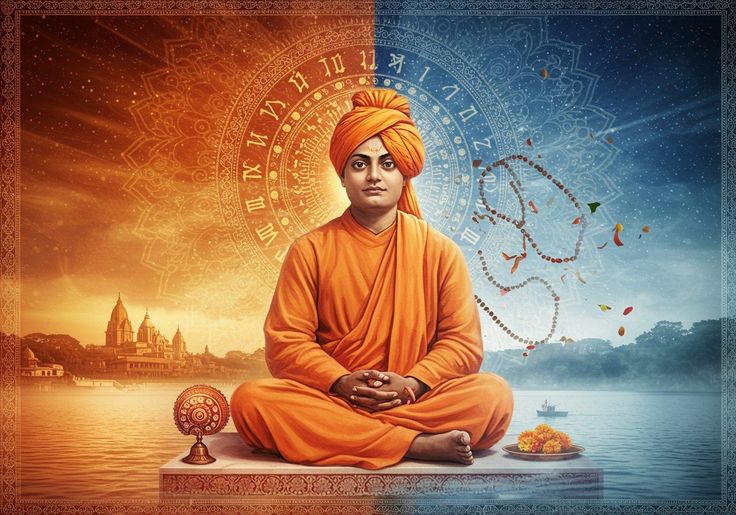
This lecture was a spark. It revealed his oratorical brilliance, his clarity of thought, and his ability to connect ancient wisdom with modern urgency. The audience was captivated—not just by his words, but by his presence. He was calm, radiant, and fearless.
🛳️ May 31, 1893 – Departure from Mumbai: A Monk Sets Sail
On May 31, 1893, Swami Vivekananda boarded the S.S. Peninsular from Mumbai, beginning his historic voyage to the United States. He carried with him the hopes of a civilization, the silence of sages, and the fire of a mission.
The Raja of Khetri, a devoted admirer, had gifted him a first-class ticket, a robe of orange silk, and an ochre turban. But Vivekananda’s heart was humble. He saw himself not as a representative of royalty, but as a servant of truth.
His route took him through Colombo, Penang, Singapore, Hong Kong, and Japan. In each place, he absorbed the culture, observed the people, and reflected on the spiritual pulse of Asia.
In Japan, he visited Yokohama, Osaka, Kyoto, and Tokyo. He was deeply impressed by the discipline, aesthetics, and spiritual depth of Japanese society. He saw in Japan a model of how an Eastern nation could modernize without losing its soul.
🛬 July 30, 1893 – Arrival in Chicago: Stranger in a New World
Swami Vivekananda arrived in Chicago on July 30, 1893, after a long and arduous journey. But his challenges were just beginning. He discovered that the Parliament of the World’s Religions was scheduled for September, and that no official credentials had been arranged for him.
He faced poverty, rejection, and cultural alienation. He wandered the streets, slept in parks, and went hungry. Yet, he remained undeterred. His faith in God, his mission, and the power of truth kept him going.
A turning point came when he met Professor John Henry Wright of Harvard University, who was so moved by Vivekananda’s intellect and presence that he exclaimed:
“To ask you for credentials is like asking the sun to prove its right to shine.”
Wright arranged for Swami Vivekananda’s participation in the Parliament, calling him “more learned than all our professors put together..”
🏛️ September 11, 1893 – The Speech That Shook the World
On September 11, 1893, Swami Vivekananda stood before the World’s Parliament of Religions in Chicago. Dressed in saffron robes, with eyes full of fire and a heart full of compassion, he began with the immortal words:
“Sisters and brothers of America…”
The hall erupted in a two-minute standing ovation. In that moment, India spoke, Vedanta breathed, and the world listened.
He spoke not of conversion, but of harmony. Not of superiority, but of unity. He declared:
“We believe not only in universal toleration, but we accept all religions as true.”
He introduced the West to Hinduism, Advaita Vedanta, and the idea of the divine within. He shattered stereotypes and built bridges between civilizations.
His speech was not just historic—it was seismic. It changed how the world saw India, and how India saw itself.
📣 Themes of the Speech: A Breakdown
Swami Vivekananda’s speech was brief, but its impact was eternal. Here are the core themes he addressed:
- Universal acceptance: All religions are valid paths to the same truth.
- Spiritual democracy: Every soul is divine; religion is realization.
- Tolerance and unity: India’s spiritual tradition embraces diversity.
- Service to humanity: True religion must uplift the poor and the weak.
These ideas were revolutionary in a world divided by dogma, colonialism, and racial superiority.
📰 Immediate Impact: The West Responds
After his speech, Swami Vivekananda became a celebrity in America. Newspapers hailed him as “the greatest figure in the Parliament.” He was invited to lecture across the country, and his message of spiritual democracy, self-realization, and service to humanity resonated deeply.
He was invited to speak at Harvard, Columbia, and other institutions. He founded the Vedanta Society of New York, planting the seeds of Eastern philosophy in Western soil.
But he remained humble. He wrote to his brother disciples:
“This is not my work. This is His work. I am but a voice.”
🧘 Spiritual Significance: East Meets West
Swami Vivekananda’s journey was not just political or cultural—it was spiritual. He carried the essence of Sanatana Dharma, the wisdom of the Upanishads, and the fire of Ramakrishna’s teachings.
He showed the West that spirituality is not superstition, and that India is not a land of shadows, but a land of light.
He declared:
“The present convention is in itself a vindication, a declaration to the world of the wonderful doctrine preached in India centuries ago.”

His presence was a living bridge between East and West, ancient and modern, soul and society.
📚 Book References and Sources
- “Swami Vivekananda: A Biography” by Swami Nikhilananda
- “The Life of Swami Vivekananda” by Romain Rolland
- “Swami Vivekananda and the Making of Modern India” by Rajagopal Chattopadhyaya
- IndiaNetZone – First Trip to the West
- Vivekananda Rock Memorial
- Cultural India – Biography
📘 The Monk Builds a Movement
The year 1893 was the moment when Swami Vivekananda became the voice of India’s soul on the world stage. But this was only the beginning. In the next chapter, we follow his journey across America and Europe, where he would plant the seeds of Vedanta and inspire a global spiritual renaissance.
👉 Scroll down to read: “1893–1897: Swami Vivekananda’s Western Mission and the Birth of the Vedanta Movement”
📖 1893–1897: Swami Vivekananda’s Western Mission — Vedanta Awakens the World
Between 1893 and 1897, Swami Vivekananda transformed from a wandering monk into a global spiritual force. These five years were a whirlwind of lectures, publications, and the founding of institutions that would carry the soul of India across continents. From the thunderous applause in Chicago to the quiet meditations in London, Swami Vivekananda’s Western mission was not about fame—it was about awakening. He carried the torch of Vedanta, the fire of Ramakrishna’s teachings, and the vision of spiritual unity into the heart of the modern world.
This blog traces his journey year by year, with emotional depth, historical clarity, and keyword-rich storytelling.
🌍 1893: After Chicago — The Monk Becomes a Messenger
After his electrifying speech at the Parliament of the World’s Religions in September 1893, Swami Vivekananda became a spiritual celebrity in America. But he did not bask in glory—he got to work.
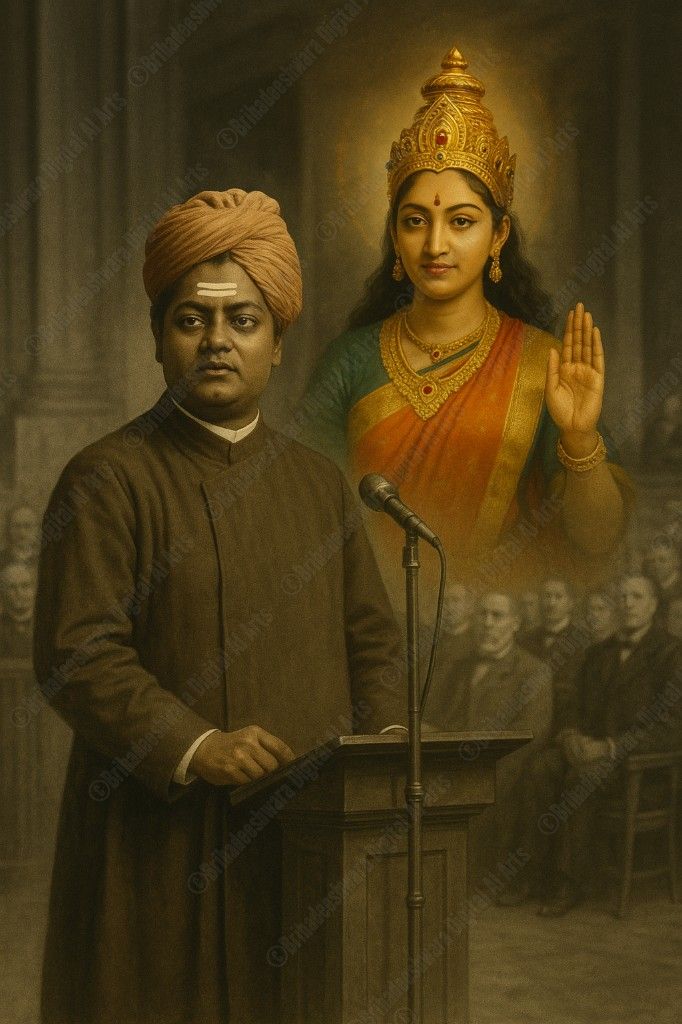
He began lecturing across the United States, speaking at universities, churches, salons, and public halls. His topics ranged from Advaita Vedanta to practical spirituality, from self-realization to service to humanity.
He declared:
“Religion is not in doctrines, in dogmas, nor in intellectual argumentation. It is being and becoming.”
He emphasized that every soul is divine, and that spirituality must be lived, not preached. His lectures were fiery, poetic, and transformative.
🏛️ 1894: Vedanta Society of New York — Planting the Seed
In 1894, Swami Vivekananda founded the Vedanta Society of New York, the first formal institution to teach Hindu philosophy in the West. It was not just a society—it was a spiritual embassy.
The Society attracted seekers, scholars, and skeptics. Vivekananda taught them Raja Yoga, Karma Yoga, and the Upanishadic vision of unity. He urged them to look within, to serve others, and to realize their own divinity.
He wrote:
“The Vedanta recognizes no sin, it only recognizes error. And the greatest error is to say that you are weak.”
The Society became a hub for spiritual education, interfaith dialogue, and personal transformation.
📚 1895–1896: Europe Beckons — London and the Power of the Word
In 1895, Swami Vivekananda traveled to London, where he began teaching Vedanta to British audiences. He met Max Müller, the renowned Indologist, who revered Ramakrishna and welcomed Vivekananda as a spiritual ambassador.
In London, Vivekananda’s charisma and clarity won hearts. He taught that God is not in temples alone, but in every human being. He challenged colonial stereotypes and presented India as a land of timeless wisdom.
In 1896, he published two seminal works:
- Raja Yoga: A practical guide to meditation, concentration, and spiritual discipline. It introduced the West to Patanjali’s Yoga Sutras and the concept of mind control.
- Karma Yoga: A manifesto of selfless action. It taught that work done without attachment is the path to liberation.
These books became spiritual classics, blending Eastern depth with Western clarity.
🧘 1896–1897: Return to India — The Fire Comes Home
In late 1896, Swami Vivekananda sailed back to India. His arrival in January 1897 was met with massive crowds, processions, and national celebration. India had found its voice.
He delivered a series of powerful lectures across the country, later compiled as Lectures from Colombo to Almora. These talks were not just spiritual—they were revolutionary. He called upon Indians to:
- Awaken their self-respect
- Serve the poor and the weak
- Unite across caste and creed
- Embrace both science and spirituality
He declared:
“My mission is to preach unto mankind their divinity, and how to make it manifest in every movement of life.”
His words ignited the minds of future freedom fighters, including Subhas Chandra Bose, Aurobindo Ghosh, and Mahatma Gandhi.
🏛️ May 1, 1897: Ramakrishna Mission — Service as Worship
On May 1, 1897, Swami Vivekananda founded the Ramakrishna Mission in Kolkata. It was the institutional embodiment of his teachings: spirituality in action.
The Mission focused on:
- Education: Schools and colleges rooted in values
- Healthcare: Hospitals and clinics for the poor
- Relief work: Disaster response and rehabilitation
- Spiritual training: Monastic life and meditation
He taught:
“Service to man is service to God.”
The Mission became a beacon of compassion, discipline, and spiritual excellence—a living tribute to Ramakrishna’s vision and Vivekananda’s fire.
🌐 Cultural Impact and Legacy in the West
Swami Vivekananda’s Western mission wasn’t just about lectures—it reshaped global spirituality. He inspired:
- Sister Nivedita (Margaret Noble): A British disciple who dedicated her life to India’s education and women’s empowerment.
- Josephine MacLeod: An American supporter who helped spread his message across continents.
- E.T. Sturdy: A British scholar who helped publish his works and organize lectures.
His teachings influenced psychologists, philosophers, and spiritual seekers. He laid the foundation for interfaith dialogue, yoga movements, and Eastern philosophy in Western academia.
📖 Book References and Sources
- Swami Vivekananda – Wikipedia
- Cultural India – Biography
- The Life of Swami Vivekananda Vol 1 – Archive
📘 The Monk Returns to Build a Nation
From 1893 to 1897, Swami Vivekananda awakened the West and reignited India’s soul. But his mission was far from over. In the next chapter, we explore how he built the Ramakrishna Mission, mentored disciples, and laid the foundation for India’s spiritual resurgence.
👉 Scroll down to read: “🏛️ 1897 – Return to India and Ramakrishna Mission”
🏛️ 1897 – Swami Vivekananda’s Return to India and the Birth of the Ramakrishna Mission
1897 was not just a year—it was a spiritual homecoming, a national awakening, and the institutional birth of modern Indian service. After electrifying the West with his message of Vedanta, unity, and spiritual democracy, Swami Vivekananda returned to India carrying the fire of transformation. His speeches, travels, and founding of the Ramakrishna Mission laid the foundation for a new India—strong, compassionate, and rooted in dharma.
This blog traces that pivotal year in depth, step by step, with emotional clarity, historical insight, and powerful storytelling.
🛬 January 15, 1897 – Arrival in Colombo: The Monk Returns
Swami Vivekananda arrived in Colombo, Sri Lanka, on January 15, 1897, after four years of intense spiritual work in the West. His arrival was met with unprecedented enthusiasm. Thousands gathered to welcome him—not as a mere monk, but as a national hero, a spiritual ambassador, and a voice of India’s soul.
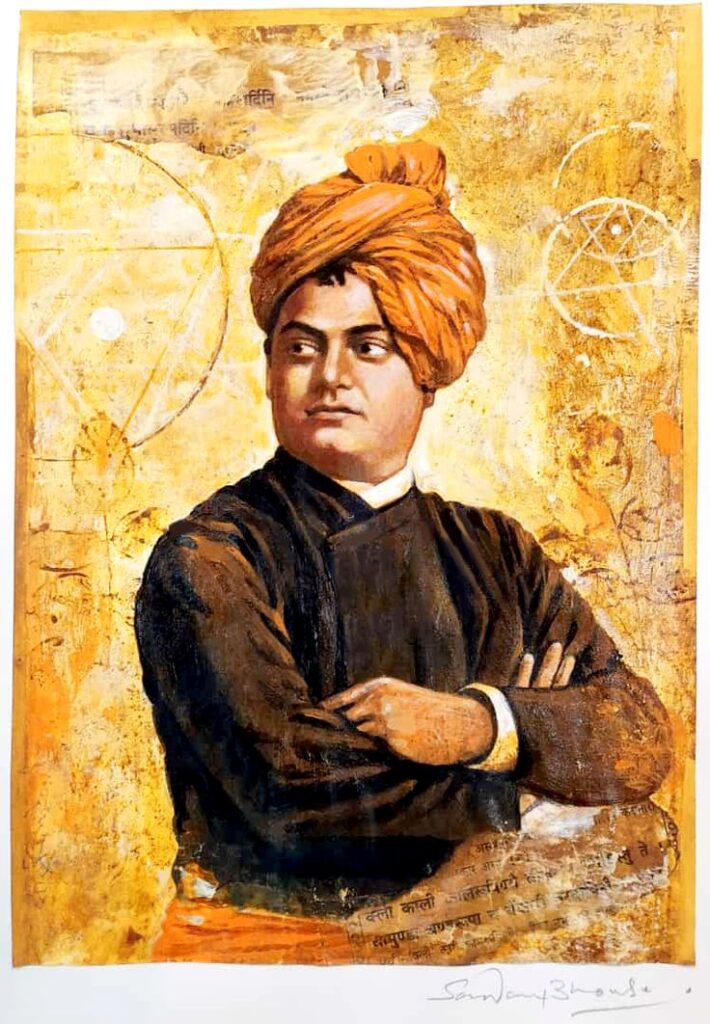
From Colombo, he began a lecture tour that would span the length of India. His speeches were compiled into the legendary volume Lectures from Colombo to Almora, a spiritual manifesto for India’s rebirth.
He declared:
“The time has come when this nation must rise and assert itself. Let every man and woman be a servant of the Mother.”
📣 January–March 1897 – The Fire Spreads: Lectures Across South India
Swami Vivekananda’s journey through Rameswaram, Madurai, Chennai, and Bengaluru was marked by massive public receptions, processions, and emotional outpourings. In each city, he addressed thousands—students, scholars, reformers, and ordinary citizens.
His message was clear:
- India must awaken from centuries of slumber
- Spirituality must be active, not passive
- Service to the poor is the highest worship
- Education must build character, not just careers
In Madurai, he thundered:
“What we want is muscles of iron and nerves of steel. We must build men who can stand on their own feet.”
In Chennai, he inspired the formation of the Ramakrishna Mission Association, a precursor to the formal Mission.
🧘 March–April 1897 – Kolkata and the Call to Action
By the time Swami Vivekananda reached Kolkata, the city was ablaze with anticipation. His speeches were covered by every major newspaper. Intellectuals, reformers, and youth leaders gathered to hear him speak.
He met with Brahmo Samaj leaders, educationists, and social reformers, urging them to unite under a common banner of service and spirituality.
He emphasized:
- Caste must be transcended
- Women must be educated and empowered
- Religion must serve humanity
He wrote to his brother disciples:
“Let us not rest till we have built a temple of humanity, where every soul is revered as divine.”
🏛️ May 1, 1897 – Founding of the Ramakrishna Mission
On May 1, 1897, Swami Vivekananda formally founded the Ramakrishna Mission in Kolkata, naming it after his beloved guru, Sri Ramakrishna Paramhamsa. The Mission was not just an organization—it was a living embodiment of Karma Yoga, a fusion of spiritual depth and practical compassion.
🔹 Core Objectives of the Mission:
- Education
- Establishing schools and colleges that blend modern learning with spiritual values
- Promoting character-building and self-reliance
- Healthcare
- Opening hospitals and clinics for the poor and sick
- Training volunteers in medical service and hygiene
- Disaster Relief
- Mobilizing monks and lay workers during famines, floods, and epidemics
- Providing food, shelter, and rehabilitation
- Spiritual Training
- Creating monastic centers for meditation, study, and service
- Training monks to be warriors of compassion
Swami Vivekananda declared:
“The poor, the illiterate, the ignorant, the afflicted—let these be your God. Know that service to them is the highest religion.”
🧘 The Philosophy Behind the Mission
The Ramakrishna Mission was rooted in Advaita Vedanta, which teaches that all beings are one with the divine. Swami Vivekananda believed that serving others is not charity—it is worship.
He rejected caste discrimination, religious exclusivity, and passive spirituality. He wanted monks who were strong, educated, and engaged with the world.
He said:
“We want that education by which character is formed, strength of mind is increased, the intellect is expanded, and by which one can stand on one’s own feet.”
The Mission was not just for monks—it was for everyone who wanted to live a life of purpose, discipline, and service.
🌐 National and Global Impact
The founding of the Ramakrishna Mission in 1897 had ripple effects across India and the world. It inspired:
- Social reformers to integrate spirituality with activism
- Educators to build value-based institutions
- Freedom fighters to draw strength from spiritual nationalism
- Global seekers to explore Vedanta and Yoga
The Mission became a model for faith-based service, influencing organizations like the Servants of India Society, Gandhian movements, and international Vedanta centers.
🧑🤝🧑 Key Disciples and Builders of the Mission
Swami Vivekananda was not alone. His vision was carried forward by a band of dedicated disciples, including:
- Swami Brahmananda: The first president of the Mission, known for his deep meditation and administrative skill.
- Swami Premananda: A master of service and compassion.
- Swami Yogananda: A spiritual powerhouse who trained young monks.
- Sister Nivedita: Though she joined later, her spirit of sacrifice and education was inspired by Vivekananda’s 1897 speeches.

Together, they built the Mission brick by brick, soul by soul.
📚 Book References and Sources
- “Swami Vivekananda: A Biography” by Swami Nikhilananda
- “The Life of Swami Vivekananda” by Romain Rolland
- “Lectures from Colombo to Almora” by Swami Vivekananda
- Ramakrishna Mission – Official Site
- Cultural India – Biography
📘 The Final Flame: Vivekananda’s Last Years
In 1897, Swami Vivekananda laid the foundation for a new India—strong, spiritual, and selfless. But his mission was far from over. In the next chapter, we explore his final years, his teachings, and the legacy he left behind.
👉 Scroll down to read: “ 1898–1901 – Final Travels and Teachings”
🗣️ 1898–1901: Swami Vivekananda’s Final Travels and Teachings — A Legacy in Motion
Between 1898 and 1901, Swami Vivekananda entered the final arc of his mission—not as a retreat, but as a crescendo. These years were marked by profound spiritual experiences, the nurturing of disciples like Sister Nivedita, and the consolidation of his teachings on Vedanta, Yoga, and national regeneration. Though his health was waning, his vision was expanding. From the Himalayan silence of Kashmir to the sacred banks of Belur, Vivekananda’s journey was both outward and inward—a legacy in motion.
🏞️ 1898: Himalayan Pilgrimage and the Birth of Nivedita
In May 1898, Swami Vivekananda set out on a spiritual pilgrimage to Kashmir, Amarnath, and Almora, accompanied by Western disciples including Margaret Noble (later Sister Nivedita), Josephine MacLeod, and Sara Bull. These travels were not leisure—they were spiritual initiations, moments of deep reflection and transmission.

🔹 Kashmir and Amarnath: The Mystic’s Encounter
At Amarnath, Vivekananda had a profound mystical experience. He later told his disciples:
“The Lord Himself appeared before me in the cave. I saw the Divine as clearly as I see you now.”
This experience deepened his conviction in the living presence of God, and reaffirmed his mission to awaken India’s soul.
In Kashmir, he visited ancient temples, meditated on the banks of Dal Lake, and reflected on India’s spiritual grandeur. He saw in the ruins of forgotten shrines the echoes of a civilization that once led the world in wisdom.
🔹 Almora: The Initiation of Sister Nivedita
In July 1898, in the serene hills of Almora, Vivekananda formally initiated Margaret Noble into the Indian spiritual tradition, giving her the name Nivedita—“the dedicated one.” He performed the ritual with sacred water, flowers, and fire, declaring:
“India needs lionesses. Go, and awaken the women of your land.”
This moment marked the birth of one of India’s greatest spiritual revolutionaries. Under Vivekananda’s guidance, Nivedita would dedicate her life to women’s education, national service, and spiritual upliftment.
🧘 1899: Belur Math and the Flame of Vedanta
In 1899, Swami Vivekananda returned to Belur Math, the headquarters of the Ramakrishna Mission, where he spent time training monks, writing, and meditating. Though his physical health was declining, his spiritual fire remained undiminished.
🔹 Training the Monastic Order
He emphasized discipline, service, and spiritual depth. He told his monks:
“You are not here to escape the world. You are here to serve it.”
He taught them Raja Yoga, Jnana Yoga, and Karma Yoga, blending meditation, knowledge, and action into a unified path.
🔹 Lectures on National Regeneration
Vivekananda delivered powerful lectures on India’s future, declaring:
“Let new India arise—out of the huts, cobbler’s shop, and sweeper’s cottage.”
He emphasized:
- Character-building education
- Unity beyond caste and creed
- Spiritual strength as the foundation of national strength
His words ignited the minds of future freedom fighters and reformers.
🌍 1900: Final Journey to the West
Despite his fragile health, Swami Vivekananda undertook a final journey to the West in 1900, visiting Paris, London, and California. His goal was not expansion—it was consolidation.
🔹 Paris: The East Meets the West
In Paris, he attended the Congress of the History of Religions, where he spoke on Vedanta, universal religion, and spiritual democracy. He met scholars, artists, and seekers, bridging East and West with clarity and compassion.
He said:
“Religion is not in believing. It is in being and becoming.”
🔹 California: The Seeds of Vedanta
In California, he taught meditation, yoga, and Vedanta to small groups. He emphasized inner transformation, urging students to realize their divine nature.
He wrote:
“The greatest sin is to think yourself weak.”
Though brief, this journey planted seeds that would blossom into Vedanta Societies across America.
📖 1901: My Master — A Tribute to Sri Ramakrishna
In 1901, Swami Vivekananda published My Master, a deeply personal and poetic tribute to Sri Ramakrishna Paramhamsa. The book was based on a lecture he delivered in New York, and it remains one of the most heartfelt accounts of guru-bhakti in modern India.
He wrote:
“If there has ever been a God on earth, he was Ramakrishna.”
In My Master, Vivekananda described Ramakrishna’s simplicity, spiritual ecstasies, and universal love. He emphasized that Ramakrishna was not just a saint, but a spiritual phenomenon, a living embodiment of Vedanta.
This publication marked the culmination of Vivekananda’s literary work—a final offering before his health began to decline.
🧑🤝🧑 Sister Nivedita’s Early Work (1898–1901)
Under Swami Vivekananda’s guidance, Sister Nivedita began her work in Kolkata’s slums, teaching girls, organizing hygiene campaigns, and promoting national pride.
She blended Western discipline with Eastern devotion, becoming a bridge between cultures. Vivekananda wrote to her:
“You are no longer European. You are Indian in spirit and soul.”
Her school, founded in 1902, would become a beacon of women’s empowerment and spiritual education.
🌐 Legacy of 1898–1901: Seeds That Would Blossom
Though Swami Vivekananda’s physical strength was waning, his impact during these years was immense:
- He empowered Sister Nivedita, whose work in women’s education and national service would inspire generations.
- He deepened the philosophical foundation of the Ramakrishna Mission.
- He connected East and West, showing that spirituality transcends geography.
- He preserved Ramakrishna’s legacy, ensuring that the world would know the master behind the monk.
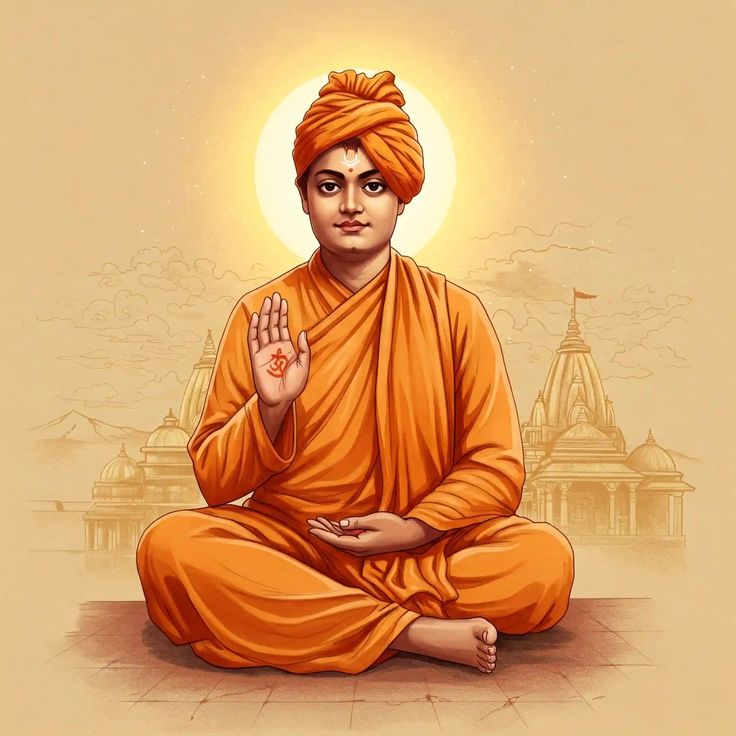
His teachings during this period laid the groundwork for modern Indian nationalism, spiritual feminism, and global Vedanta movements.
📚 Book References and Sources
- “Swami Vivekananda: A Biography” by Swami Nikhilananda
- “The Life of Swami Vivekananda” by Romain Rolland
- “My Master” by Swami Vivekananda
- “Notes of Some Wanderings with Swami Vivekananda” by Sister Nivedita
- Ramakrishna Mission – Official Site
- Cultural India – Biography
📘 The Final Flame: Vivekananda’s Last Year
From 1898 to 1901, Swami Vivekananda sowed the seeds of spiritual revolution, national pride, and global unity. In the next chapter, we explore his final year—1902—where the monk embraced silence, completed his mission, and entered immortality.
👉 Scroll down to read: “🕯️ 1902 – Death”
🕯️ 1902 – Swami Vivekananda’s Final Year and Mahasamadhi: The Flame Returns to the Source
On July 4, 1902, at the age of 39, Swami Vivekananda left his mortal body at Belur Math, West Bengal. His passing was not a moment of sorrow—it was a moment of transcendence. After years of tireless service, spiritual teaching, and national awakening, the monk who had roared like a lion across continents chose silence. This blog explores the final year of Swami Vivekananda’s life, his last teachings, his spiritual state, and the sacred farewell that followed.
🧘 January–June 1902: Silence, Reflection, and Inner Radiance
In the first half of 1902, Swami Vivekananda withdrew from public life. His body, worn by years of travel and intense spiritual work, was fragile. Yet his mind remained luminous, and his soul serene.

At Belur Math, he spent his days:
- Meditating deeply, often for hours at a stretch
- Teaching select disciples, including lessons on the Shukla-Yajur-Veda, Sanskrit grammar, and Yoga philosophy
- Discussing plans for a Vedic college, envisioning a future where ancient wisdom would empower modern minds
He told his disciples:
“I have given everything. Now I want rest—not of the body, but of the soul.”
Despite his physical weakness, he radiated peace. Visitors described his presence as “divine stillness,” a living embodiment of Advaita Vedanta.
📖 His Final Conversations and Letters
In his final months, Swami Vivekananda wrote fewer letters, but each carried profound insight. In one of his last notes to Sister Nivedita, he wrote:
“The work is more important than the worker. The mission must go on.”
He spoke often of death, not with fear, but with clarity. To a disciple, he said:
“I shall not live to see forty. But I have done my work.”
His conversations were filled with gratitude, detachment, and vision. He encouraged his monks to be fearless, disciplined, and devoted to service.
🛏️ July 4, 1902 – The Day of Mahasamadhi
On the morning of July 4, Swami Vivekananda rose early, meditated for three hours, and taught his students as usual. He was calm, joyful, and inwardly focused.
He spent time with Swami Premananda, discussing the future of the Ramakrishna Mission. He reviewed Sanskrit grammar with a young disciple, and walked briefly in the garden.
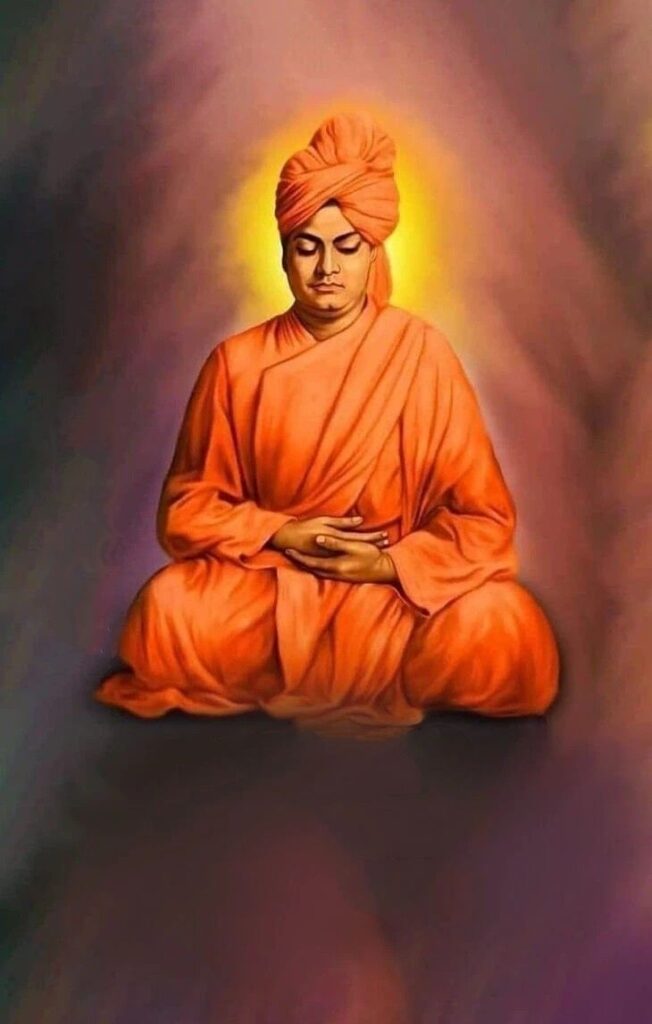
In the evening, he retired to his room, asking not to be disturbed. At approximately 9:20 p.m., he entered Mahasamadhi—the conscious exit from the body practiced by realized yogis.
There was no struggle, no pain. His breath ceased, and his body lay still. The flame had returned to the source.
His disciples were stunned, yet they knew: the master had chosen his moment.
🔥 Cremation: A Sacred Farewell
Swami Vivekananda was cremated on the banks of the Ganges, directly opposite the shrine of Sri Ramakrishna, his beloved guru. The location was symbolic—disciple and master, united in eternity.
Monks, devotees, and admirers gathered in silence. The air was thick with reverence. As the flames rose, chants of “Om Shanti” and “Jai Ramakrishna” echoed across the river.
His ashes were later enshrined at Belur Math, where a memorial now stands—a place of pilgrimage, reflection, and spiritual inspiration.
🧑🤝🧑 Reflections from Disciples
🔹 Swami Brahmananda
Swami Brahmananda, the first president of the Ramakrishna Mission, said:
“He was not a man. He was a spiritual hurricane.”
He led the cremation rites, holding back tears, and vowed to carry forward the mission with strength and purity.
🔹 Sister Nivedita
Sister Nivedita, upon hearing the news, wrote:
“He is not gone. He is everywhere—in the air, in the fire, in the hearts of those who serve.”
She intensified her work in Kolkata, dedicating every breath to the ideals Vivekananda had planted.
🌐 Symbolism of July 4: Freedom and Liberation
Swami Vivekananda passed away on July 4, the day celebrated as Independence Day in America. For the West, it symbolizes political freedom. For India, through Vivekananda, it came to symbolize spiritual liberation.
His death on this day was not coincidence—it was cosmic poetry. The monk who had awakened the West to Vedanta left the world on the very day it celebrated freedom.
He had once said:
“Liberty is the first condition of growth. Liberty of thought, liberty of action.”
His Mahasamadhi was the ultimate expression of that liberty.
🏛️ Legacy Carried Forward
Though Swami Vivekananda’s physical form was gone, his legacy surged forward:
- The Ramakrishna Mission expanded across India and the world, serving in education, healthcare, and disaster relief
- Sister Nivedita continued her work in women’s education and national service
- Vedanta Societies flourished in the West, spreading his teachings of unity and self-realization
- Freedom fighters like Subhas Chandra Bose and Aurobindo Ghosh drew inspiration from his words
His final year was not an ending—it was a transmission, a seed, a silent roar that would echo for centuries.
📚 Book References and Sources
- “Swami Vivekananda: A Biography” by Swami Nikhilananda
- “The Life of Swami Vivekananda” by Romain Rolland
- “My Master” by Swami Vivekananda
- Ramakrishna Mission – Official Site
- Cultural India – Biography
- VivekaVani – Death of Swami Vivekananda
📘 The Legacy Lives On
On July 4, 1902, Swami Vivekananda
👉 Scroll down to read: “Swami Vivekananda’s Legacy: 1902–Present”
🕊️ Swami Vivekananda’s Legacy After 1902: A Flame That Never Died
After Swami Vivekananda’s Mahasamadhi in 1902, his legacy did not fade—it flourished. His vision of spiritual nationalism, service to humanity, and global unity became the foundation for a new India and a global Vedanta movement. From the expansion of the Ramakrishna Mission to the inspiration he gave to freedom fighters, educators, and global thinkers, Vivekananda’s impact only grew stronger with time.
🏛️ Ramakrishna Mission: Expanding the Vision
After Vivekananda’s passing, the Ramakrishna Mission became the living embodiment of his ideals. Under the leadership of Swami Brahmananda, Swami Premananda, and other direct disciples, the Mission expanded across India and abroad.
🔹 Key Areas of Impact:
- Education: Schools and colleges were established to promote character-building, value-based learning, and spiritual awareness.
- Healthcare: Hospitals and clinics served the poor and sick, especially during epidemics and disasters.
- Relief Work: The Mission became known for its rapid and compassionate response to floods, famines, and earthquakes.
- Spiritual Training: Monastic centers trained young men in meditation, service, and Vedantic philosophy.
Today, the Mission operates in over 200 centers worldwide, continuing Vivekananda’s call for “Service to man as service to God.”
👩🏫 Sister Nivedita: Carrying the Torch
Sister Nivedita, Vivekananda’s most devoted Western disciple, intensified her work after his death. She founded a girls’ school in Kolkata, promoted scientific education, and supported Indian art and culture.
She became a voice for women’s empowerment, national pride, and spiritual feminism. Her writings, such as The Master As I Saw Him, preserved Vivekananda’s teachings with emotional depth and clarity.
She wrote:
“He is not gone. He is everywhere—in the air, in the fire, in the hearts of those who serve.”
🇮🇳 Influence on India’s Freedom Movement
Swami Vivekananda’s teachings became a spiritual backbone for India’s independence struggle. Leaders like:
- Subhas Chandra Bose called him “the maker of modern India.”
- Mahatma Gandhi said, “After reading Vivekananda, my love for my nation increased a thousandfold.”
- Aurobindo Ghosh drew inspiration from his call for spiritual strength and national unity.
Vivekananda’s emphasis on self-respect, fearlessness, and service shaped the minds of revolutionaries and reformers alike.
🌍 Global Vedanta Movement
Vivekananda’s seeds of Vedanta in the West blossomed into a global movement. Vedanta Societies were established in:
- New York
- San Francisco
- London
- Paris
- Tokyo
These centers taught meditation, non-dualism, and spiritual unity, attracting seekers from all backgrounds. His message of “unity in diversity” resonated across cultures and religions.
Even in the 21st century, global leaders like Barack Obama and Dalai Lama have quoted Vivekananda’s words on tolerance and spiritual democracy.
📚 Educational Philosophy and Modern Relevance
Vivekananda’s vision of education was revolutionary. He believed in:
- Man-making education: Building character, courage, and compassion
- Holistic learning: Blending science, spirituality, and service
- Freedom of thought: Encouraging inquiry and individuality
His ideas now influence NEP 2020, value-based curricula, and youth leadership programs across India.
🕊️ Enduring Legacy in Culture and Politics
Vivekananda’s legacy continues to inspire:
- Artists: Rabindranath Tagore said, “If you want to know India, study Vivekananda.”
- Politicians: Jayalalithaa credited him for inspiring her entry into public life.
- Spiritual leaders: His teachings are quoted by gurus across traditions.
His birthday, January 12, is celebrated as National Youth Day in India—a tribute to his timeless relevance.
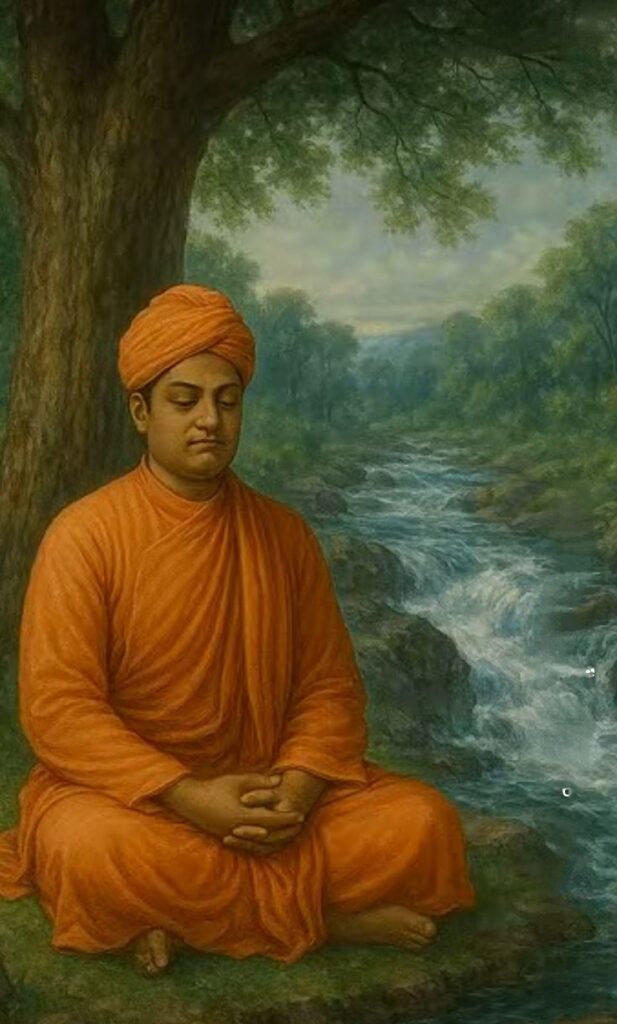
📚 Book References and Sources
- Ramakrishna Mission – Official Site
- Influence and Legacy of Swami Vivekananda – Wikipedia
- Swami Vivekananda’s Enduring Legacy – IJFMR
📘 The Legacy in Action
Swami Vivekananda’s legacy lives on—in every school, every temple, every soul he touched. In the next chapter, we explore how his teachings are being adapted for the digital age, youth movements, and global spiritual leadership.
👉 Scroll down to read: “Swami Vivekananda in the 21st Century: Digital Dharma and Youth Awakening”
🌍 Swami Vivekananda’s Legacy: 1902–Present — The Eternal Flame of India’s Soul
Swami Vivekananda’s physical journey ended in 1902, but his mission had only just begun. What he ignited in his brief 39 years — a spiritual revolution, a cultural renaissance, and a global awakening — continues to shape the soul of India and inspire the world. This chapter traces the evolution of his legacy across the 20th and 21st centuries, from the expansion of the Ramakrishna Mission to his enduring influence on education, nationalism, and global spirituality.
🏛️ 1902–1920: The Mission Marches On
After Swami Vivekananda’s Mahasamadhi, the Ramakrishna Math and Mission entered a new phase under the leadership of his brother disciples, especially Swami Brahmananda, the first president of the Mission.
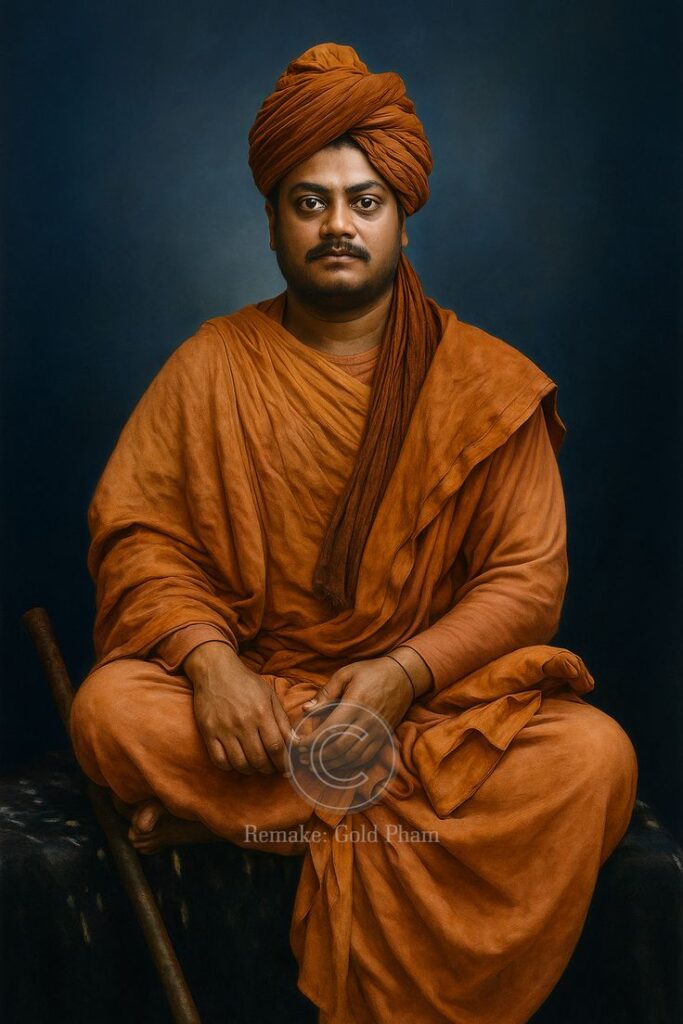
🔹 Institutional Growth
- New centers were established in Chennai, Varanasi, Mayavati, and Rangoon, spreading the twin ideals of Atmano Mokshartham Jagat Hitaya Cha — “For one’s own liberation and for the welfare of the world.”
- The Advaita Ashrama in Mayavati, founded by Vivekananda in 1899, became a hub for publishing his works and Vedantic literature.
- The Udbodhan Office in Kolkata began publishing The Complete Works of Swami Vivekananda, preserving his voice for future generations.
🔹 Service in Action
The Mission responded to plague outbreaks, floods, and famines, offering medical aid, food, and shelter. Monks were trained not only in scriptures but in first aid, engineering, and education — fulfilling Vivekananda’s vision of the “man-making mission.”
👩🏫 1902–1911: Sister Nivedita’s National Awakening
Sister Nivedita, empowered by Vivekananda’s vision, became a fierce advocate for India’s freedom, women’s education, and scientific advancement.
- She founded the Nivedita Girls’ School in Kolkata, which became a model for value-based education.
- She collaborated with Jagadish Chandra Bose, promoting Indian science and defending his work in Western circles.
- She wrote extensively on Indian art, culture, and nationalism, inspiring a generation of thinkers and artists.
Her death in 1911 was mourned across India. On her tombstone in Darjeeling are the words:
“Here reposes Sister Nivedita who gave her all to India.”
🇮🇳 1920–1947: Fueling India’s Freedom Struggle
Swami Vivekananda’s words became the mantra of India’s freedom fighters. His call for fearlessness, self-respect, and spiritual nationalism echoed in the speeches and writings of:
- Subhas Chandra Bose, who called him “the maker of modern India”
- Mahatma Gandhi, who said, “Vivekananda’s words increased my love for my country a thousandfold”
- Sri Aurobindo, who saw him as a yogi of action, blending renunciation with revolution
His birthday, January 12, began to be celebrated as a day of youth inspiration, long before it was officially declared National Youth Day in 1984.
🌍 1947–2000: Global Vedanta and Cultural Renaissance
After independence, Vivekananda’s legacy expanded globally through Vedanta Societies, cultural diplomacy, and spiritual tourism.
🔹 Vedanta in the West
- Vedanta centers flourished in New York, San Francisco, London, and Tokyo, offering meditation, philosophy, and interfaith dialogue.
- His books — Raja Yoga, Karma Yoga, Jnana Yoga — were translated into dozens of languages and studied in universities worldwide.
🔹 Cultural Institutions
- The Vivekananda Rock Memorial was inaugurated in 1970 at Kanyakumari, where he meditated in 1892. It became a symbol of India’s spiritual unity.
- The Ramakrishna Mission Institute of Culture in Kolkata became a hub for global scholarship, Sanskrit studies, and cultural exchange.
📱 2000–Present: Digital Dharma and Youth Awakening
In the 21st century, Swami Vivekananda’s message has found new life through digital platforms, youth movements, and policy frameworks.
🔹 National Youth Day and Beyond
- January 12 is now celebrated across India with speeches, seminars, and service drives.
- Government programs like NYKS and Skill India draw inspiration from his ideals of self-reliance and character-building.
🔹 Online Renaissance
- His quotes trend on social media during exams, elections, and national crises.
- YouTube channels, podcasts, and Instagram pages (like your own HistoryVerse7) bring his teachings to Gen Z in Hindi, Marathi, Hinglish, and English.
🔹 Global Recognition
- In 2013, the World Congress of Religions in Chicago honored the 150th birth anniversary of Swami Vivekananda.
- His statue stands in Chicago’s Art Institute, where he delivered his iconic 1893 speech.
🧠 Vivekananda’s Relevance Today
Swami Vivekananda’s teachings are more relevant than ever:
| Challenge Today | Vivekananda’s Response |
| Identity crisis among youth | “Each soul is potentially divine.” |
| Religious intolerance | “We accept all religions as true.” |
| Mental health and anxiety | “Stand up, be bold, be strong.” |
| Education without values | “We want that education by which character is formed.” |
| Social inequality | “They alone live who live for others.” |
His message is not just for monks or mystics—it is for leaders, teachers, artists, and entrepreneurs. It is for every Indian who dreams of a stronger, nobler nation.

📚 Book References and Sources
- “Swami Vivekananda: A Biography” by Swami Nikhilananda
- “The Life of Swami Vivekananda” by Romain Rolland
- “The Master As I Saw Him” by Sister Nivedita
- Ramakrishna Mission – Official Site
- Vivekananda Rock Memorial – Official Site
- National Youth Day – Government of India
📘 The Voice for the Future
Swami Vivekananda’s legacy is not a memory—it is a movement. In the next chapter, we explore how his teachings can be applied to modern leadership, education reform, and digital storytelling. Let us carry his fire forward.
👉 Scroll down to read: “Swami Vivekananda for Tomorrow: Leadership, Learning, and Legacy”
🚀 Swami Vivekananda for Tomorrow: Leadership, Learning, and Legacy
Swami Vivekananda’s message was never confined to the 19th century. It was a blueprint for the future — for leaders, educators, and creators who dare to build a world of strength, compassion, and unity. In this chapter, we explore how his teachings can be applied to modern leadership, education reform, and digital storytelling, empowering a new generation to carry his flame forward.

🧠 Leadership: From Command to Character
Swami Vivekananda redefined leadership — not as domination, but as service, vision, and character.
🔹 His Leadership Principles
- Self-mastery before leading others: “You cannot believe in God until you believe in yourself.”
- Courage in crisis: “Arise, awake, and stop not till the goal is reached.”
- Empowerment over control: “Give man a chance. Let him become strong.”
🔹 Modern Applications
- Corporate leaders use his teachings to build ethical, purpose-driven organizations.
- Social entrepreneurs draw from his call to uplift the poor and marginalized.
- Youth leaders find in him a role model of fearless authenticity.
His leadership style was not transactional — it was transformational.
📚 Education: Building Minds, Not Just Careers
Swami Vivekananda’s vision of education was revolutionary — far ahead of his time.
🔹 His Educational Philosophy
- “We want that education by which character is formed, strength of mind is increased, the intellect is expanded.”
- “Education is the manifestation of the perfection already in man.”
🔹 Relevance Today
- NEP 2020 echoes his ideals of holistic, value-based learning.
- Skill development programs reflect his emphasis on self-reliance.
- Character education is being reintroduced in schools and colleges.
His model blends science and spirituality, discipline and creativity, individuality and service.
📱 Digital Dharma: Storytelling in the Age of Screens
Swami Vivekananda was a master communicator. Today, his message thrives on Instagram reels, YouTube shorts, podcasts, and blogs — reaching millions across languages and borders.
🔹 His Communication Style
- Bold and poetic: “The moment I have realized God sitting in the temple of every human body, I am free.”
- Universal and inclusive: “We accept all religions as true.”
- Emotionally charged: “They alone live who live for others.”
🔹 Digital Adaptation
- Creators use his quotes to inspire reels and carousels.
- Educators build online courses around his teachings.
- Spiritual influencers translate his message into daily motivation.
🧘 Mental Health and Inner Strength
In an age of anxiety and burnout, Vivekananda’s teachings offer resilience, clarity, and inner peace.
His message is not escapism — it is empowerment.
🌐 Global Citizenship and Interfaith Harmony
Swami Vivekananda was a pioneer of interfaith dialogue and global unity.
- He taught that all religions are paths to the same truth.
- He urged people to see God in every human being, regardless of race, creed, or nationality.
- His 1893 speech in Chicago remains a cornerstone of spiritual diplomacy.
Today, his ideals guide:
- UN peace initiatives
- Interfaith summits
- Global education programs
🔥 Be the Flame
Swami Vivekananda’s legacy is not just to be admired — it is to be lived.
- If you’re a student: Build character, not just credentials.
- If you’re a teacher: Awaken minds, not just syllabi.
- If you’re a creator: Use your platform to inspire, not just entertain.
- If you’re a leader: Serve, don’t dominate.
He said:
“Take up one idea. Make that one idea your life.”
Let that idea be service, strength, and spiritual unity.
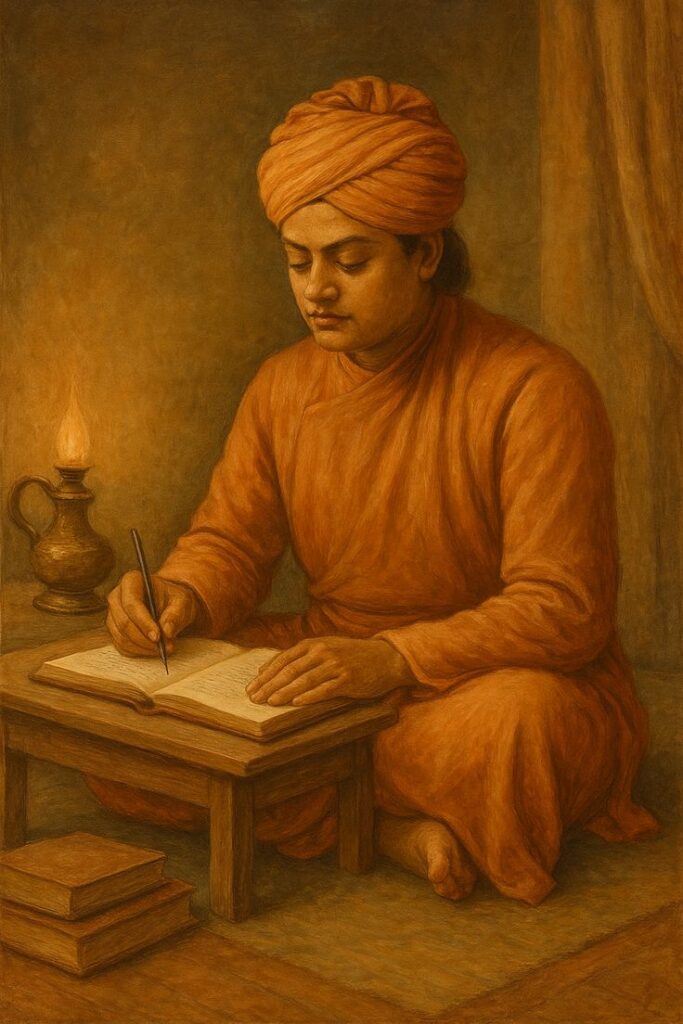
📚 Book References and Sources
- “Swami Vivekananda: A Biography” by Swami Nikhilananda
- “The Life of Swami Vivekananda” by Romain Rolland
- “Education and National Regeneration” by Swami Vivekananda
- Ramakrishna Mission – Official Site
- National Youth Day – Government of India
📘 The Journey Ends, The Mission Begins
From the thunder of Chicago to the silence of Belur, Swami Vivekananda walked the earth like a blazing comet — awakening minds, building institutions, and igniting a spiritual renaissance. His words were not just speeches; they were seeds. His life was not just a biography; it was a blueprint.
This tribute series is complete. But the real tribute begins now — in your actions, your voice, your vision. Whether you teach, create, serve, or lead, let his legacy guide you. Let his fire live through you.
👉 Carry the flame forward. Build. Serve. Awaken.
🔚 Conclusion: Swami Vivekananda — The Eternal Flame of India’s Soul
Swami Vivekananda’s life was not a chapter in history — it was a call to action. From his thunderous speech at the Parliament of Religions in 1893 to his silent Mahasamadhi at Belur Math in 1902, he lived as a beacon of strength, wisdom, and service. His legacy is not confined to books or statues — it breathes through every soul that dares to rise, awaken, and serve.
This tribute series traced his journey year by year — from his return to India in 1897 and the founding of the Ramakrishna Mission, to his final travels, teachings, and the sacred farewell on July 4, 1902. Each milestone was a manifestation of his core ideals: Vedanta, Karma Yoga, spiritual nationalism, and service to humanity.
But the real power of Vivekananda lies in what came after.
His disciples — Swami Brahmananda, Sister Nivedita, and countless others — carried his vision forward, expanding the Ramakrishna Mission across India and the world. His teachings fueled the minds of freedom fighters like Subhas Chandra Bose, Sri Aurobindo, and Mahatma Gandhi, shaping the soul of India’s independence movement.

His message of unity in diversity, fearless living, and spiritual democracy found new life in the 21st century — through Vedanta Societies, National Youth Day, and digital platforms like HistoryVerse7, where his words now echo in reels, carousels, and multilingual blogs.
Swami Vivekananda’s vision of man-making education, character-building leadership, and global citizenship is more relevant than ever. In an age of anxiety, division, and distraction, his teachings offer clarity, courage, and compassion.
He taught us that:
- “Each soul is potentially divine.”
- “They alone live who live for others.”
- “Arise, awake, and stop not till the goal is reached.”
These are not just quotes — they are blueprints for a better world.
As we conclude this tribute, let us remember: Swami Vivekananda did not ask for followers — he called for builders. Builders of character, of community, of culture. His fire is not to be worshipped — it is to be carried.
📘 FAQ: Understanding Swami Vivekananda
1. What was Swami Vivekananda’s vision for India beyond independence?
Answer:
Swami Vivekananda’s vision for India extended far beyond political freedom. He envisioned a spiritually awakened, economically self-reliant, and socially just India. His dream was of a nation where Vedanta philosophy guided public life, where education built character, and where service to the poor was seen as the highest form of worship. He believed that true independence would come only when every Indian realized their inner divinity and acted with strength, compassion, and unity.
2. How did Swami Vivekananda redefine the role of a monk in modern India?
Answer:
Swami Vivekananda shattered the stereotype of the reclusive monk. He introduced the concept of the “dynamic sannyasi” — a monk who meditates in the morning and serves society by afternoon. For him, renunciation did not mean escape from the world, but engagement with its suffering. Through the Ramakrishna Mission, he institutionalized this ideal, training monks to be teachers, doctors, relief workers, and spiritual guides. He declared, “Be a hero. Always say, ‘I have no fear.’”
3. What was Swami Vivekananda’s approach to intergenerational leadership?
Answer:
Swami Vivekananda believed that youth must lead, but elders must guide. He often said that India’s future rested in the hands of its young, but that their energy needed the wisdom of tradition. He envisioned a bridge between generations, where the fire of youth was tempered by the depth of the rishis. His own life was a model — a young man mentored by Sri Ramakrishna, who then mentored others like Sister Nivedita and Swami Sadananda.
4. How did Swami Vivekananda use silence as a spiritual tool in his final year?
Answer:
In 1902, Swami Vivekananda embraced mauna (spiritual silence) not as withdrawal, but as preparation for transcendence. He reduced public engagements, meditated deeply, and spoke only when necessary. This silence was not emptiness — it was conscious stillness, a final teaching without words. His Mahasamadhi on July 4, 1902, was the culmination of this inner retreat. He showed that silence can be louder than speech, and that stillness can be the highest action.
5. What would Swami Vivekananda say about digital India and social media?
Answer:
Though he lived in the 19th century, Swami Vivekananda would have seen digital platforms as tools for dharma. He believed in mass communication of spiritual ideas, and if alive today, he might have used reels, podcasts, and blogs to awaken the youth. But he would also warn against vanity, distraction, and superficiality. His message would be: “Use technology to serve, not to show. Let your feed reflect your fire.”
Share this content:


Very nice 👍🏻🚩✨
“I am proud to belong to a religion which has taught the world both tolerance and universal acceptance.👍👌”