
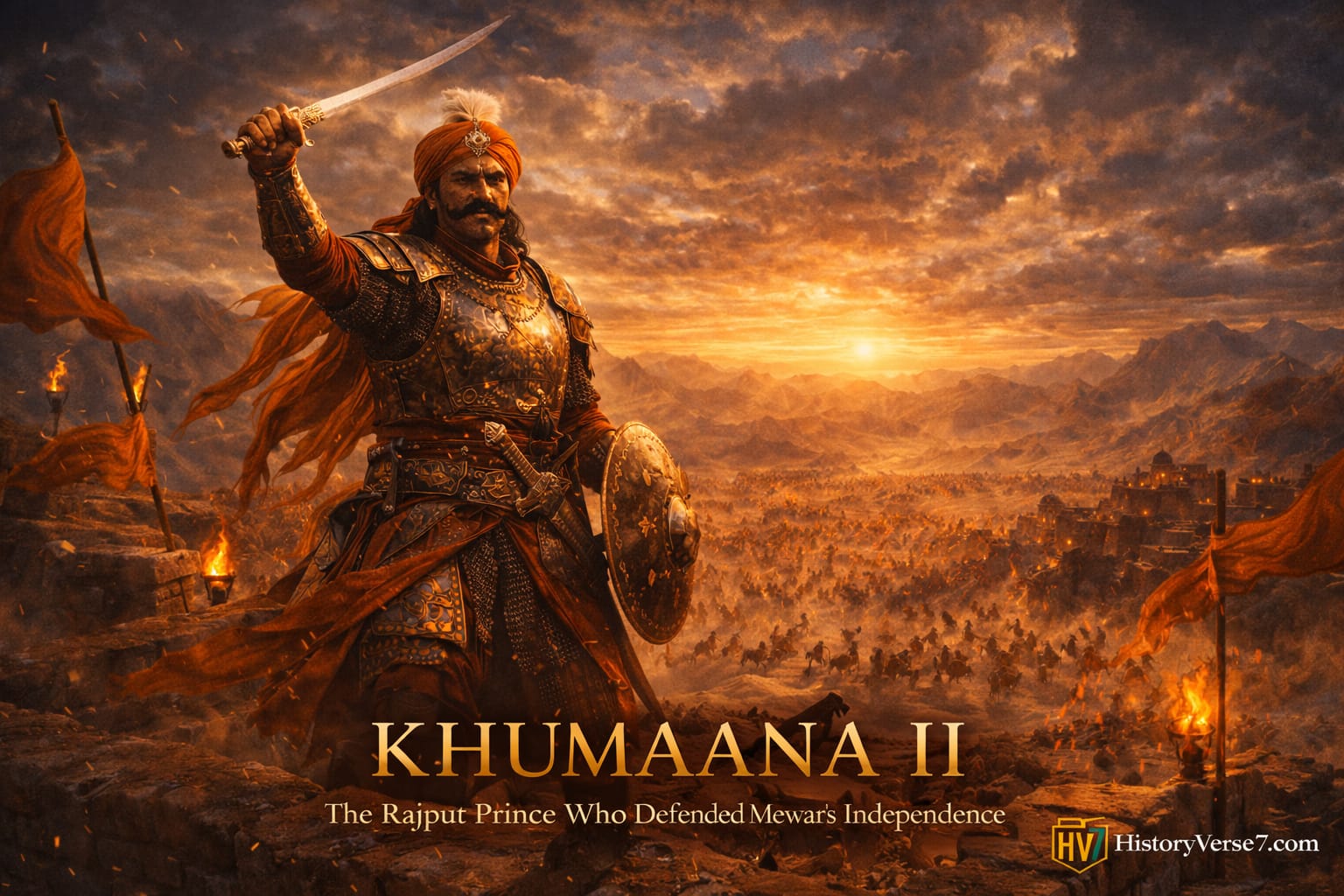
Khumaana II

Khumaana II : 7 Brilliant Tactical Victories That Proved How One Mewar Prince Defeated Arab Invaders and Saved Rajput Independence Forever

⚔️ Khumaana II: जब एक 20 वर्षीय राजकुमार ने अरब साम्राज्य को रोका और राजपुताना को बचाया

यह लेख 8वीं शताब्दी के सबसे निर्णायक political power struggle, Islamic expansion strategy के विरुद्ध Rajput प्रतिरोध, military leadership analysis, और एक young warrior की अरब आक्रमणों से मेवाड़ की रक्षा की अविश्वसनीय वीरता पर आधारित हमारी विस्तृत शोध-श्रृंखला का हिस्सा है।

728 ई. की वह चुनौती: जब Umayyad Caliphate ने Sindh conquered किया, Gujarat और Malwa में raids शुरू कीं, और पूरा राजपुताना अरब विस्तार के निशाने पर था — तब एक युवा Guhila prince ने कहा: “नहीं।”

734 ई. की वह विरासत: जब उसी योद्धा ने — guerrilla warfare, fort defense, और diplomatic brilliance से — अरब forces को defeat किया, चित्तौड़गढ़ को recapture किया, और Sisodia dynasty की वह नींव रखी जो Maharana Pratap तक पहुंची।

इस लेख में जानें: Sindh conquest (712 CE) और भारत में Arab expansion • गुहिल वंश की स्थापना • चित्तौड़गढ़ का recapture (735-36 CE) • Muhammad bin Qasim के बाद continued Arab raids • खुमाण की asymmetric warfare strategy • Rajput cultural preservation • और centuries की independence की foundation।

🔥 यह लेख क्यों पढ़ें?

✓ David vs Goliath: कैसे छोटे kingdom ने vast empire को हराया
✓ Guerrilla warfare और asymmetric strategy का early example
✓ Arab expansion की limits और Rajput resistance
✓ Inscriptions और historical sources पर आधारित गहन शोध

“जो योद्धा केवल अपनी पीढ़ी नहीं, बल्कि आने वाली centuries की स्वतंत्रता बचाता है — वही सच्चा विजेता है।” — Khumaana II की कहानी ⚔️🛡️

जब एक युवा राजकुमार ने अरब साम्राज्य की विस्तार योजना को रोक दिया

728 ईस्वी। चित्तौड़ का प्राचीन किला। राजस्थान की तपती धूप में, एक युवा राजकुमार – मात्र 20 के आसपास – अपने सैनिकों को संबोधित कर रहा था। क्षितिज पर धूल का एक विशाल बादल उठ रहा था। अरब घुड़सवार – जिन्होंने हाल ही में सिंध को जीता था, जिन्होंने गुजरात और मालवा में छापे मारे थे – अब मेवाड़ की ओर बढ़ रहे थे।

यह युवा राजकुमार था Khumaana II – गुहिल वंश का शासक, जो बाद में सिसोदिया वंश की नींव रखने वाला था। इस समय, वह केवल अपने राज्य के लिए नहीं, बल्कि पूरे राजपुताना की स्वतंत्रता के लिए लड़ने वाला था।

अरब साम्राज्य – जो अभूतपूर्ण गति से फैल रहा था, जिसने फारस, मध्य एशिया और सिंध को जीत लिया था – का अगला लक्ष्य था: राजस्थान के समृद्ध राज्य। यदि वे सफल होते, तो पूरे उत्तर भारत का नक्शा बदल जाता। परंतु Khumaana II ने कुछ और ही सोचा था।

blog1-4-1024x683 Khumaana II : 7 Brilliant Tactical Victories That Proved How One Mewar Prince Defeated Arab Invaders and Saved Rajput Independence Forever

अगले कई वर्षों में, इस young Rajput warrior ने न केवल अरब invasions को रोका, बल्कि उन्हें decisively हराया। उसने guerrilla warfare, diplomatic alliances, और strategic fort defense का brilliant combination use किया। उसने यह साबित किया कि तकनीकी और संख्यात्मक श्रेष्ठता के बावजूद, local knowledge, determination, और smart strategy किसी भी विदेशी आक्रमण को defeat कर सकती है।

Khumaana II की कहानी केवल military victories की नहीं है। यह cultural resistance, political wisdom, और long-term vision की कहानी है। यह proof है कि कैसे एक determined leader अपने समय के सबसे शक्तिशाली empire को रोक सकता है।

यह लेख उस extraordinary journey की कहानी है – कैसे 8वीं शताब्दी में, जब Islamic expansion अपने चरम पर था, एक Rajput prince ने अपने kingdom और culture को defend किया, और centuries के लिए एक precedent set किया।

ऐतिहासिक पृष्ठभूमि: जब अरब साम्राज्य भारत की ओर बढ़ा

Khumaana II की कहानी को समझने के लिए, हमें 7वीं-8वीं शताब्दी की geopolitical landscape को समझना होगा – एक ऐसा समय जब Islamic caliphate तेजी से expand कर रहा था।

Islamic Expansion: एक अभूतपूर्ण गति

632 ईस्वी में Prophet Muhammad की मृत्यु के बाद, Islamic Caliphate ने unprecedented speed से expand किया:

blog2-3-1024x683 Khumaana II : 7 Brilliant Tactical Victories That Proved How One Mewar Prince Defeated Arab Invaders and Saved Rajput Independence Forever
  • 634-644: Byzantine Empire के कुछ हिस्से और पूरा Sassanid Persia conquered
  • 640s-650s: Egypt, North Africa, और Central Asia में expansion
  • 711: Umayyad Caliphate ने Spain (Iberia) conquered किया
  • 712: Muhammad bin Qasim ने Sindh (आधुनिक Pakistan) को conquered किया

यह last conquest particularly significant था क्योंकि यह था भारतीय subcontinent में पहला major Islamic invasion

Sindh Conquest (712 CE) और इसके Implications

Muhammad bin Qasim – एक young और talented general – ने Raja Dahir को हराकर Sindh को Umayyad Caliphate के under ला दिया। यह conquest strategically important था:

  1. Trade routes: Sindh important trade hub था
  2. Gateway to India: यह deeper Indian territories में entry point था
  3. Psychological impact: एक major Indian kingdom conquered हो गई थी

इस conquest के बाद, Arab forces ने Gujarat, Malwa, और Rajasthan की ओर raids शुरू कीं। उनका ultimate goal था: पूरे North India को conquer करना।

8वीं शताब्दी का राजस्थान: Political Fragmentation

उस समय राजस्थान politically fragmented था – multiple Rajput kingdoms अस्तित्व में थीं:

  • Mewar (गुहिल वंश के under)
  • Marwar
  • Jaisalmer region
  • Ajmer-Pushkar region

यह fragmentation Arab invaders के लिए एक opportunity थी – divide and conquer। परंतु यह Rajput chiefs के लिए भी एक challenge थी: unite होना या separately fall होना।

blog4-6-1024x683 Khumaana II : 7 Brilliant Tactical Victories That Proved How One Mewar Prince Defeated Arab Invaders and Saved Rajput Independence Forever

Khumaana II का Context

Khumaana II (शासनकाल: लगभग 728-734 CE, कुछ sources 735 CE तक suggest करते हैं) Guhila dynasty के थे – जो Mewar के hereditary rulers थे और जिनकी capital Nagda (Udaipur के पास) थी।

जब Khumaana II ने power संभाली, तब situation critical थी:

  • Arab forces regularly raids कर रही थीं
  • Local kingdoms pressure में थीं
  • Trade और agriculture disrupted हो रहे थे

Khumaana II के सामने choice था: submit होना और tributary बनना, या resist करना और consequences face करना। उसने resist करने का choice किया।

Khumaana II का उदय और अरब Invasions के विरुद्ध संघर्ष

Khumaana II के early life के बारे में limited information उपलब्ध है – जो 8वीं शताब्दी के sources की scarcity के कारण expected है। परंतु जो clear है वह यह: वे young थे जब उन्होंने leadership संभाली, और उनके सामने unprecedented challenges थे।

पहले Arab Raids (720s)

Khumaana II के शासनकाल से ठीक पहले, Arab forces ने Mewar के territories में raids करना शुरू किया। यह raids primarily reconnaissance और loot के लिए थीं – full-scale conquest के बजाय।

परंतु जैसे-जैसे Arab presence Sindh और Gujarat में consolidate होती गई, raids more frequent और aggressive होती गईं।

blog3-5-1024x683 Khumaana II : 7 Brilliant Tactical Victories That Proved How One Mewar Prince Defeated Arab Invaders and Saved Rajput Independence Forever

Khumaana II का Initial Strategy: Defense और Fortification

Khumaana II ने immediately understood किया कि conventional warfare में Arabs को match करना difficult होगा। Arab cavalry fast और mobile थी, उनके पास better organized logistics थी।

इसलिए, Khumaana II ने एक defensive strategy adopt की:

  1. Fort-based defense: Mewar के existing forts – जैसे Chittor, Nagda के आसपास के smaller forts – को heavily fortify किया गया
  2. Early warning systems: Scouts और intelligence networks establish किए गए
  3. Mobile cavalry units: Quick response के लिए light cavalry units organize कीं
  4. Local militias: Village-level defense units train किए गए

The Major Arab Invasion Attempt (728-729 CE)

कुछ historical accounts suggest करते हैं कि लगभग 728-729 CE में, एक major Arab expedition Mewar की ओर launched हुआ। यह likely था Gujarat से, जहां Arabs ने already significant influence establish किया था।

Details sparse हैं, परंतु broad narrative यह है:

  • Arab forces ने Mewar के border territories में enter किया
  • खुमाण द्वितीय की forces ने guerrilla tactics employ कीं – supply lines को harass करना, ambushes लगाना
  • Several skirmishes हुईं, जिनमें Arabs को heavy casualties face करनी पड़ीं
  • Ultimately, Arab forces withdraw कर गईं बिना significant territory gain किए

Khumaana II की Tactical Brilliance

Khumaana II की military strategy में कई elements थे:

1. Terrain Advantage: Mewar का terrain – hills, forests, narrow passes – cavalry-heavy Arab armies के लिए challenging था। खुमाण ने इसे exploit किया।

2. Hit-and-Run Tactics: Direct confrontation avoid करते हुए, Khumaana II की forces ने continuously Arab supply lines और rear positions को attack किया।

3. Psychological Warfare: Arabs – जो quick victories के आदी थे – को prolonged, costly campaign में drag किया गया। यह उनके morale को affect करता था।

4. Local Support: Local population actively resisting करने में participate करती थी – intelligence provide करके, supplies छुपाकर, refuges offer करके।

blog5-5-1024x683 Khumaana II : 7 Brilliant Tactical Victories That Proved How One Mewar Prince Defeated Arab Invaders and Saved Rajput Independence Forever

Diplomatic Efforts

Khumaana II केवल एक warrior नहीं थे – वे एक skilled diplomat भी थे। उन्होंने neighboring Rajput chiefs के साथ alliances बनाने की कोशिश की।

यह हमेशा successful नहीं रही – Rajput rivalries deeply entrenched थीं। परंतु कुछ cases में, shared threat ने cooperation को facilitate किया।

Khumaana II ने यह भी ensure किया कि Arabs के साथ कोई भी peace negotiations उनकी terms पर हों – वे कभी tributary status accept नहीं करने वाले थे।

रणनीतिक और नेतृत्व विश्लेषण: Khumaana II की Military और Political Genius

Khumaana II के leadership का analysis करने पर कई fascinating insights emerge होते हैं।

Military Strategy: Asymmetric Warfare का Early Example

8वीं शताब्दी में, asymmetric warfare का concept formally defined नहीं था। परंतु खुमाण द्वितीय ने intuitively इसे employ किया।

Core principles जो Khumaana II ने use कीं:

  1. Never fight on the enemy’s terms: Arabs open-field cavalry battles में superior थे। खुमाण ने ऐसे battles avoid किए।
  2. Use terrain as a force multiplier: Hills, forests, और narrow passes में, Arab cavalry advantage neutralize हो जाता था।
  3. Exhaust the enemy: Prolonged resistance ने Arab forces को logistically strain किया।
  4. Protect the population: Agricultural areas को defend करना ensure करता था कि local economy function करती रहे और forces को support मिलती रहे।

Political Strategy: Unity Through Shared Threat

Khumaana II की सबसे बड़ी political achievements में से एक थी: competing Rajput chiefs को – at least temporarily – unite करना shared threat के against।

यह easy नहीं था। Rajput chiefs traditionally were in rivalry परंतु Khumaana II ने argue किया कि Arab conquest सभी के लिए existential threat थी।

blog6-7-1024x683 Khumaana II : 7 Brilliant Tactical Victories That Proved How One Mewar Prince Defeated Arab Invaders and Saved Rajput Independence Forever

उन्होंने यह भी demonstrate किया – अपने own successful resistance के through – कि Arabs invincible नहीं थे।

Leadership Style: Leading by Example

Contemporary और later sources suggest करते हैं कि खुमाण personally brave थे और frontlines में fight करते थे। यह lead from the front approach Rajput culture में deeply valued थी और उनके soldiers के morale को boost करती थी।

राजनीतिक शक्ति परिवर्तन: Guhila Dynasty का Consolidation

Khumaana II के successful resistance ने Guhila dynasty की position को significantly strengthen किया

पहले: Fragmented Authority

8वीं शताब्दी के early में, Mewar में Guhila rulers थे, परंतु उनकी authority challenged थी – rival clans, local chieftains, और external threats द्वारा।

बाद: Consolidated Power

blog7-5-1024x683 Khumaana II : 7 Brilliant Tactical Victories That Proved How One Mewar Prince Defeated Arab Invaders and Saved Rajput Independence Forever

Khumaana II के reign के बाद, Guhilas की position much stronger थी:

  1. Military prestige: Arab invasions को defeat करना major achievement थी
  2. Regional leadership: Neighboring chiefs ने Guhilas की leadership को recognize किया
  3. Legitimacy boost: Successful defense ने dynasty की legitimacy को reinforce किया

Foundation for Future

Khumaana II द्वारा laid की गई foundation ने later Guhila/Sisodia rulers के लिए base provide किया। Centuries बाद, यही dynasty produce करेगी Maharana Pratap जैसे legendary warriors।

लेखक (Abhishek) की टिप्पणी: इतिहास के अध्येता का चिंतन

इतिहास के अध्येता के रूप में, Khumaana II की कहानी मुझे कई levels पर fascinate करती है।

पहला: Sources की Challenge। 8वीं शताब्दी का Rajasthan history reconstruct करना extremely difficult है। Contemporary written records are minimal हैं। हम mostly rely करते हैं later bardic accounts, inscriptions, और circumstantial evidence पर।

यह एक reminder है कि “absence of evidence” हमेशा “evidence of absence” नहीं होताKhumaana II के बारे में हमारी knowledge limited हो सकती है, परंतु broad narrative—कि Mewar ने successfully Arab invasions को resist किया—historically sound है।

दूसरा: Small States की Resilience। यह fascinating है कि कैसे relatively small kingdoms जैसे Mewar ने vast empires जैसे Umayyad Caliphate को resist किया। यह underdog stories में से एक है।

यह demonstrate करता है कि geopolitics केवल size और resources के बारे में नहीं है। Terrain, local knowledge, motivation, और smart strategy are equally important हैं।

blog8-5-1024x683 Khumaana II : 7 Brilliant Tactical Victories That Proved How One Mewar Prince Defeated Arab Invaders and Saved Rajput Independence Forever

तीसरा: Cultural Factors। Arab expansion जो इतना successful था Middle East, North Africa, और Spain में, क्यों रुक गया भारत में? Partially, यह military resistance था जैसे खुमाण द्वितीय ने किया। Partially, यह भारत की sheer geographic और cultural diversity थी।

परंतु कुछ uncomfortable questions भी हैं:

क्या Khumaana II की success partially luck थी? Arab Caliphate उस समय internal problems का सामना कर रही थी। क्या यदि Arabs more resources commit करते, तो outcome different होता?

और broader perspective में: क्या यह resistance ultimately delay ही थी? Centuries बाद, Islamic rulers (Mughals) eventually North India को dominate करने वाले थे।

मैं argue करूंगा कि हर resistance की अपनी context और value होती हैKhumaana II ने अपने समय में अपने लोगों को defended किया। उन्होंने centuries की Rajput independence के लिए foundation दिया। Future inevitabilities उनकी achievements को diminish नहीं करतीं।

निष्कर्ष: जब एक Young Warrior ने इतिहास की धारा बदल दी

Khumaana II की कहानी हमें याद दिलाती है कि history predetermined नहीं है। 8वीं शताब्दी में, जब Islamic Caliphate unstoppable लगती थी—Spain से लेकर Central Asia तक फैली हुई—यह assumed किया जा सकता था कि India भी eventually conquered हो जाएगा।

परंतु एक young Rajput prince ने decide किया कि वह इस “inevitability” को accept नहीं करेगा। Khumaana II ने अपने kingdom को defend किया—न केवल courage से, बल्कि strategic brilliance से भी। और वह succeeded।

उनकी success के lessons timeless हैं:

  • Determination matter करता है: Overwhelming odds के बावजूद, committed resistance effective हो सकती है
  • Smart strategy beat कर सकती है superior resources: Asymmetric warfare, terrain advantage, psychological warfare – ये brute force को overcome कर सकते हैं
  • Cultural identity preserving के लिए worth fighting है: Khumaana II केवल territory defend नहीं कर रहे थे – वे एक way of life defend कर रहे थे
  • Individual leaders make a difference: Right person, right time, right decisions – यह history को shape कर सकता है
blog10-2-1024x683 Khumaana II : 7 Brilliant Tactical Victories That Proved How One Mewar Prince Defeated Arab Invaders and Saved Rajput Independence Forever

परंतु साथ ही, Khumaana II की story हमें humble भी बनाती है। हम उनके बारे में बहुत कम जानते हैं। Centuries ने उनकी detailed story को erode कर दिया है।

यह reminder है कि जो हम achieve करते हैं, ultimately time के हाथों में है। Monuments crumble। Records fade। Details are lost।

परंतु broad impact endure करता हैKhumaana II ने जो defend किया – Mewar, Rajput culture, independence – वह centuries तक flourish किया। उन्होंने जो dynasty consolidated किया, वह 20वीं शताब्दी तक चली।

और उन्होंने जो precedent set किया – resist करने का, never bow down करने का – वह inspire करता रहा generation after generation, culminating in figures like Maharana Pratap।

Khumaana II – एक young warrior जिसने एक empire को रोका। एक visionary leader जिसने अपने people की future secure की। एक forgotten hero जिसकी legacy अभी भी lives on, भले ही उनका naam widely known नहीं है।

स्रोत और संदर्भ

प्राथमिक और द्वितीयक स्रोत:

  1. Tod, JamesAnnals and Antiquities of Rajasthan (1829)
  2. Ojha, Gaurishankar HirachandRajputana ka Itihas (Hindi)
  3. Sharma, DasharathaEarly Chauhan Dynasties
  4. Jackson, PeterThe Delhi Sultanate: A Political and Military History
  5. Chandra, SatishMedieval India: From Sultanat to the Mughals
  6. Rajasthan State Archives – Inscriptions और genealogical records

FAQ —- Khumaana II

प्रश्न 1: Khumaana II कौन थे और वे क्यों महत्वपूर्ण हैं?

उत्तर: खुमाण द्वितीय (Khumaana II) 8वीं शताब्दी (लगभग 728-734 CE) में Mewar के Guhila dynasty के एक ruler थे। उनका महत्व इस fact में है कि उन्होंने Arab invasions को successfully resisted उस समय जब Islamic Caliphate तेजी से expand कर रही थी। (1) Timing critical थी: 712 CE में Muhammad bin Qasim ने Sindh conquered किया था। Arab forces Gujarat, Malwa, और Rajasthan में raids कर रही थीं। यदि यह expansion continue होता, तो पूरा North India Islamic rule के under आ सकता था – Spain जैसा। (2) Military brilliance: खुमाण ने guerrilla warfare, fort-based defense, और terrain advantage का brilliant use किया। Despite being numerically और technologically weaker, उन्होंने Arab armies को defeat किया। (3) Cultural preservation: Arab conquest केवल political नहीं, बल्कि cultural और religious भी होता। खुमाण की success ने ensure किया कि Rajput culture, Hindu traditions, और local identity preserve रहें। (4) Foundation for future: खुमाण ने Guhila dynasty को consolidate किया। यही dynasty बाद में Sisodia dynasty बनी, जो centuries तक Mewar को rule करने वाली थी और जिसने Maharana Pratap जैसे legendary warriors produced किए। (5) Historical precedent: खुमाण ने demonstrate किया कि organized resistance effective हो सकती है। यह inspiration बना later Rajput rulers के लिए। Essentially, Khumaana II ने एक critical historical moment में अपने kingdom और culture को defend किया, और इसके consequences centuries तक felt हुए।

प्रश्न 2: Khumaana II ने Arab invaders को कैसे defeat किया जबकि वे militarily weaker थे?

उत्तर: यह Khumaana II की strategic genius का testament है कि उन्होंने technically superior Arab forces को defeat किया। Key strategies: (1) Asymmetric Warfare: खुमाण ने avoid किया open-field battles जहां Arab cavalry dominant थी। Instead, उन्होंने guerrilla tactics employ कीं – ambushes, hit-and-run attacks, supply line disruptions। (2) Terrain Advantage: Mewar का terrain – hills, forests, narrow mountain passes – cavalry-heavy Arab armies के लिए nightmare था। खुमाण ने battles को ऐसे terrains में fight किया जहां Arab advantages neutralize हो जाती थीं। (3) Fort-based Defense: जब major Arab forces आती थीं, खुमाण की forces fortified positions में retreat कर जाती थीं। Forts को siege करना time-consuming और costly था। (4) Attrition Strategy: Arabs – जो quick conquests के आदी थे (Spain को कुछ ही वर्षों में conquered किया) – को prolonged, exhausting campaign में drag किया गया। Supply lines long थीं (Sindh या Gujarat से), local support minimal थी, और continuous harassment ने morale को damage किया। (5) Local Intelligence और Support: Local population ने active resistance में participate किया – intelligence provide करके, supplies छुपाकर, refugees को shelter देकर। यह Arab forces के लिए major disadvantage थी। (6) Alliances: खुमाण ने कुछ neighboring Rajput chiefs के साथ tactical alliances बनाईं। हालांकि complete unity achieve नहीं हुई, परंतु coordinated resistance ने Arab task को complicate किया। (7) Psychological Warfare: Continuous losses और inability to achieve quick victory ने Arab commanders को frustrate किया। कुछ point पर, cost-benefit analysis unfavorable हो गई और वे withdraw कर गए। Essentially, खुमाण ने classic “asymmetric warfare” principles followed centuries before यह formally theorized हुआ: अपनी strengths को maximize करो (local knowledge, motivation, terrain), enemy की weaknesses को exploit करो (supply lines, unfamiliar terrain, prolonged campaign cost), और never enemy के preferred terms पर fight करो।

प्रश्न 3: Khumaana II के बारे में हम इतना कम क्यों जानते हैं?

उत्तर: यह एक excellent question है और यह ancient Indian history के broader challenge को reflect करता हैKhumaana II के बारे में limited information होने के कई reasons हैं: (1) Time Period (8th century): यह period भारतीय इतिहास का एक “dark age” माना जाता है documentation के terms में। Previous Gupta Empire collapse हो चुका था, और बाद के better-documented periods (जैसे Mughal era) अभी शुरू नहीं हुए थे। (2) Written Records का Scarcity: Medieval Rajasthan में, oral tradition (bardic accounts) written records से अधिक common थी। बहुत से contemporary written records survive नहीं किए – climate, invasions, और time ने destroy कर दिए। (3) Regional Nature: खुमाण एक regional ruler थे, pan-Indian empire के head नहीं। Regional rulers के बारे में often कम documentation होती है compared to major emperors। (4) Arab Perspective: Arab sources – जो otherwise detailed हैं – primarily अपनी successes को document करते थे। Defeats या unsuccessful campaigns को less detail में record किया जाता था। (5) Later Overwriting: बाद की centuries में, later Rajput rulers (जैसे Maharana Pratap) ने popular imagination को dominate किया, और earlier figures जैसे खुमाण shadows में रह गए। (6) Archaeological Limitations: Archaeological evidence भी limited है। 8वीं शताब्दी के structures बहुत से survive नहीं किए या बाद में rebuild/destroyed हुए। जो हम जानते हैं वह आता है: – Later bardic traditions (चारण literature) – Inscriptions (कुछ) – Genealogies और dynastic records – Circumstantial evidence (जैसे Arab expansion की limits) – Later historical compilations (जैसे James Tod के works, जो 19th century में लिखे गए) यह frustrating है historian के लिए, परंतु यह भी reminder है कि history का बहुत बड़ा हिस्सा lost हो गया है। जो records survive किए हैं – और broad narrative जो reconstruct की जा सकती है – वे suggest करते हैं कि खुमाण significant figure थे, even if details elusive हैं।

Watch This Video:

⚔️ Khumaana II और राजपुताना की स्वतंत्रता की अमर गाथा

यह लेख 8वीं शताब्दी के भारत में Islamic expansion strategy, political power struggle, military leadership analysis, गुहिल राजवंश का Arab invasions के विरुद्ध प्रतिरोध, asymmetric warfare tactics, और Rajput cultural preservation पर आधारित हमारी विस्तृत शोध-श्रृंखला का हिस्सा है।

खुमाण द्वितीय का 728 ई. में शासन संभालना, Muhammad bin Qasim द्वारा Sindh conquest (712 CE) के बाद Arab raids, चित्तौड़गढ़ का recapture (735-36 CE), guerrilla warfare और fort-based defense strategy, Guhila dynasty का consolidation, 734 ई. में stable succession, और वह foundation जिस पर Sisodia dynasty बनी और Maharana Pratap तक पहुंची — इन सभी ऐतिहासिक घटनाओं को समझने के लिए नीचे दिए गए स्रोत देखें।

🔥 राजपूत प्रतिरोध और Arab invasions की पूरी महागाथा पढ़ें

HistoryVerse7 — जहाँ प्रतिरोध की कहानियां अमर होती हैं • जहाँ forgotten warriors का गौरव है • भूला हुआ इतिहास, सत्य की खोज

Share this content:

Leave a Reply